

FREE RISK–REWARD TRADE PLANNER
Evaluate Risk and Reward
Review Your Planned Risk and Reward
Compare the loss at your stop with the potential profit at your target before placing the trade.
Use one calculation currency for account balance, entry, stop and target. This tool does not perform currency conversion.
Risk–reward assessment—
Enter a valid plan to compare the proposed reward with the amount at risk.
Risk / reward ratio
—
Potential loss at stop
—
Potential profit at target
—
Stop distance
—
Target distance
—
Supporting risk-based quantity
—
Supporting position value
—
Educational estimate only. Account balance and prices must use the same calculation currency; no FX conversion is performed. Supporting quantity assumes one price unit per quantity unit and does not model futures contract multipliers, leverage, margin or lot-size restrictions. Round quantities down to the instrument’s allowed increment. Fees, slippage, gaps, liquidity and execution can change the actual result.
How to Use the Trade Planner
- Choose whether the proposed trade is Long or Short.
- Enter the planned entry price, stop-loss price and target price.
- Add your account balance and the percentage you are prepared to risk.
- Review the risk–reward ratio, potential loss and potential profit.
- Check the stop and target distances against your trading setup.
- Treat position quantity and value as supporting estimates, then confirm valid lot sizes, fees and order requirements with your broker or exchange.
How the Risk–Reward Trade Planner Works
The planner measures the price distance from entry to stop as risk and the distance from entry to target as potential reward. It then compares those distances as a risk–reward ratio. For example, a result of 1:2.50 means the planned reward is 2.5 times the amount at risk.
Your account balance and risk percentage are used to estimate the money at risk and a supporting position quantity. The target price is then used to estimate potential profit if price reaches that level. These are planning estimates—not forecasts. A larger potential reward does not mean the target is more likely to be reached.
Important: Fees, spread, slippage, gaps, funding charges, contract multipliers, taxes and partial fills can change the actual result. Always confirm instrument and platform requirements before placing a trade.
More tools: Position Size Calculator | Drawdown Calculator | Pre-Trade Checklist | Trading Journal
WHY USE THIS TOOL?
Turn a Trade Idea into a Measurable Plan
A written, measurable plan cannot remove trading risk, but it can make the assumptions behind a trade easier to examine before the order is placed.
TRADE PLANNING EXPLAINED
Benefits of Using a Risk–Reward Trade Planner
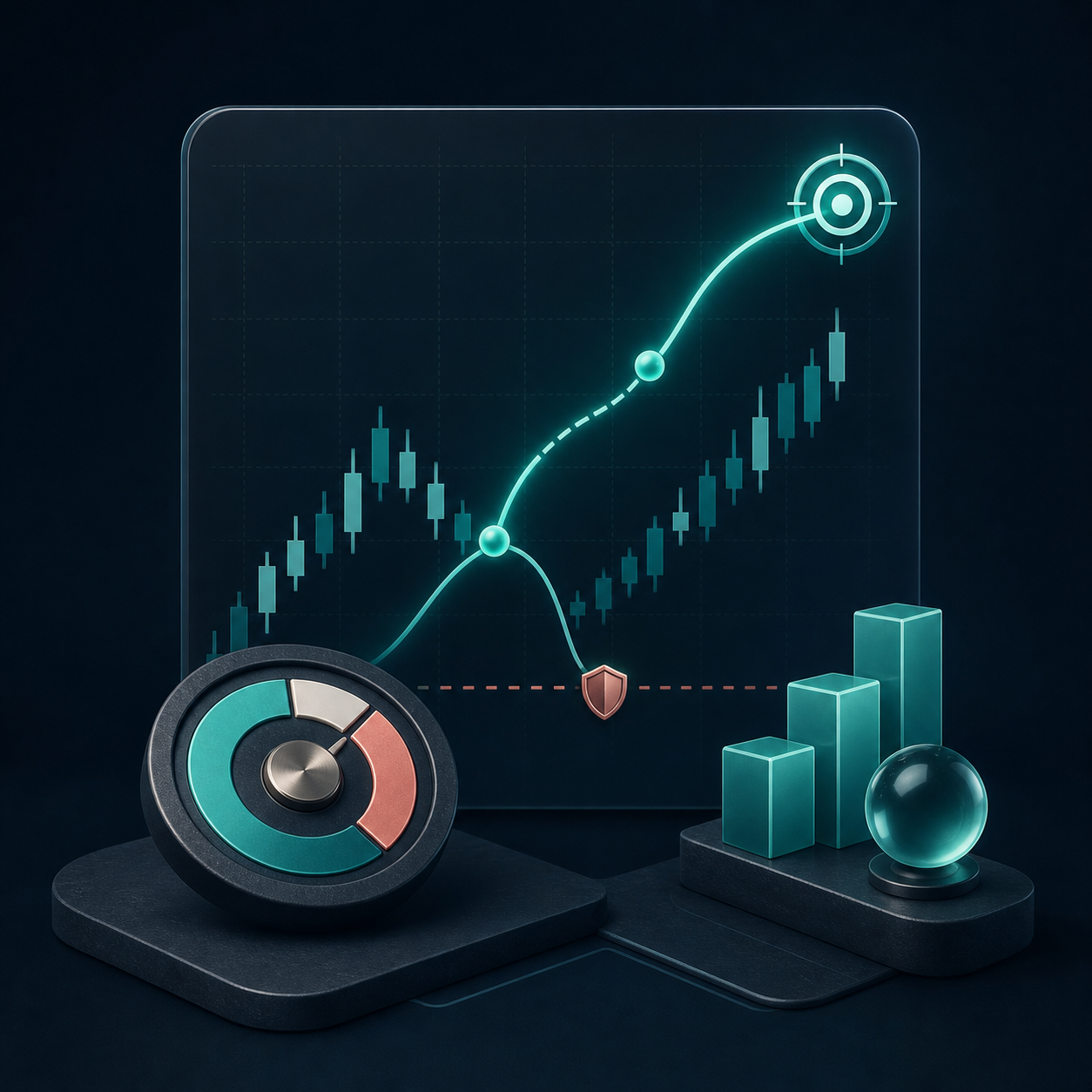
See the Risk–Reward Trade-OffCompare the potential loss and profit using the same entry, stop and target levels. This makes it easier to identify plans where the proposed reward is small relative to the risk.
Keep Stops and Targets Intentional
Enter price levels based on your trading setup rather than changing them simply to produce a more attractive ratio. The calculator measures the plan; it does not validate the market reasoning behind it.
Enter price levels based on your trading setup rather than changing them simply to produce a more attractive ratio. The calculator measures the plan; it does not validate the market reasoning behind it.
Support More Consistent ReviewsUsing the same planning process for each trade creates comparable records for your trading journal. Over time, you can review whether planned risk, execution and outcomes matched your rules.