

FREE TRADING DISCIPLINE TOOL
Pre-Trade Checklist
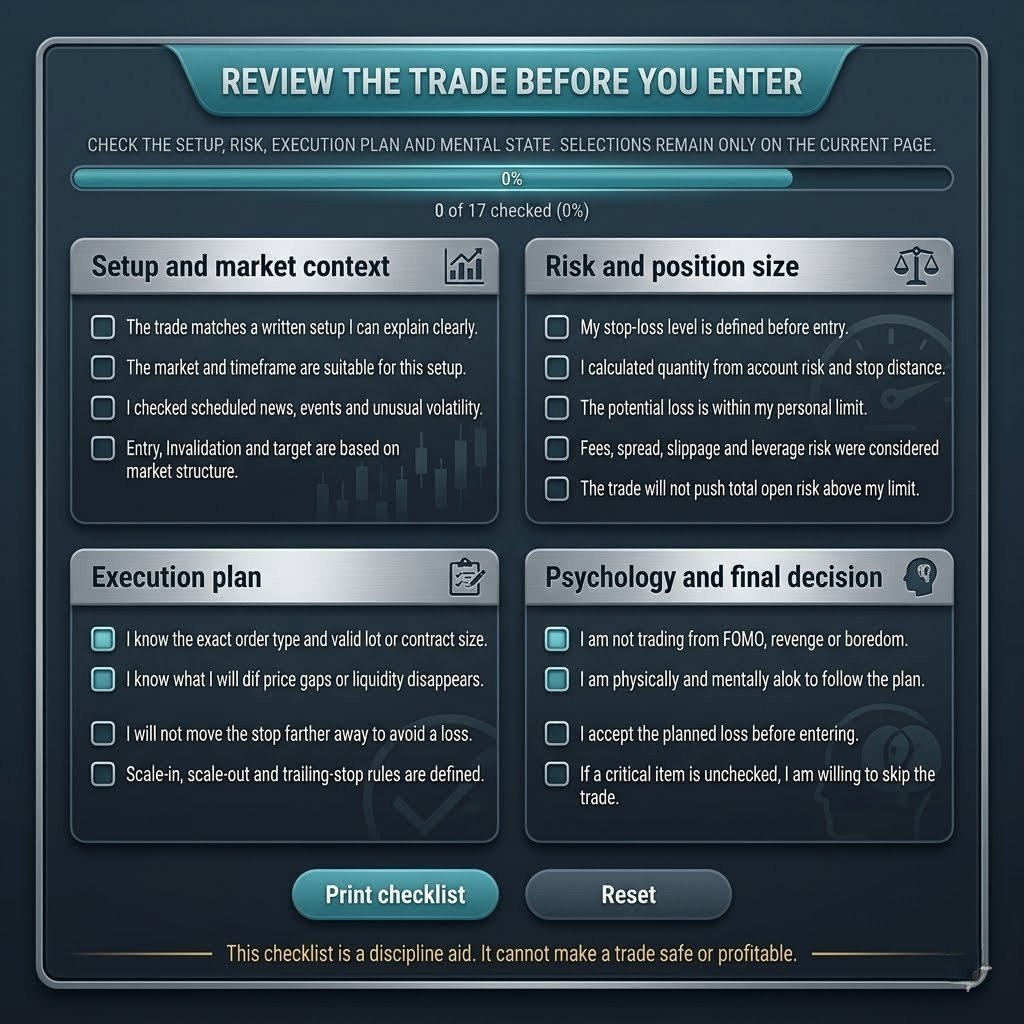
Review the Trade Before You Enter
Check the setup, risk, execution plan and mental state. Selections remain only on the current page.
This checklist is a discipline aid. It cannot make a trade safe or profitable.
How to Use the Pre-Trade Checklist
- Review each item before placing the order.
- Tick a box only when the condition has genuinely been checked.
- Pay particular attention to the setup, stop-loss, position size and total account risk.
- If a critical item is incomplete, pause and review the plan instead of forcing the trade.
- Use the progress indicator to confirm how much of the checklist is complete.
- Print the completed checklist if you want a temporary record, or reset it before reviewing another trade.
How the Trading Checklist Works
The checklist divides the pre-trade decision into four areas: setup and market context, risk and position size, execution planning, and trading psychology. This creates a repeatable pause between seeing an opportunity and placing an order.
Your selections are processed only in the current browser page. They are not sent to Trading Turtle, saved to a database or stored as a permanent trading record. Refreshing or leaving the page may clear the selections. Use the printable option or record the final decision in your Trading Journal if you need to keep it.
Important: A completed checklist does not validate the market analysis or guarantee an outcome. It confirms only that the listed questions were reviewed.
More tools: Position Size Calculator | Trade Planner | Drawdown Calculator | Trading Journal
WHY USE THIS CHECKLIST?
Create a Consistent Pause Before Every Trade
A checklist is most useful when it is treated as a decision filter—not as a box-ticking exercise after the trade has already been chosen.
TRADING DISCIPLINE EXPLAINED
Benefits of Using a Pre-Trade Checklist
Reduce Avoidable OversightsIt is easy to overlook scheduled news, liquidity, total open risk or an invalid stop when attention is focused on a possible entry. A checklist brings these considerations back into view.
Support More Consistent Decisions
Reviewing the same questions before each trade creates a more consistent process. This makes later journal reviews more meaningful because trades were assessed against similar criteria.
Reviewing the same questions before each trade creates a more consistent process. This makes later journal reviews more meaningful because trades were assessed against similar criteria.
Make It Easier to Skip Weak PlansA missing stop, unclear setup or emotionally driven decision becomes more visible when it must be acknowledged before entry. Sometimes the most disciplined decision is to wait.