Learn Cryptocurrency and Crypto Trading
Build Your Crypto Knowledge With Confidence
Understand cryptocurrency from the ground up—how digital assets, blockchain networks, wallets and crypto markets work. Explore beginner-friendly guides on Bitcoin, Ethereum, trading strategies, market analysis and risk management before putting real money at risk.


START YOUR CRYPTO JOURNEY
Build YourCryptoKnowledge
Learn the essential concepts that every cryptocurrency beginner should understand before exploring digital assets or developing a trading strategy.
1
Crypto Fundamentals
Learn how cryptocurrencies, blockchain networks, wallets and tokens work, along with the basic ideas behind decentralised applications and DeFi.
2
Analyze the Market
Learn how traders use price charts, market structure, technical analysis and risk management to study cryptocurrency markets without treating any indicator or pattern as a guarantee.
3
Trade With a Plan
Learn how a trading plan brings together setup criteria, position sizing, invalidation and risk limits before a trade is placed.
LATEST INSIGHTS on
Cryptocurrency
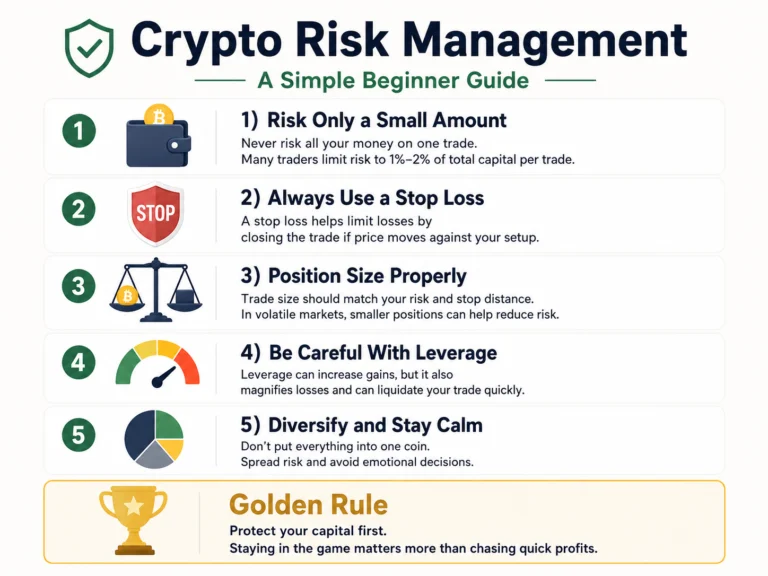
Crypto Risk Management: Position Size, Stop-Losses and Volatility Planning
What is crypto risk management? Crypto risk management is a structured process for identifying and controlling the risks associated with buying, selling, holding, or trading crypto assets. It is broader…

Public vs Private Blockchain: Differences, Use Cases and Limitations
Quick answer: A public blockchain is designed for broad participation, while a private blockchain restricts access to an approved group. Compare who may read data, submit transactions, validate blocks and…

How Does Blockchain Work? Blocks, Nodes, Consensus and Validation Explained
How blockchain works in simple terms To understand how blockchain works, imagine a shared digital ledger that is copied across a network of computers. When a user submits a transaction,…
Why Learn Crypto?
DecentralizationAccessibilityInnovation
DecentralizationAccessibilityInnovation
Understand the TechnologyLearn how blockchain, Bitcoin, Ethereum, smart contracts, and decentralized applications work together to power the digital economy.
Reduce Costly MistakesUnderstand wallet security, scams, market volatility, and risk management before investing real money.
Build Long-Term ConfidenceDevelop the knowledge needed to evaluate projects, analyze market trends, and make independent investment decisions.
Learn the Fundamentals of Digital Assets
Crypto Basics
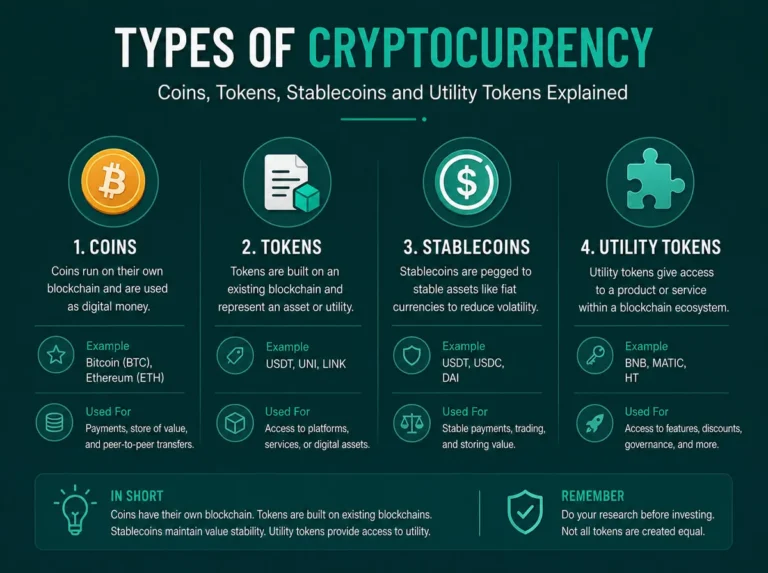
Types of Cryptocurrency: Coins, Tokens, Stablecoins and Utility Tokens Explained
What are the types of cryptocurrency? The phrase types of cryptocurrency is used broadly because crypto assets can be classified in more than one way. Classification may be based on…

How Cryptocurrency Works: Blockchain, Transactions and Validation Explained
Cryptocurrency in brief Many cryptocurrencies use a shared ledger rather than a bank’s private database. A wallet signs a transfer, the network checks it against its rules, and an accepted…

What Is Cryptocurrency? A Beginner’s Guide to Digital Assets
What is cryptocurrency? Cryptocurrency is a digital asset that uses cryptography—special mathematical techniques for security—to support transfers and record ownership on a digital network. Unlike physical notes and coins, cryptocurrency…
LEARNING RESOURCES
Tools That Support Crypto Learning
Use charting, research, paper-trading and wallet-learning resources to put concepts into practice. Choose tools based on what you actually need, and check fees, availability and risks before using any platform with real funds.
Affiliate note: This page contains affiliate links. We may earn a commission if you sign up through one, at no extra cost to you.
Crypto Wallets
Learn how crypto wallets work, how hot and cold storage differ, and why private keys, seed phrases and self-custody require careful handling.
Market Analysis
Explore charting, technical-analysis and research tools that can help you study crypto markets, organise your analysis and test ideas before risking capital.
Blockchain basics
Learn how blockchains record transactions, how nodes and consensus mechanisms work, and how public and private blockchain networks differ.
Platforms We Cover







Trading Strategies for Different Crypto Market Conditions
Crypto Trading Strategies
Crypto Risk Management: Position Size, Stop-Losses and Volatility Planning
What is crypto risk management? Crypto risk management is a structured process for identifying and controlling the risks associated with buying, selling, holding, or trading crypto assets. It is broader…

Crypto Scalping Strategy: Execution, Costs and Short-Term Risk
What is a crypto scalping strategy? A crypto scalping strategy is a short-term trading framework designed to capture relatively small price movements over minutes or, in some cases, seconds. A…
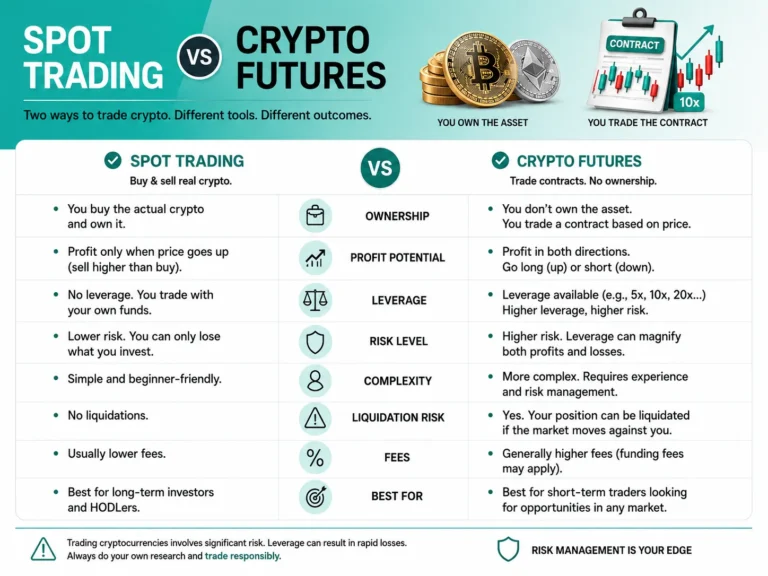
Spot Trading vs Crypto Futures: Key Differences, Risks and Use Cases
What is spot trading? Spot trading involves buying or selling a crypto asset at the current market price, or at a price specified through an order. When a trader buys…
RECOMMENDED PLATFORM
Explore Crypto Markets With Binance
Binance is a cryptocurrency exchange that provides access to spot markets, charting tools, educational resources and other crypto-related services. If you choose to explore an exchange, compare its fees, supported products, security controls and availability in your jurisdiction before depositing funds.
Affiliate Disclosure: Some links on Trading Turtle are affiliate links. If you sign up or make a purchase through these links, we may earn a commission at no additional cost to you. Our recommendations remain editorially independent.