Spot Trading vs Crypto Futures: Key Differences, Risks and Use Cases

What is spot trading?
Spot trading involves buying or selling a crypto asset at the current market price, or at a price specified through an order. When a trader buys an asset in a spot market, the trader generally receives ownership or control of that asset through an exchange account or wallet arrangement.
For example, a person who buys a crypto asset in a spot market may later:
- Hold the asset.
- Transfer it to a wallet.
- Sell it for another asset or currency.
- Use it within a supported blockchain application.
- Accept the possibility that its market value may decline.
Spot trading does not automatically involve borrowing funds or using leverage. However, the exact rights and custody arrangements depend on the platform used. A balance displayed in an exchange account may not be the same as direct self-custody.
Education-only disclaimer: This article is for general educational purposes only. It is not investment, financial, tax, or legal advice. Crypto assets and derivatives can be highly volatile and speculative. The examples are hypothetical and do not represent trade recommendations, target prices, or guaranteed returns.
Spot trading example
Suppose a trader buys a hypothetical crypto asset at 100 units of currency in the spot market. If the price later rises to 120, the position has an unrealised gain before fees and taxes. If the price falls to 80, the position has an unrealised loss.
The trader is not automatically liquidated merely because the market price falls. However, the trader can still lose a substantial portion or all of the capital if the asset declines sharply, becomes illiquid, or cannot be sold as expected.
What are crypto futures?
Crypto futures are derivative contracts whose value is linked to an underlying crypto asset. Instead of buying the underlying asset directly, the trader opens a contract position based on the expected movement of its price.
A futures trader may take:
- A long position, which benefits if the contract price rises, subject to costs and execution.
- A short position, which benefits if the contract price falls, subject to costs and execution.
Crypto futures may be used for speculation, hedging, portfolio management, or price discovery. Their use requires an understanding of contract size, margin, leverage, settlement, fees, funding, mark price, and liquidation rules.
Traditional futures generally have an expiry date. Many crypto platforms also offer perpetual futures, which are designed to remain open without a conventional expiry date. Perpetual contracts use funding mechanisms and other exchange rules to keep their prices connected to the underlying market.
Spot trading vs crypto futures
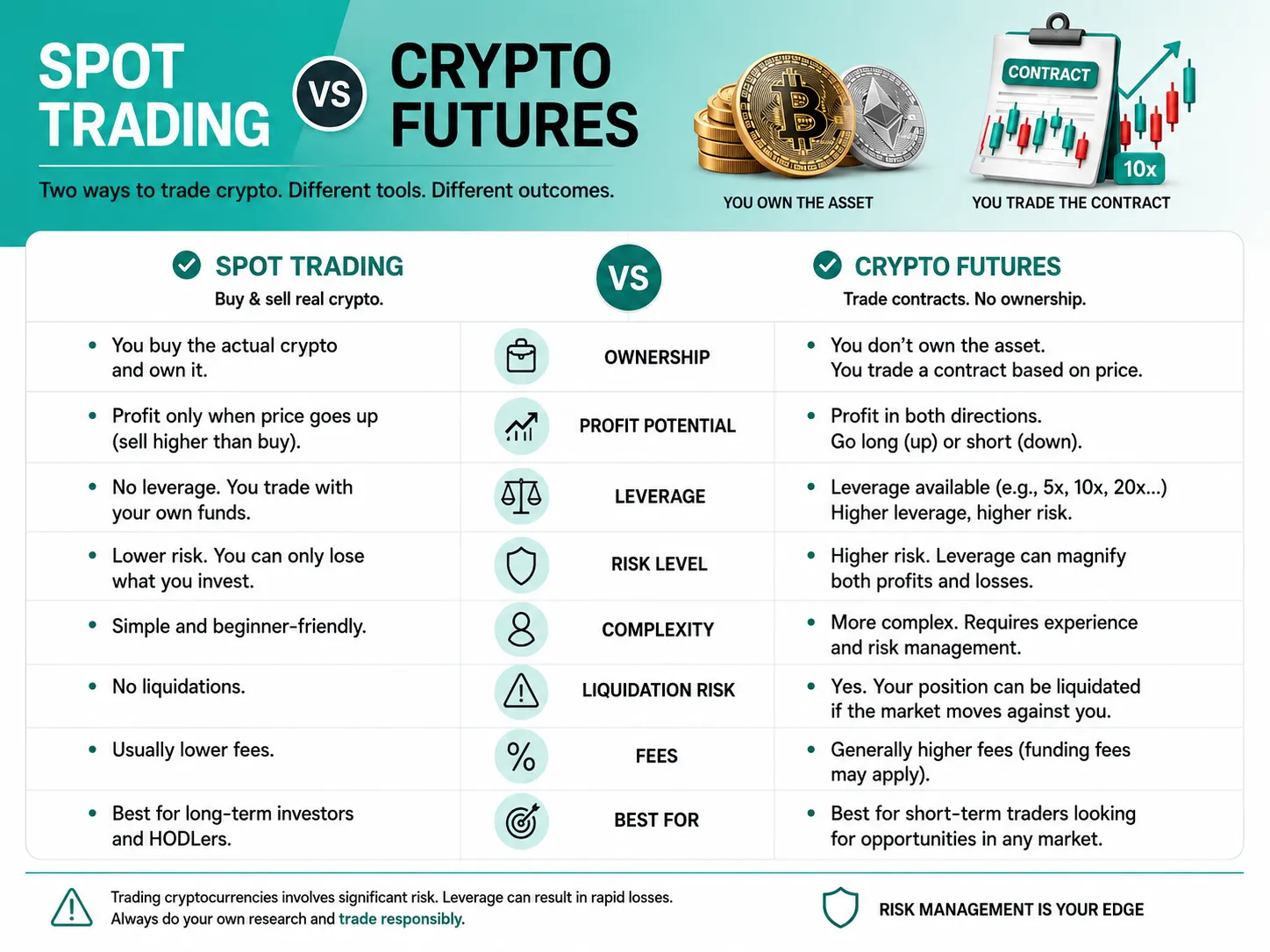
The central difference in spot trading vs crypto futures is what the trader controls.
| Feature | Spot trading | Crypto futures |
|---|---|---|
| What is traded? | The underlying crypto asset | A derivative contract linked to the asset |
| Ownership | The trader may receive or control the asset through the platform | The trader has contractual price exposure, not necessarily the asset |
| Long positions | Usually require buying the asset | Can be opened through a futures contract |
| Short positions | Usually require borrowing or another mechanism | Commonly available through a futures contract |
| Leverage | Usually absent unless separately borrowed | Often available, depending on the platform and contract |
| Liquidation | No futures liquidation from margin alone | Possible if margin falls below required levels |
| Funding | Usually no perpetual funding payment | Perpetual contracts generally use periodic funding |
| Custody | Wallet or platform custody applies | Collateral and contract account rules apply |
| Main risks | Price decline, custody, liquidity, platform, and fraud risk | All relevant market risks plus leverage, liquidation, funding, and contract risk |
The table provides a general comparison. Actual features, protections, fees, and rules vary by platform, jurisdiction, asset, and contract.
Key differences in detail
Asset ownership
In spot trading, the trader normally purchases the asset itself. The asset may remain with a custodial exchange or be transferred to a self-custody wallet.
In crypto futures, the trader generally does not purchase the underlying asset. Instead, the trader holds a contract position whose profit or loss changes as the contract price moves.
This difference matters when considering withdrawal, wallet security, blockchain transfers, staking, voting, or other uses of the underlying asset.
Long and short exposure
Spot markets are often associated with buying first and selling later. Some platforms may support spot margin or borrowing, but those arrangements introduce additional risk.
Futures markets commonly make both long and short positions available. A short position can benefit from a price decline, but losses may become very large if the market rises sharply.
Shorting is not simply the opposite of buying. It may involve margin requirements, funding, liquidation, borrowing mechanics, and rapid losses.
Leverage
Leverage allows a trader to control a larger position than the amount of capital posted as margin. For example, a trader using 5x leverage may obtain exposure several times larger than the initial margin, depending on the contract and platform.
Leverage risk works in both directions:
- A favourable price movement can increase returns on posted margin.
- An unfavourable price movement can reduce margin rapidly.
- Fees and funding apply to the larger exposure in some arrangements.
- A position can be liquidated before the trader expects the market to recover.
The CFTC warns that leverage amplifies risk in margined virtual-currency futures and can lead to losses that may exceed the initial amount deposited in some futures contexts.
Liquidation
Liquidation is the forced closure of a futures position when the account or position no longer satisfies the platform’s margin requirements.
The CFTC glossary describes forced liquidation as a situation in which a brokerage firm closes open positions after an account becomes under-margined because of adverse price movements and failure to meet margin requirements.
Liquidation can occur even if the trader believes the long-term market outlook remains favourable. A position may be closed because the available margin is insufficient to withstand short-term volatility.
Funding rates
Perpetual futures do not have a traditional expiry date. To help keep the perpetual contract price close to the relevant spot or index price, platforms commonly use periodic funding payments between long and short traders.
Depending on the funding rate and the position held:
- Long traders may pay short traders.
- Short traders may pay long traders.
- The payment may change as market conditions change.
- Funding can become a meaningful cost when a position is held for a long time.
Funding is not the same as a trading commission. It is a payment mechanism associated with the perpetual contract and may vary according to the platform’s rules.
Binance describes funding rates as periodic payments transferred between holders of long and short positions in perpetual contracts. Its published information also states that the default funding interval is generally every eight hours, although users must verify the current rules for the relevant product.
Settlement and contract rules
Spot trading generally involves the asset and an exchange transaction. Futures trading involves a contract with specific terms.
Before using crypto futures, a trader should understand:
- Contract denomination.
- Margin currency.
- Minimum order size.
- Tick size and quantity precision.
- Mark-price calculation.
- Index-price methodology.
- Funding interval.
- Liquidation process.
- Insurance-fund or auto-deleveraging rules, where applicable.
- Whether the contract is inverse, linear, dated, or perpetual.
- Settlement and delivery procedures.
These details can vary between products. A trader should not assume that all crypto futures contracts work in the same way.
How leverage and margin work
Margin is collateral posted to support a futures position. It is not the same as the full value of the position.
Initial margin
Initial margin is the amount required to open a position. The required amount may depend on the contract size, leverage selected, platform rules, and risk tier.
Maintenance margin
Maintenance margin is the minimum collateral level required to keep a position open. If the account falls below the required level, the platform may issue a margin warning or begin liquidation according to its rules.
Isolated and cross margin
- Isolated margin: The trader assigns a specific amount of collateral to a position. Losses may be limited to the margin assigned to that position, subject to platform rules.
- Cross margin: Available collateral may be shared across positions. This can delay liquidation in some situations but may expose more of the account balance to losses.
The exact behaviour depends on the platform. Traders should read the official contract and margin documentation before using either mode.
Hypothetical illustration
A trader deposits 100 units of currency and opens a position with 5x exposure. The position’s notional value may be approximately 500 units, subject to the platform’s rules.
A 10% adverse move on the position would represent a loss of approximately 50 units before fees and other costs. A larger adverse move could consume much of the posted margin and trigger liquidation.
This example is simplified. Actual liquidation depends on leverage, maintenance margin, fees, funding, mark price, other positions, and the exchange’s liquidation process.
Main risks of spot trading
Spot trading avoids some risks of leveraged derivatives, but it is not low-risk or automatically suitable for every person.
Market risk
The asset price can fall sharply. Crypto markets may react to liquidity changes, market sentiment, technical events, macroeconomic developments, regulation, security incidents, or project-specific news.
Custody risk
Assets held on a platform may be affected by hacking, insolvency, withdrawal restrictions, operational failure, or account compromise. Assets held through self-custody create responsibility for private keys and recovery phrases.
Liquidity risk
An asset may appear tradable but have limited real liquidity. During stressed markets, the spread may widen and an order may execute at a significantly different price from the expected level.
Network and transfer risk
The wrong wallet address, blockchain network, or contract interaction can result in a permanent loss. Blockchain transactions are often difficult or impossible to reverse.
Platform risk
Investor.gov warns that crypto platforms may lack important investor protections and that companies holding crypto assets can face failure or bankruptcy.
Main risks of crypto futures
Crypto futures combine market risk with derivative-specific risks.
Leverage risk
Leverage increases exposure relative to deposited collateral. A relatively small price movement can create a large percentage gain or loss on margin.
Liquidation risk
A trader may lose control of a position when the platform closes it automatically. Liquidation can occur before the trader’s preferred exit level and may involve additional charges or unfavourable execution.
Funding risk
Funding payments may reduce the value of a position over time. A strategy that looks profitable from price movement alone may become unprofitable after funding, fees, and slippage.
Basis risk
The futures price may differ from the spot or index price. This difference can affect entries, exits, hedges, and performance calculations.
Counterparty and platform risk
A trader depends on the platform to calculate margin, maintain systems, process orders, and honour withdrawals or settlement according to its terms.
Emotional and operational risk
Leverage can encourage overtrading, revenge trading, premature exits, and excessive position sizes. Technical outages, internet interruptions, API errors, and incorrect order settings can also affect results.
Which approach is suitable for beginners?
There is no universally suitable market for every beginner. However, a person learning crypto markets should understand spot trading thoroughly before considering leveraged derivatives.
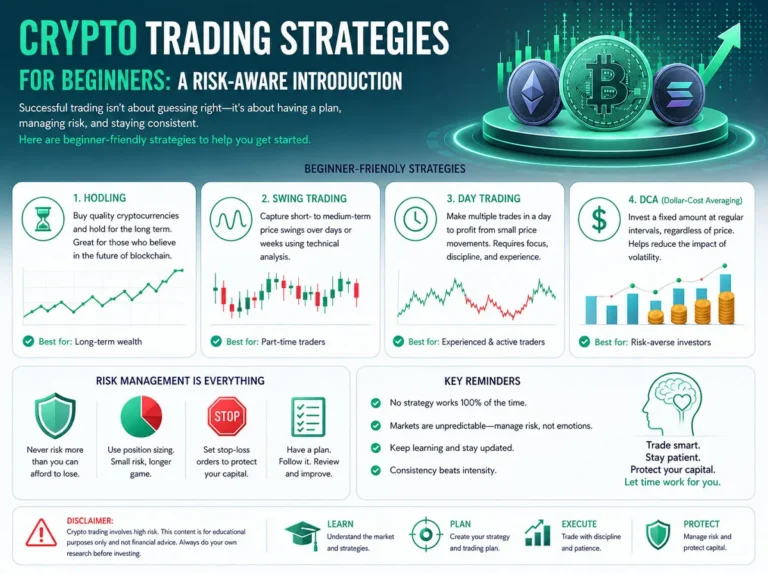
A cautious learning sequence may include:
- Learn how wallets, addresses, orders, fees, and custody work.
- Practise a simple spot trading process in a simulator or paper-trading environment.
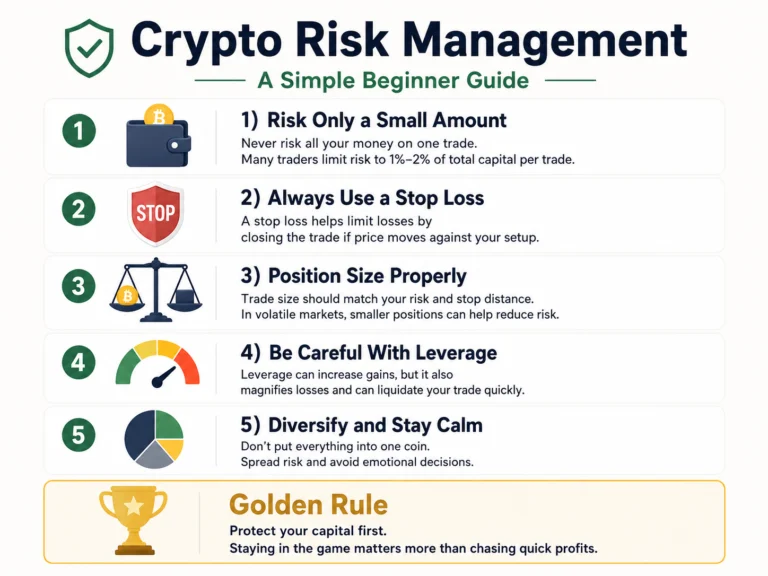
- Study position sizing, stop-loss limitations, and portfolio exposure.
- Learn futures terminology without immediately using leverage.
- Read the official contract specifications and liquidation rules.
- Test order execution and recordkeeping in a controlled environment.
- Use only risk capital if eventually moving to live trading.
Paper trading does not reproduce all real-world effects, including emotional pressure, slippage, funding, liquidity changes, and platform interruptions. It is a training tool, not proof of future profitability.
A decision framework
When comparing spot trading vs crypto futures, ask:
- Do I need to own or withdraw the underlying asset?
- Do I understand how margin and liquidation work?
- Can I tolerate losing the entire amount allocated to the activity?
- Do I understand funding rates and contract specifications?
- Am I using leverage because the strategy requires it, or because the position seems too small?
- Have I tested the process without relying on a favourable market period?
- Are the platform, product, and rules available to me legally and operationally?
- Is the risk compatible with my financial situation?
Do not select futures merely because they offer short selling or larger exposure. Those features also create additional ways to lose capital.
Key takeaways
- Spot trading vs crypto futures is mainly a comparison between buying or selling the underlying asset and trading a derivative contract linked to its price.
- Spot trading generally involves buying or selling the crypto asset itself, while futures trading involves long or short exposure through a contract.
- Crypto futures may use leverage, which increases market exposure and can accelerate both gains and losses.
- Perpetual futures do not have a traditional expiry date but usually involve periodic funding payments between long and short positions.
- Futures traders must understand margin, maintenance margin, mark price, liquidation, funding, and contract specifications.
- Spot trading avoids forced liquidation caused by futures margin requirements, but it still involves volatility, custody, liquidity, platform, and total-loss risks.
– Frequently Asked Questions (FAQs)
There is no universally best strategy. A beginner should choose an approach that is understandable, testable, compatible with available time, and supported by clear risk controls.
Spot trading avoids some risks associated with margin and liquidation, but it can still result in substantial losses from price declines, poor liquidity, custody problems, fraud, or platform failure. Futures add leverage, funding, liquidation, and contract-specific risks.
No. A strategy can produce losses, including during periods when its historical results appeared favourable. Claims of guaranteed returns or risk-free crypto trading should be treated as warning signs.
There is no suitable amount for everyone. A person should not risk money needed for living costs, debt payments, emergencies, or essential financial goals. Position sizing should be based on an affordable maximum loss, not on a desired profit.
Beginners should first understand spot trading, position sizing, margin, liquidation, funding, and order execution before considering leverage. Leverage magnifies exposure and can accelerate losses.
There is no universal minimum period. The test should include enough trades and different market conditions to evaluate rule-following, drawdown, execution assumptions, and costs. A small number of winning paper trades is not sufficient evidence.