

Stock Market Education
Learn How the Stock Market Really Works
Every successful investor starts with knowledge – not luck. Trading Turtle helps you understand how the stock market works through practical lessons, beginner-friendly guides, technical analysis, and proven trading concepts. Whether your goal is long-term investing or active trading, you’ll find structured educational resources designed to help you make informed decisions with greater confidence.


START YOUR LEARNING JOURNEY
Build YourStock MarketKnowledge Step by Step
Learning to invest or trade doesn’t have to feel overwhelming. Our structured learning path breaks complex market concepts into practical lessons that help you understand the fundamentals before moving to advanced strategies. Progress at your own pace while building the confidence to analyze markets independently.
STEP 01
Understand the Market
Learn how stock exchanges operate, why share prices move, how companies create value, and the key principles every beginner should know before making an investment decision.
STEP 02
Analyze With Confidence
Discover how traders evaluate stocks using price action, chart patterns, technical indicators, market trends, and trading psychology to identify higher-probability opportunities.
STEP 03
Develop Your Own Strategy
Combine market knowledge, technical analysis, and disciplined risk management to build a trading plan that matches your goals, experience, and tolerance for risk.
Discover rECENTLY PUBLISHED
Stock Market Articles

Pullback Trading Strategy: How to Plan Entries Within an Existing Trend
A pullback is a temporary move against a broader trend. In an uptrend, price advances, pauses or declines, then may resume higher. In a downtrend, price falls, rallies temporarily, then…

NIFTY Bank vs NIFTY 50: Exposure, Concentration and Risk
NIFTY 50 and NIFTY Bank are two of the most watched indices in India, but they measure very different things. NIFTY 50 is a broad-market large-company benchmark spanning important sectors…
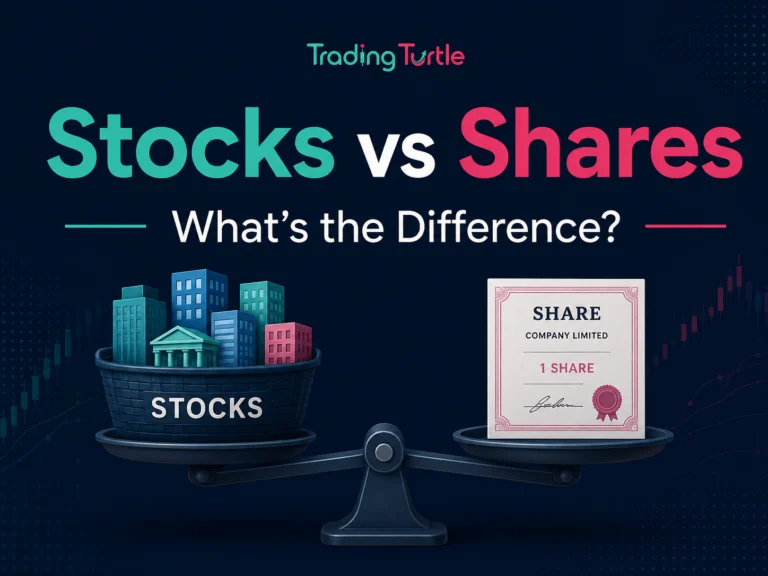
Stocks vs Shares: What’s the Difference? A Beginner’s Guide
If you are new to the market, the difference between stocks vs shares can seem more complicated than it really is. Financial news may say an investor “owns stocks,” while…
Why Learn Trading?
FreedomIncomeMastery
FreedomIncomeMastery
Make Better Financial DecisionsUnderstand how market trends, company performance, economic events, and investor sentiment influence stock prices so you can evaluate opportunities with greater confidence.
Reduce Common Beginner MistakesLearning the fundamentals of risk management, position sizing, and trading psychology helps you avoid emotional decisions that often lead to unnecessary losses.
Build Long-Term Trading ConfidenceConfidence comes from preparation—not predictions. The more you understand market structure and trading principles, the more consistent your decision-making becomes over time.
START WITH THE FUNDAMENTALS
Stock Market Basics
Stocks vs Shares: What’s the Difference? A Beginner’s Guide
If you are new to the market, the difference between stocks vs shares can seem more complicated than it really is. Financial news may say an investor “owns stocks,” while…

Share Market Terms for Beginners: 30 Essential Stock Market Terms Explained
The share market becomes far less intimidating once you understand its language. A new investor might open a trading app and immediately encounter words such as Demat account, market order,…

How Does the Share Market Work? A Beginner’s Guide to Buying and Selling Shares in India
If you are new to investing, one of the first questions you may ask is: how does the share market work? A trading app can make buying or selling a…
LEARNING RESOURCES
Essential Tools Every Stock Market Beginner Should Know
Learning the stock market becomes easier when you use the right tools. From tracking market movements to practicing trades without risking real money, these beginner-friendly resources help you turn theory into practical experience. Explore educational platforms, market research tools, and paper trading solutions that support your learning journey.
Paper Trading
Practice buying and selling stocks in a simulated market environment to gain experience without risking real money.
Market Research
Learn how to analyze companies, monitor market trends, and understand the data that experienced investors use before making decisions.
Stock Indices
track the performance of a specific group of stocks. They serve as economic health indicators and benchmarks for investors to measure market trends.
Improve Your Trading Skills With
Trading Strategies
Pullback Trading Strategy: How to Plan Entries Within an Existing Trend
A pullback is a temporary move against a broader trend. In an uptrend, price advances, pauses or declines, then may resume higher. In a downtrend, price falls, rallies temporarily, then…
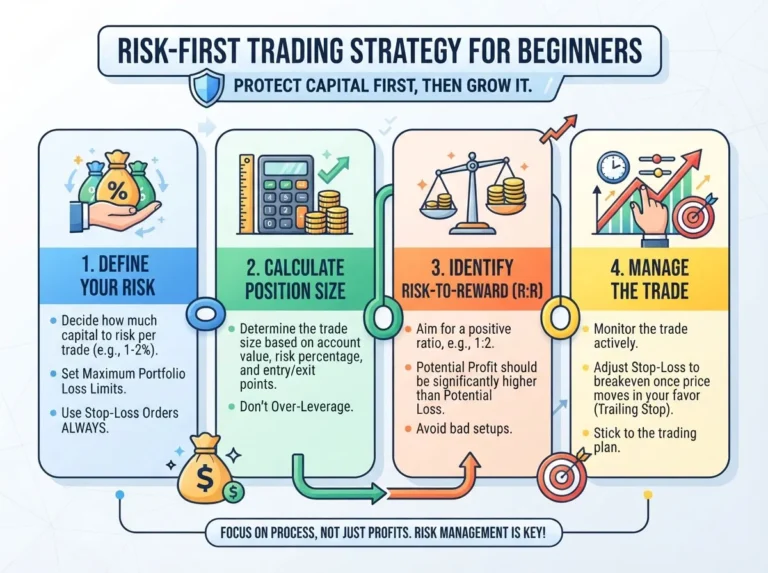
Risk-First Trading Strategy for Beginners: How to Protect Capital Before Seeking Returns
What Is a Risk-First Trading Strategy? A risk-first trading strategy is an approach in which a trader defines acceptable risk before analysing potential returns. Instead of starting with the question,…
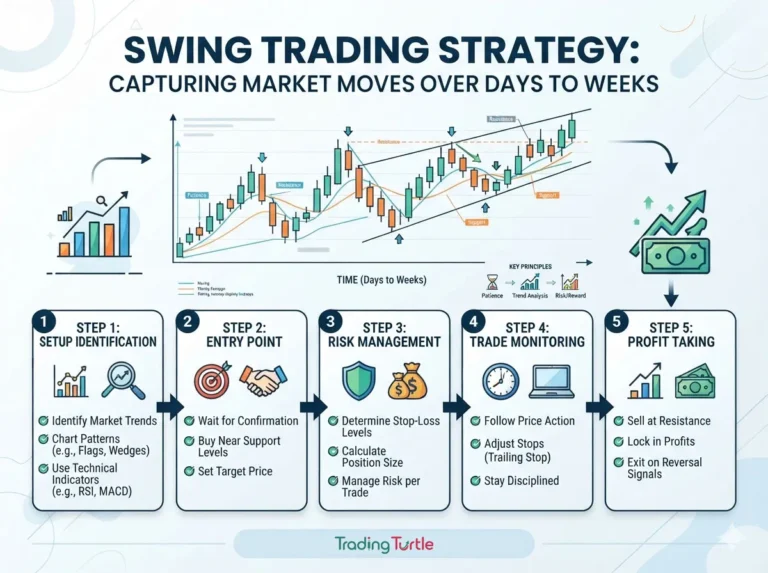
Swing Trading Strategy for Beginners: How to Plan and Manage Short-Term Stock Trades
What Is a Swing Trading Strategy? A swing trading strategy is a structured method for attempting to capture short- to medium-term price movements in stocks. A swing trader may hold…

100%Free Forever Basic Plan
Try Premium For 30 Days
Try Premium For 30 Days
Analyze Markets with TradingView
Advanced Charting
Tools & Indicators
Tools & Indicators
Learning technical analysis becomes much easier when you can visualize real market data. TradingView provides interactive charts, powerful drawing tools, customizable indicators, and real-time market insights that help beginners understand how prices move and how experienced traders analyze market trends.
Affiliate note: This page contains an affiliate link. We may earn a commission if you sign up through it, at no extra cost to you.