Binance Review 2026: Fees, Safety, KYC & Is It Good for Beginners?

Binance Review: Quick Verdict
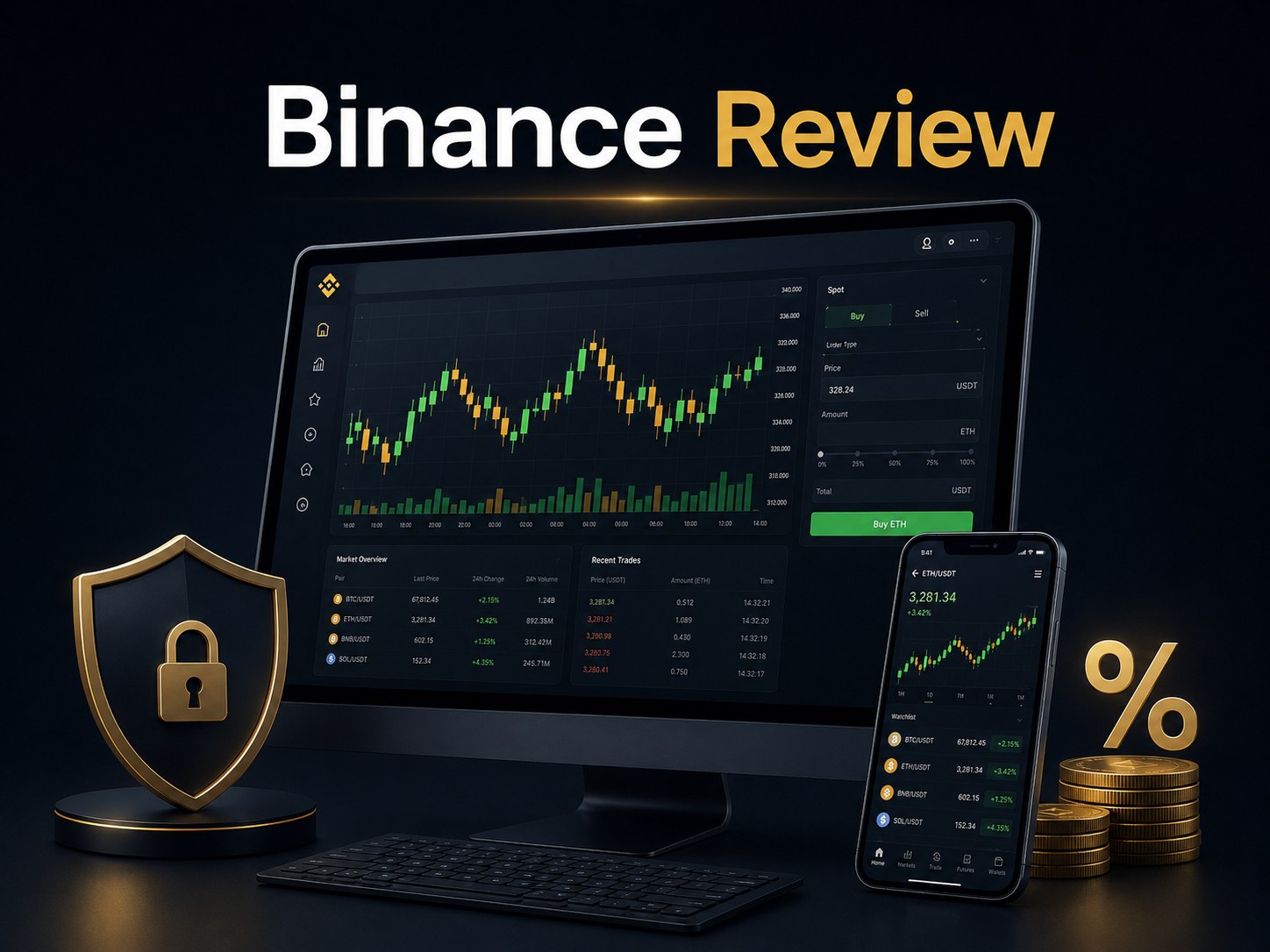
Binance is a feature-rich centralized cryptocurrency exchange with competitive Spot trading fees, a relatively simple Convert tool for new users and a much deeper trading interface for people who need more control.
Its biggest advantage is flexibility. Someone can start by simply converting one crypto asset into another and later learn Spot trading, limit orders, advanced order types, P2P and other tools without moving to a different exchange.
Its biggest drawback is complexity. Futures, margin and other leveraged products sit within the same broad ecosystem, even though a beginner may have no reason to use them.
For a first-time user, a sensible approach is to keep Binance simple: secure the account, complete KYC, learn how deposits and withdrawals work, start with Convert or Spot, understand market and limit orders, and avoid leverage until its risks are fully understood.
Educational disclaimer: This Binance review is for educational and informational purposes only. It is not financial, investment, legal or tax advice, and it is not a recommendation to buy, sell or hold cryptocurrency. Crypto assets are volatile, exchange availability differs by jurisdiction, and platform features, fees and regulations can change.
| Area | Trading Turtle assessment |
|---|---|
| Beginner usability | Good when using Convert or basic Spot |
| Spot trading fees | Competitive |
| Advanced trading tools | Extensive |
| Account security tools | Strong range of controls |
| Custody | Centralized; counterparty risk remains |
| KYC | Required for meaningful use |
| India relevance | FIU-IND registered reporting entity |
| Best suited for | Users wanting a broad exchange ecosystem |
| Main caution | Complexity and easy access to leveraged products |
The central conclusion of this Binance review is therefore not that Binance is automatically the “best” exchange. It is that Binance offers a broad, comparatively low-cost trading ecosystem that can suit beginners if they deliberately avoid products they do not yet understand.
What Is Binance?
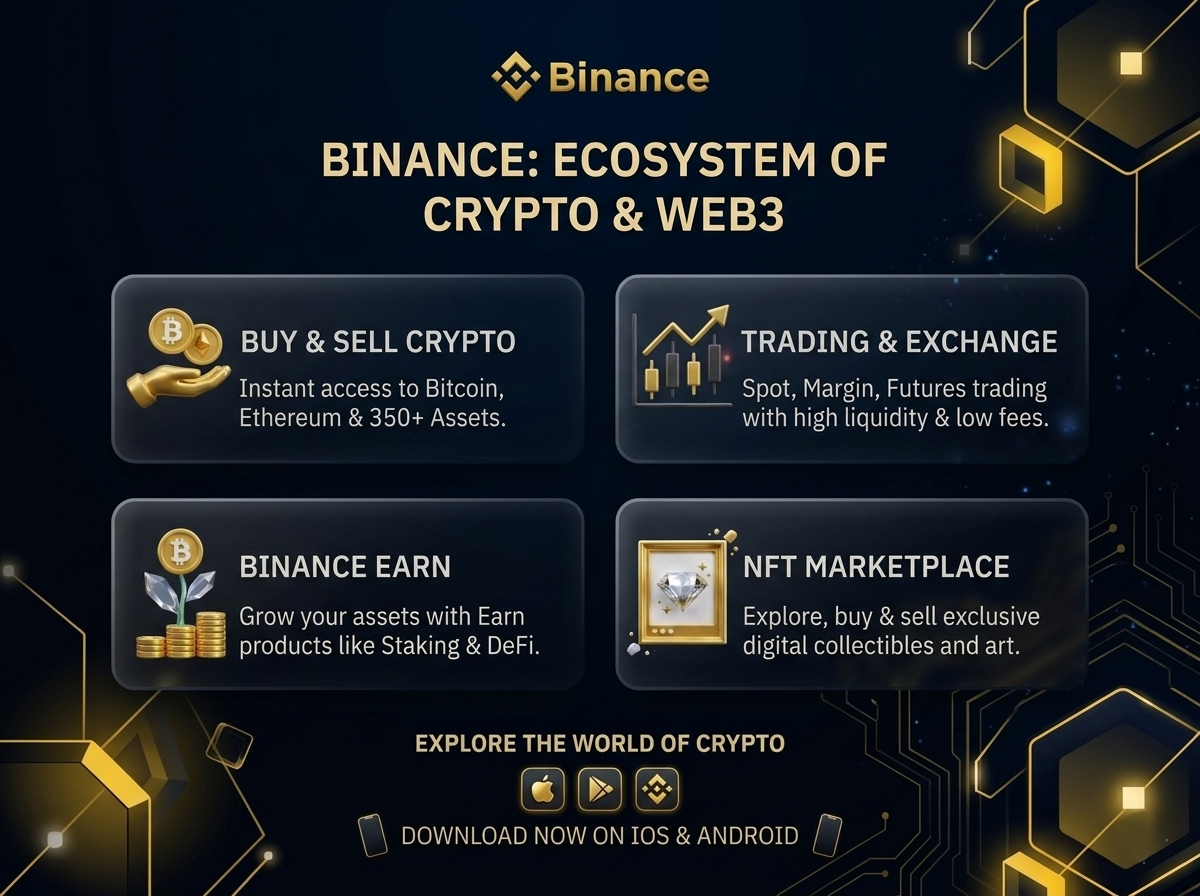
Binance is a centralized cryptocurrency exchange that allows users to buy, sell, convert and trade supported digital assets.
Its broader ecosystem includes Spot trading, P2P, staking and earning products, APIs and derivatives where those services are permitted.
For beginners, the most useful distinction is between Convert and Spot.
Binance’s official beginner guide describes Convert as the simpler interface, while Spot gives users more control over prices and order types.
That gives Binance a relatively smooth learning path. You can begin without immediately learning an order book, then move to a more detailed trading interface when you understand how execution works.
The same breadth can also be distracting. Someone who only wants to buy Bitcoin or Ethereum does not need most of the tools available across the platform.
Is Binance Good for Beginners?
Yes, Binance can be suitable for beginners—but the way it is used matters.
A beginner using Convert or straightforward Spot trading is dealing with a much simpler product than someone opening leveraged futures positions.
Convert lets users select the asset they want to exchange, review the quoted conversion and confirm it.
Spot trading adds:
- trading pairs;
- order books;
- market orders;
- limit orders;
- conditional orders;
- charts; and
- more control over execution.
Binance’s current Spot trading guide explains that Spot trading involves directly buying and selling assets rather than using the borrowed funds or leverage found in margin and futures products.
For a new user, that distinction matters much more than having access to hundreds of advanced features.
A practical learning sequence is:
- Secure the account.
- Complete identity verification.
- Learn how deposits and withdrawals work.
- Understand Convert.
- Learn market and limit orders.
- Use Spot before considering leverage.
- Understand exchange custody and self-custody.
So although this Binance review considers the platform beginner-friendly at its basic level, the complete Binance interface can become overwhelming if a new user tries to learn everything at once.
Binance Exchange
Buy, convert and trade crypto in one platform
Spot Trading • Convert • P2P • Security Tools

Affiliate disclosure: Trading Turtle may earn a commission if you register or purchase through some links on this page, at no additional cost to you. Affiliate relationships do not determine our conclusions or the criteria used in this Binance review.
Binance Fees Explained
Binance uses a maker-taker trading-fee structure.
The exact amount depends on factors such as:
- the market being traded;
- the user’s VIP level;
- whether the order is maker or taker;
- the trading pair;
- applicable promotions; and
- whether an eligible BNB fee discount is being used.
For Spot trading, Binance’s current transaction fee guide uses 0.10% as a basic example for a taker transaction.
At a 0.10% trading fee, a hypothetical $1,000 trade would cost approximately $1 before any applicable discount.
Trading fees are not the only cost
The headline trading fee is only part of the actual cost of using an exchange.
Users should also consider:
- bid-ask spreads;
- slippage;
- card or payment-provider charges;
- fiat deposit or withdrawal costs;
- cryptocurrency withdrawal fees;
- blockchain network fees; and
- futures funding payments where applicable.
For example, a market order can execute across several available prices in the order book. In a less liquid market, the difference between the expected price and actual average execution price can be more important than the nominal trading fee.
This Binance review therefore considers the Spot fee structure competitive, but users should compare total transaction cost, not only the number shown on the fee schedule.
Binance Security: What Users Should Know
Binance provides several security controls, but no centralized crypto exchange should simply be described as “safe.”
A more useful question is:
What protections are available, and what risks remain?
Users can strengthen Binance accounts with protections such as two-factor authentication, authenticator-based verification, passkeys, anti-phishing measures and withdrawal controls.
Strong security still depends on the user. Reusing passwords, approving fake login pages or sharing verification codes can defeat otherwise strong platform-level protections.
Proof of Reserves
Binance publishes Proof of Reserves, using cryptographic methods designed to let users verify that their account balances are included in reserve reporting.
That is a useful transparency feature, but it has limits.
Binance’s own 2026 explanation notes that Proof of Reserves is a point-in-time mechanism and does not necessarily verify every off-chain liability.
In other words:
Proof of Reserves improves transparency, but it is not the same as a complete guarantee of solvency or future withdrawals.
SAFU
Binance also maintains the Secure Asset Fund for Users (SAFU).
According to Binance, the fund held crypto assets valued at approximately US$1 billion in February 2026, although the assets and structure of the fund can change.
SAFU is another positive risk-control measure, but it should not be interpreted as blanket insurance against every possible user loss.
Exchange Custody vs Self-Custody
One of the most important issues for beginners has little to do with trading fees.
When crypto remains inside a Binance exchange account, Binance controls the custody infrastructure.
That is different from holding cryptocurrency in a self-custody wallet where you control the private keys.
Exchange custody is convenient for active trading because assets are immediately available within the platform.
The trade-off is counterparty risk.
If you plan to hold cryptocurrency for a longer period, understanding the difference between an exchange wallet and self-custody is important before deciding where those assets should remain.
A good crypto exchange can still be different from the best long-term storage method for a particular user.
Does Binance Require KYC?
Yes. Identity verification is required for normal use of Binance’s buying and trading services.
Binance’s current beginner documentation requires users to complete Know Your Customer verification before proceeding through its normal crypto-purchase workflow.
KYC requirements can vary by jurisdiction but typically include personal information and government-issued identification. Additional checks may sometimes be required.
Never send KYC documents, passwords or verification codes to somebody claiming to represent Binance over Telegram, WhatsApp or social media.
Identity verification should be completed only through the official Binance application or website.
Binance Spot Trading
Spot trading is the part of Binance that most new traders should understand before considering more advanced products.
In Spot trading, you buy or sell the underlying cryptocurrency rather than opening a leveraged futures contract.
Binance currently supports common order types including:
- Market;
- Limit;
- Stop-Limit; and
- One-Cancels-the-Other (OCO).
Its official guide to Binance order types explains how these orders differ.
Market order
A market order prioritizes immediate execution at the best prices currently available.
The advantage is speed.
The disadvantage is reduced control over the final execution price, particularly in volatile or illiquid markets.
Limit order
A limit order allows you to specify a price at which you are willing to buy or sell.
It provides more price control, but the order may never execute if the market does not reach your chosen price.
For beginners, understanding these two order types is far more useful than immediately experimenting with every advanced trading function Binance provides.
Binance Futures and Leverage
Binance also provides futures and other leveraged products where those products are available under the relevant regional rules.
These should not be confused with ordinary Spot trading.
With a Spot purchase, the user buys the underlying asset.
With a futures position, the trader is dealing with a derivative contract and may use leverage.
Leverage amplifies exposure.
That means it can amplify profits, but it also amplifies losses and can result in liquidation when the position no longer has sufficient margin.
Access to Binance Futures should therefore not be treated as an advantage for someone who has just started learning crypto.
A beginner can use Binance perfectly well without ever trading futures.
This Binance review considers Spot the more appropriate place to learn basic exchange mechanics before even considering leveraged products.
Binance P2P
Binance P2P provides a marketplace where users can buy and sell supported crypto directly with other users while Binance provides escrow infrastructure.
P2P can be useful when local payment methods are preferred or direct exchange funding options are limited.
However, it introduces a different type of transaction risk.
The most important rule is simple:
Never release cryptocurrency because the counterparty has sent a screenshot claiming that payment was completed.
Verify that the funds actually reached your account.
Users should also keep communications and dispute handling within the official Binance platform rather than moving a transaction to an unofficial private messaging channel.
For some users P2P is useful; for a complete beginner it may not be the simplest first funding method.
Is Binance Legal in India?
Yes. As of August 2026, Indian users can legally use Binance for supported crypto services.
That is the practical answer under India’s current framework.
Binance is registered as a reporting entity with India’s Financial Intelligence Unit, FIU-IND, for anti-money-laundering compliance. It resumed services for Indian users after completing that registration process in 2024. FIU-IND’s own records also retain the official Binance compliance order issued in June 2024.
India has not enacted a general ban on owning or trading private crypto assets. Instead, Virtual Digital Assets are subject to tax and AML/reporting frameworks. This is why Indian tax systems contain dedicated VDA reporting and TDS mechanisms and why crypto service providers are required to comply with FIU-IND rules.
Crypto is legal to trade, but it is not legal tender
These two ideas are different.
Bitcoin, Ethereum, USDT and other private crypto assets are not legal tender in India.
Legal tender is official money that has legal status for discharging monetary obligations. RBI guidance identifies Indian rupee banknotes and the RBI’s digital rupee as legal tender.
Being not legal tender does not mean that owning or trading the asset is prohibited.
So, for an Indian reader:
- Using Binance: currently permitted for supported services.
- Buying and selling crypto: not generally banned.
- Holding crypto: not generally banned.
- Crypto as official Indian currency: no.
- Binance FIU-IND registration: yes.
- KYC/AML requirements: yes.
- Tax obligations: yes.
- Every Binance product automatically available in India: no.
The final point is important. An exchange being legally accessible does not guarantee that every global product or derivative Binance offers is available to every Indian account.
Why Was Binance Previously Blocked in India?
Binance did previously face regulatory action in India.
In December 2023, FIU-IND issued compliance notices to several offshore Virtual Digital Asset service providers that were serving Indian users without satisfying local PMLA requirements. Binance was among those platforms.
FIU-IND later imposed a penalty on Binance in June 2024 for earlier non-compliance. Its official compliance-order register records the Binance order dated 19 June 2024.
Binance subsequently registered as an FIU-IND reporting entity and restored its Indian services.
So the answer to another common question is also straightforward:
Is Binance banned in India now?
No. Binance is not currently banned in India.
Its earlier access restriction related to compliance failures before its FIU-IND registration; it later returned to the Indian market after registering.
FIU-IND continues to maintain updated AML/CFT guidelines for Virtual Digital Asset service providers, including guidance updated in January 2026.
Binance and Crypto Taxes in India
Using Binance does not remove an Indian user’s tax responsibilities.
India’s tax system expressly recognizes Virtual Digital Assets.
The Income Tax Department maintains a dedicated VDA reporting framework, and its current guidance covers both taxation of VDA income and TDS reporting for qualifying transactions.
Users should maintain accurate transaction records.
Because individual tax treatment depends on the transaction and current law, this article does not attempt to provide personalized tax calculations. Current Income Tax Department guidance or a qualified tax professional should be used for individual cases.
The important point is simple:
Using an international crypto exchange does not make Indian tax obligations disappear.
Binance Regulatory History
Binance has also faced significant regulatory action outside India, and a balanced Binance review should not hide that history.
In November 2023, Binance Holdings pleaded guilty in the United States to criminal charges involving Bank Secrecy Act, money-transmission and sanctions violations. The company agreed to a multibillion-dollar resolution. The U.S. Department of Justice maintains the official Binance case record.
A separate civil enforcement case brought by the U.S. Securities and Exchange Commission later ended differently. In May 2025, the SEC dismissed that civil action against Binance entities and founder Changpeng Zhao with prejudice. The SEC stated that the dismissal was a policy decision and did not necessarily represent its position in other proceedings.
Both facts belong in an accurate assessment.
The later SEC dismissal does not erase the earlier criminal resolution, and the earlier enforcement action does not by itself answer whether Binance is suitable for a particular user today.
Binance Review: Pros and Cons
Pros
- Competitive standard Spot trading fees.
- Simple Convert interface for beginners.
- Full Spot interface for users who want more execution control.
- Multiple order types.
- Broad trading ecosystem.
- Strong account-security options.
- Proof of Reserves verification.
- SAFU protection fund.
- External crypto withdrawals on supported networks.
- FIU-IND registration for Indian operations.
Cons
- The full interface can overwhelm beginners.
- Binance remains a centralized custodian.
- Futures and leverage introduce substantial additional risk.
- Actual transaction cost includes more than the advertised Spot fee.
- Products and payment methods vary by jurisdiction.
- Binance has a significant regulatory-enforcement history.
- Proof of Reserves does not eliminate all custody or solvency risk.
Who Is Binance Best Suited For?
Binance makes the most sense for someone who wants a crypto exchange they can continue using as their knowledge develops.
A beginner can start with Convert or basic Spot trading without needing to use the platform’s more advanced features.
Later, users who need more control can access order books, limit orders, technical interfaces and additional trading functionality.
That makes Binance particularly suitable for people who would rather learn one broader platform than repeatedly migrate between simpler and more advanced exchanges.
However, someone who only wants a very minimal buy-and-hold interface may find Binance unnecessarily complex.
The platform should be chosen because its actual features match your requirements—not simply because it is large or widely known.
What to Check Before Opening a Binance Account
Before choosing Binance or any centralized crypto exchange, check a few practical details.
Availability
Confirm that the exchange and the specific product you intend to use are available in your country.
Funding
Check how you will deposit and withdraw money or crypto and what those methods cost.
Trading needs
Someone making occasional Spot purchases has different requirements from an active trader.
Withdrawals
Confirm that the exchange supports withdrawals for the assets and blockchain networks you intend to use.
Custody
Decide whether assets are being kept on the exchange for active trading or moved to self-custody for longer-term storage.
Risk
Understand the difference between Spot, margin and futures before using any leveraged product.
Binance Review: Final Verdict
Binance combines competitive Spot trading fees, a simple Convert interface, extensive trading functionality and enough depth for users who want to progress beyond basic crypto purchases.
For beginners, its strongest feature may actually be the ability not to use everything.
Starting with Convert or Spot keeps the experience relatively straightforward. Learning market orders, limit orders, deposits, withdrawals and account security provides a much stronger foundation than immediately moving into leverage.
Binance’s Proof of Reserves, SAFU fund and account-security tools are meaningful positives, but they do not eliminate centralized-exchange risk.
For Indian readers, the legal position is also clear: Binance is currently permitted to serve Indian users under the country’s VDA compliance framework and is registered with FIU-IND. Crypto trading and ownership are not generally banned, although crypto is not legal tender and applicable KYC, AML and tax obligations remain.
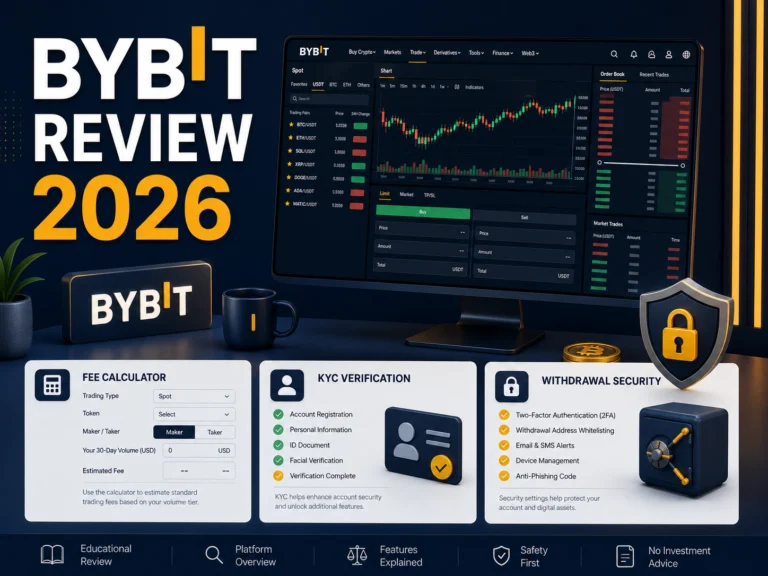
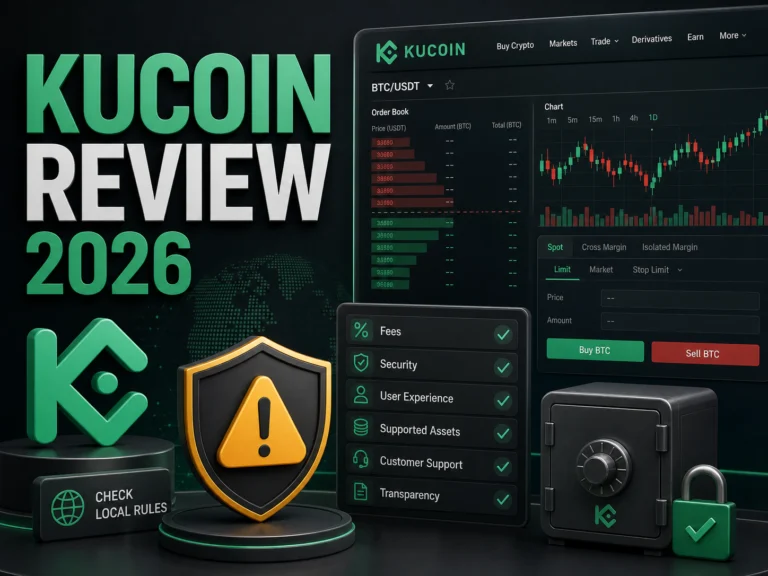
Overall, this Binance review considers Binance a capable option for beginners who want an exchange with room to grow, provided they keep the initial workflow simple and understand that trading features, exchange custody and leverage each carry different risks. For separate assessments of fees, safety and access, see our Bybit review and KuCoin review.
Written By: Trading Turtle Editorial Team
– Frequently Asked Questions (FAQs)
As of the most recent Trading Turtle review, Binance is accessible to Indian users for supported services and operates within India’s Virtual Digital Asset anti-money-laundering framework as an FIU-IND reporting entity.
FIU-IND registration relates primarily to obligations under India’s Prevention of Money Laundering Act, including KYC, record-keeping, reporting and AML/CFT compliance. It should not be interpreted as a blanket government approval of Binance, a guarantee of the platform’s safety, approval of cryptocurrency as an investment, or confirmation that every Binance product is available or permitted for every Indian user.
Binance previously faced FIU-IND action for operating without fulfilling its PMLA obligations and was penalised in June 2024. Its compliance position subsequently changed.
Indian users should therefore distinguish between:
- the exchange’s current India availability;
- its FIU-IND reporting status;
- the availability of a particular Binance product;
- India’s tax treatment of Virtual Digital Assets; and
- the fact that private cryptocurrencies are not legal tender in India.
Platform availability, product restrictions and regulatory requirements can change. Readers should verify the latest information with Binance and relevant Indian authorities before using a particular service.
Regulatory status last reviewed: September 2026.
Binance provides account-security controls, Proof of Reserves and SAFU, but no centralized crypto exchange should be described as risk-free. Users still face custody, phishing, operational, regulatory and market risks.
Binance’s 2026 documentation uses 0.10% maker and 0.10% taker as the typical standard Spot example. BNB discounts, VIP levels and temporary promotions can change the effective rate.
Binance allows account creation before full verification, but its documentation says trading and other activities are restricted until identity verification is completed.
Yes. Binance registered as a reporting entity with FIU-IND in 2024 and restored access for Indian users. Users should still check current product availability and compliance requirements.
Binance supports external crypto withdrawals for supported assets and networks. Users should verify the blockchain network, destination address and current withdrawal fee carefully before confirming a transfer.
There is no universal winner. This Binance review identifies Binance’s broad ecosystem as a major strength, but KuCoin and Bybit may better suit particular trading preferences. Trading Turtle will evaluate each exchange independently before publishing the direct comparison.