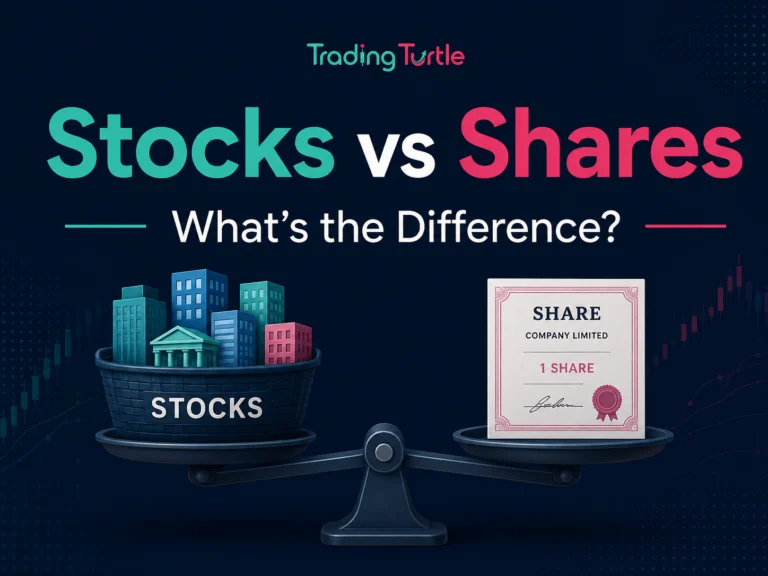
How to Invest in Stocks for Beginners: A Step-by-Step Guide


Learning how to invest in stocks for beginners starts with understanding that buying a share means buying a small ownership interest in a company. It is not about chasing tips, predicting tomorrow’s price, or copying someone else’s portfolio.
Affiliate note: This article contains an affiliate link. We may earn a commission if you open an account through it, at no extra cost to you.
A sensible approach to how to invest in stocks for beginners is to define your goals, understand your risk tolerance, use a regulated broker, learn basic research, and invest only money you can keep invested for an appropriate period. In India, investors generally need a bank account, a demat account to hold securities electronically, and an Upstox trading account with a SEBI-registered broker to place orders on recognised exchanges.
1. Decide Why You Want to Invest
Before deciding how to invest in stocks for beginners, identify the goal behind the investment.
Your goal influences how much risk you can take, how long you can stay invested, and how you should measure progress. “I want to make quick money” is not a reliable investment plan. A goal should be specific and connected to a time frame.
Examples of financial goals include:
- Building long-term wealth.
- Saving for retirement.
- Creating a future education fund.
- Building a house down-payment fund.
- Growing money beyond a traditional savings account.
- Learning how equity investing works with a small amount.
Write down three details before investing:
| Question | Why it matters |
|---|---|
| What is this money for? | Clarifies your investment objective |
| When will I need it? | Helps determine a suitable time horizon |
| How much loss can I handle emotionally and financially? | Helps define your risk tolerance |
Stocks may not be suitable for money required soon. Market prices can fall sharply over short periods, even for companies with strong long-term businesses.
2. Build Your Financial Base First
A common mistake when learning how to invest in stocks for beginners is investing before building basic financial stability.
Before buying stocks, consider whether you have:
- A cash buffer for emergencies.
- A plan for high-interest debt.
- Adequate insurance for important risks.
- Money available after essential expenses.
- A realistic monthly savings habit.
Do not use rent money, medical funds, loan repayments, or borrowed money to invest in stocks. SEBI’s investor guidance specifically advises investors not to borrow money for investment and not to rely on hot tips when making investment decisions.
Quick tip: Investing is easier to sustain when it comes from surplus money rather than money you may urgently need.
3. Understand Your Risk and Time Horizon
Stocks can deliver gains over time, but individual stock prices can also decline substantially. Your investment period and ability to tolerate temporary or permanent losses matter as much as selecting a company.
For a beginner, risk usually comes from five areas:
| Risk | What it means |
|---|---|
| Market risk | The entire market can decline |
| Company risk | A business can lose customers, profits, or competitive strength |
| Concentration risk | Too much money in one company or sector |
| Liquidity risk | It may be difficult to sell at the expected price |
| Behavioural risk | Fear, greed, panic selling, and tip-following can harm decisions |
A longer time horizon does not remove risk, but it can give an investor more time to handle normal market volatility. If you need the money within a short period, avoid assuming that stock prices will rise when you need to sell.
Read our guide on Risk Management before placing your first order.
4. Open a Demat and Trading Account
For Indian residents, the practical part of how to invest in stocks for beginners usually involves opening the required accounts through a SEBI-registered broker or depository participant.
You generally need:
- A savings bank account.
- A demat account for holding securities in electronic form.
- A trading or broking account for buying and selling securities.
- Completed Know Your Customer, or KYC, verification.
SEBI explains that a demat account is used to hold securities electronically, while a trading account with a SEBI-registered broker is used to buy and sell securities on stock exchanges.
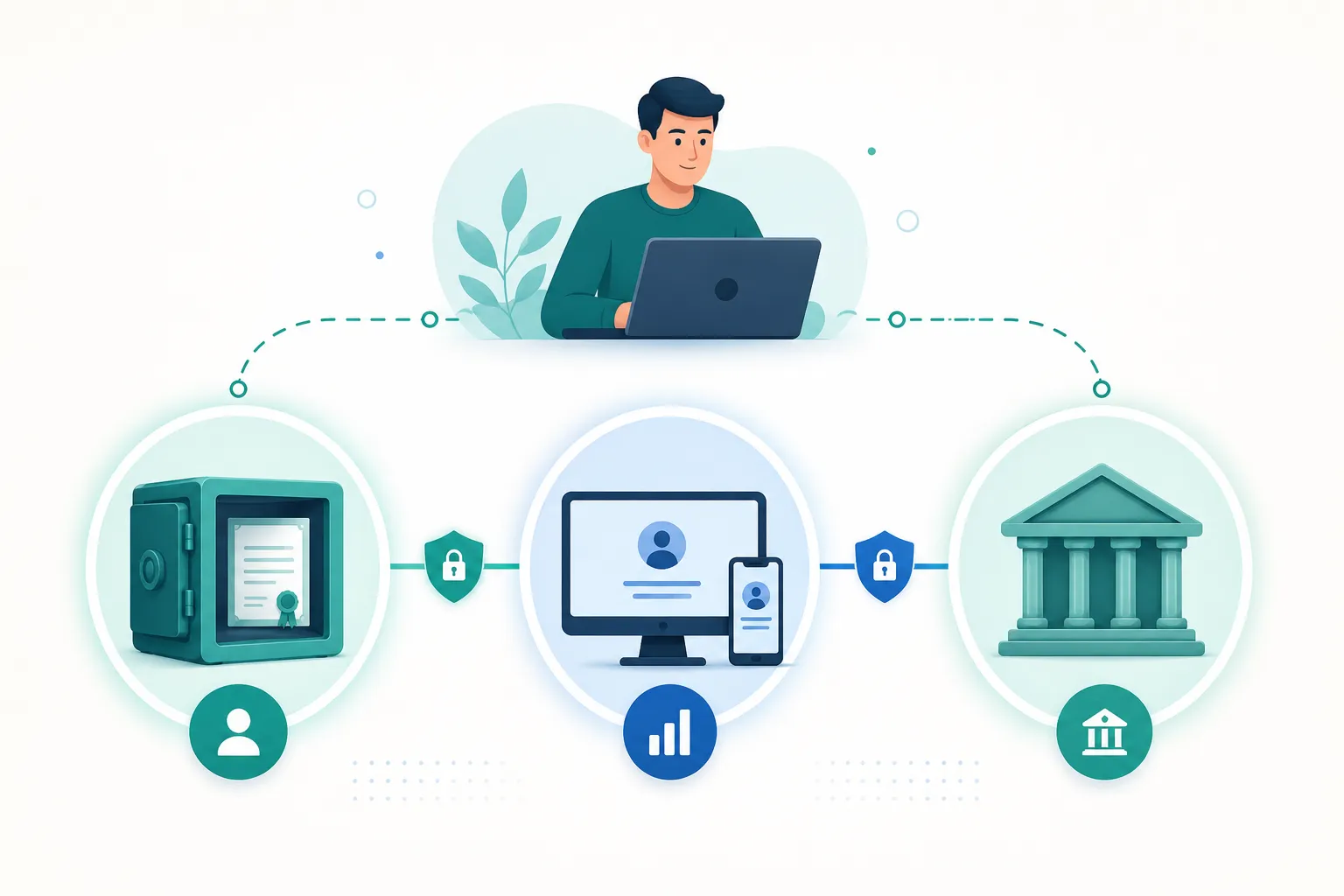
Basic Account-Opening Steps
- Choose a SEBI-registered broker or depository participant.
- Review account charges, brokerage, annual maintenance fees, and platform features.
- Complete KYC and account-opening forms.
- Submit required identity, address, bank, and tax documents as applicable.
- Link your bank account.
- Review the broker-client agreement and disclosures before accepting them.
- Activate two-factor authentication and use a unique password.
NSE states that a PAN card, bank account, demat account, KYC process, and SEBI-registered broker are key starting requirements for capital-market investors.
Do not choose a broker only because someone on social media claims it is “best.” Compare regulation, charges, service quality, platform stability, customer support, order types, and suitability for your own needs.
5. Learn the Basics Before Buying
Successful beginner stock investing is built on basic understanding, not speed.
Before investing, learn these terms:
| Term | Simple meaning |
|---|---|
| Share | A unit of ownership in a company |
| Stock exchange | A marketplace where listed securities are bought and sold |
| Market order | An order to buy or sell at the best available market price |
| Limit order | An order that specifies the price you are willing to accept |
| Dividend | A distribution a company may pay to shareholders |
| Market capitalisation | The market value of a company’s outstanding shares |
| Diversification | Spreading money across investments to reduce concentration risk |
| Volatility | How sharply and frequently prices move |
Start with these Trading Turtle guides:
6. Choose an Investing Approach
There is no single method that works for everyone. However, beginners should understand the difference between investing and frequent trading.
| Approach | General focus | Typical holding period | Main challenge |
|---|---|---|---|
| Long-term investing | Business quality and long-term goals | Years | Requires patience and discipline |
| Index investing | Broad market exposure through index funds or ETFs | Years | Still carries market risk |
| Dividend investing | Companies with dividend-paying histories | Years | Dividends are not guaranteed |
| Active stock picking | Selecting individual companies | Months to years | Requires more research and monitoring |
| Short-term trading | Price movements and market timing | Minutes to weeks | Higher complexity, costs, and emotional pressure |
For most people learning how to invest in stocks for beginners, a disciplined long-term approach can be easier to understand than daily trading. Frequent trading can add brokerage, taxes, errors, emotional decisions, and unnecessary complexity.
7. Research a Stock Before Buying
Before you buy a company’s shares, understand the business behind the ticker symbol.
Use this beginner research checklist:
- What does the company do?
Can you explain its product, service, customers, and business model in simple words? - How does it make money?
Look at revenue sources, pricing power, and dependence on a small number of customers. - Is the company profitable?
Review whether profits are stable, growing, or falling over time. - How much debt does it have?
Debt is not always bad, but high debt can increase financial pressure. - Who are the competitors?
Understand whether the company has a genuine advantage or operates in a highly competitive sector. - What can go wrong?
Consider regulation, debt, technology disruption, customer concentration, commodity costs, and management execution. - Is the valuation reasonable for your understanding?
Avoid assuming that an expensive-looking price per share means a company is expensive, or that a low share price means it is cheap.
Use company annual reports, exchange filings, investor presentations, earnings releases, and official company investor-relations pages. Avoid making decisions based only on influencers, Telegram messages, “multibagger” claims, or unverified screenshots.
8. Place Your First Stock Order Carefully
Once you understand the company and have decided the amount you are comfortable investing, you can place an order through your broker platform.
For a first investment, consider using a limit order if you have a specific maximum purchase price in mind.
Market Order vs Limit Order
| Order type | What happens | Best understood as |
|---|---|---|
| Market order | Seeks execution at the best available price | Prioritises execution |
| Limit order | Executes only at your chosen limit price or better | Prioritises price control |
A limit order may not execute if the market does not reach your selected price. A market order may execute at a price different from the one shown moments earlier, particularly in a fast-moving or low-liquidity market.
Read Market Order vs Limit Order and Bid-Ask Spread Explained before trading actively.
9. Build a Simple Portfolio
A portfolio is the collection of investments you own. In beginner stock investing, simplicity is often better than complexity.
Avoid putting all your money into one company, one sector, or one trend. A diversified portfolio can reduce dependence on a single outcome, though it cannot eliminate market risk.
Beginner-friendly portfolio principles include:
- Start with an amount you can genuinely afford to invest.
- Invest gradually instead of trying to perfectly predict the market.
- Avoid owning more companies than you can understand or monitor.
- Spread exposure instead of concentrating it in one idea.
- Review your holdings periodically, not obsessively every hour.
- Keep written reasons for every purchase.
Your aim is not to own every popular stock. Your aim is to build a portfolio that matches your goals, risk capacity, knowledge, and time horizon.
10. Track Costs, Records and Security
Investment returns are affected by more than the share price. Check brokerage, annual maintenance charges, statutory charges, taxes, and any other applicable fees before placing frequent orders.
SEBI advises investors to understand applicable charges, keep account statements and contract notes, pay through banking channels, monitor exchange SMS/email alerts, and never share passwords for online accounts.
Maintain a basic investment journal with:
- Purchase date.
- Company name.
- Number of shares.
- Purchase price.
- Reason for buying.
- Risks identified before buying.
- Intended holding period.
- Review date.
This creates accountability and makes it easier to learn from your decisions.
Common Beginner Mistakes
Investing Because a Stock Is Rising
A rising stock can keep rising, but it can also fall quickly. Momentum alone is not a complete investment thesis.
Buying Without Understanding the Business
If you cannot explain how a company makes money, you may not understand the risks you are accepting.
Overconcentrating in One Stock
A large allocation to one company can produce large gains or large losses. Diversification is a risk-control tool.
Checking Prices Constantly
Constant monitoring can lead to emotional reactions rather than rational review. Focus on your investment thesis and planned review dates.
Ignoring Account Security
Never share your password, OTP, PIN, or login access. Use strong passwords and multi-factor authentication.
Treating Investing as Guaranteed Income
Stocks can generate gains, losses, or long periods of flat performance. Never invest based on guaranteed-return language.
Key Takeaways
- Learning how to invest in stocks for beginners starts with goals, risk awareness, and financial stability.
- In India, investors generally need a bank account, demat account, and trading account with a SEBI-registered broker.
- Research the company, not only the stock price.
- Begin with a simple, diversified approach that fits your time horizon.
- Understand fees, keep records, and protect your account.
- Avoid borrowed money, tips, hype, and guaranteed-return claims.
- Stock investing involves risk, and no outcome is assured.
– Frequently Asked Questions (FAQs)
There is no universal minimum amount. Start only with money you can afford to keep invested and potentially lose without affecting essential expenses or emergency needs.
For most listed equity investing in India, securities are held electronically through a demat account. You also generally use a trading account with a registered broker to buy and sell shares.
The right choice depends on your knowledge, goals, time available for research, risk tolerance, and preference for direct versus professionally managed exposure. Mutual funds and stocks both involve risk.
Daily trading can be complex, fast-moving, and costly. Beginners should first understand market basics, order types, risk management, and how losses can occur before considering active trading.
Use a SEBI-registered broker or recognised intermediary. Verify registration status through official sources and carefully read all fees, agreements, and risk disclosures.
Educational disclaimer: This article is for educational purposes only. It is not personalised financial, investment, tax, or legal advice. Stock-market investments involve risk, and returns are not guaranteed.