Crypto Exchange Withdrawal Risk in India: What the Coinbase Outage Reveals

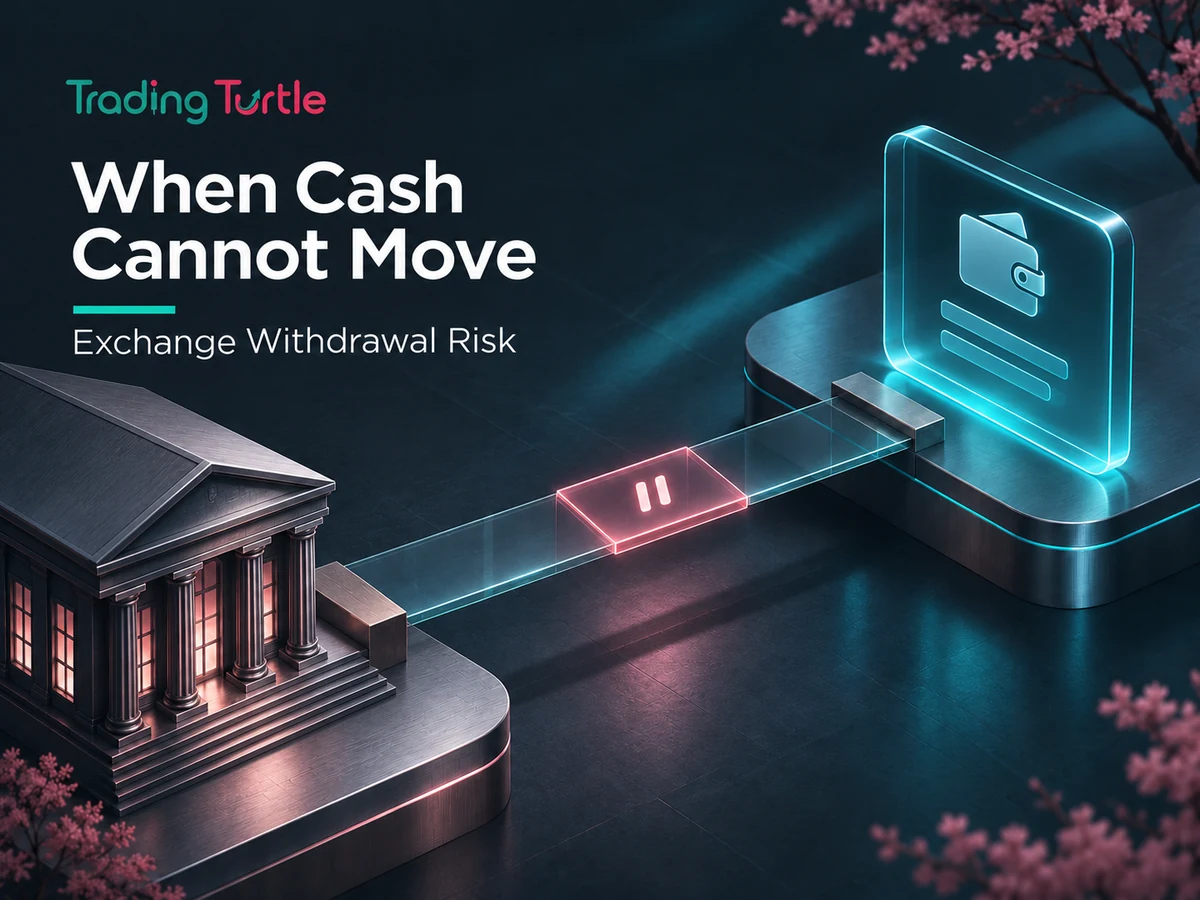
A crypto exchange can display a balance, accept deposits and still leave a customer unable to move rupees to a bank. The Coinbase India withdrawal interruption makes that distinction practical: access to money depends on the full payment chain, not simply the number shown inside an app.
This analysis examines crypto exchange withdrawal risk in India through the lens of that incident. The aim is to explain where access can fail, what evidence matters and how readers can assess operational exposure without confusing a payment disruption with a proven solvency problem.
Analysis date: 15 November 2026. The incident is a starting point for a broader risk framework. Examples below are hypothetical and do not describe undisclosed Coinbase balances, contracts or banking arrangements.
Table of Contents
- The incident and the question it raises
- Four different risks hidden inside one balance
- How a payout dependency can become a bottleneck
- Available balance is more useful than headline account value
- A decision framework during an interruption
- Why proof of reserves does not settle every question
- What a better recovery update should contain
- Three possible paths from here
- A practical checklist before the next deposit
- Frequently asked questions
The incident and the question it raises
Coinbase’s official status notice attributes its India INR withdrawal interruption to a banking partner outage. At review, the notice distinguished unavailable payouts from functioning deposits, UPI and bank linking, and offered no confirmed restoration deadline. Our news report covers the event itself.
The analytical question is broader: what does a customer actually own, where is it recorded and what must happen before it becomes usable money outside the exchange? Answering that requires separating several layers that a convenient interface brings together.
An app may let users trade around the clock while a payment dependency has its own operating constraints. A liquid market for a token does not establish a continuously available rupee payout. Similarly, a functioning bank deposit route does not establish that an outgoing route has recovered.
Four different risks hidden inside one balance
The first is market risk: the price of an asset can fall. The second is liquidity risk: an asset may be difficult to sell at an acceptable price. The third is access risk: the balance may exist but cannot currently be transferred as intended. The fourth is counterparty risk: the intermediary may fail to meet its obligations.
These categories can interact, but none automatically proves the others. A temporary payout interruption is evidence of an access problem. It is not, by itself, proof of missing reserves. Equally, an assurance about reserves does not answer how soon a customer can access a particular bank payment.
Suppose a user holds ₹30,000 in cash on an exchange and ₹20,000 of a token. The token price is relevant to the second holding; the payment route can affect both after conversion into rupees. Selling the token removes that token’s price exposure but does not necessarily remove the payout dependency.
That is why a balance sheet view and an operational view belong together. The first asks what is owed. The second asks whether the process needed to deliver it is working.
How a payout dependency can become a bottleneck
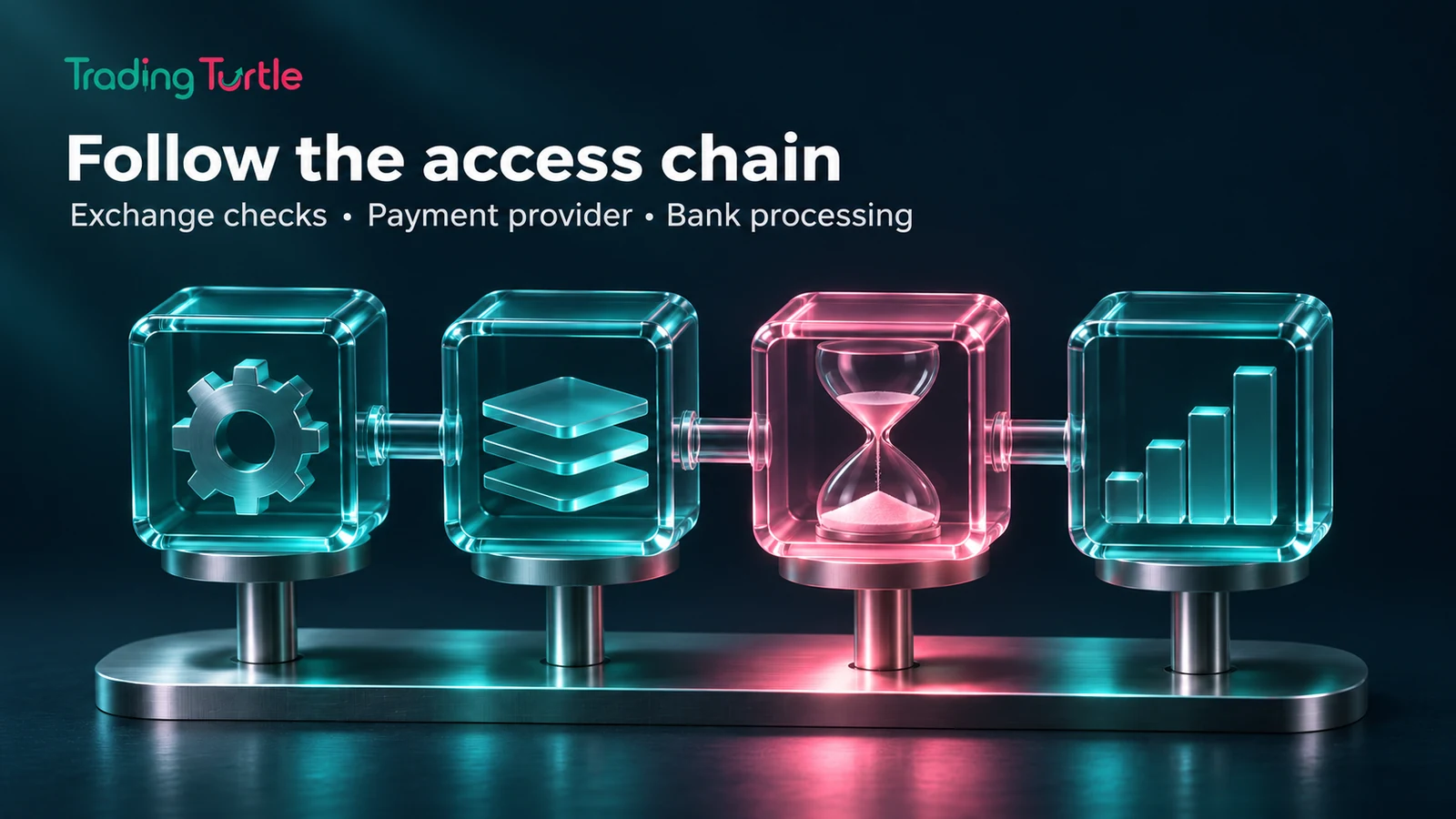
A simplified payout involves an exchange recording a request, checking it, instructing a payment provider and confirming that the bank route has completed. The customer sees the final result, but several systems may be involved before that point.
This is a general model, not a description of Coinbase’s private infrastructure. Its value is to show why apparently separate brands can share dependencies, and why an exchange’s trading engine can remain operational during a payment problem.
An alternative provider can potentially improve resilience, but only if it is genuinely independent and ready to process the relevant transaction type. Two commercial contracts do not guarantee two independent technical paths. Shared infrastructure, capacity limits or additional checks can still constrain the fallback.
Readers should therefore look for evidence of tested continuity rather than a vague promise of multiple partners. Useful questions include which services are covered, whether a backup is active and how the provider communicates queued transactions during a transition.
Available balance is more useful than headline account value
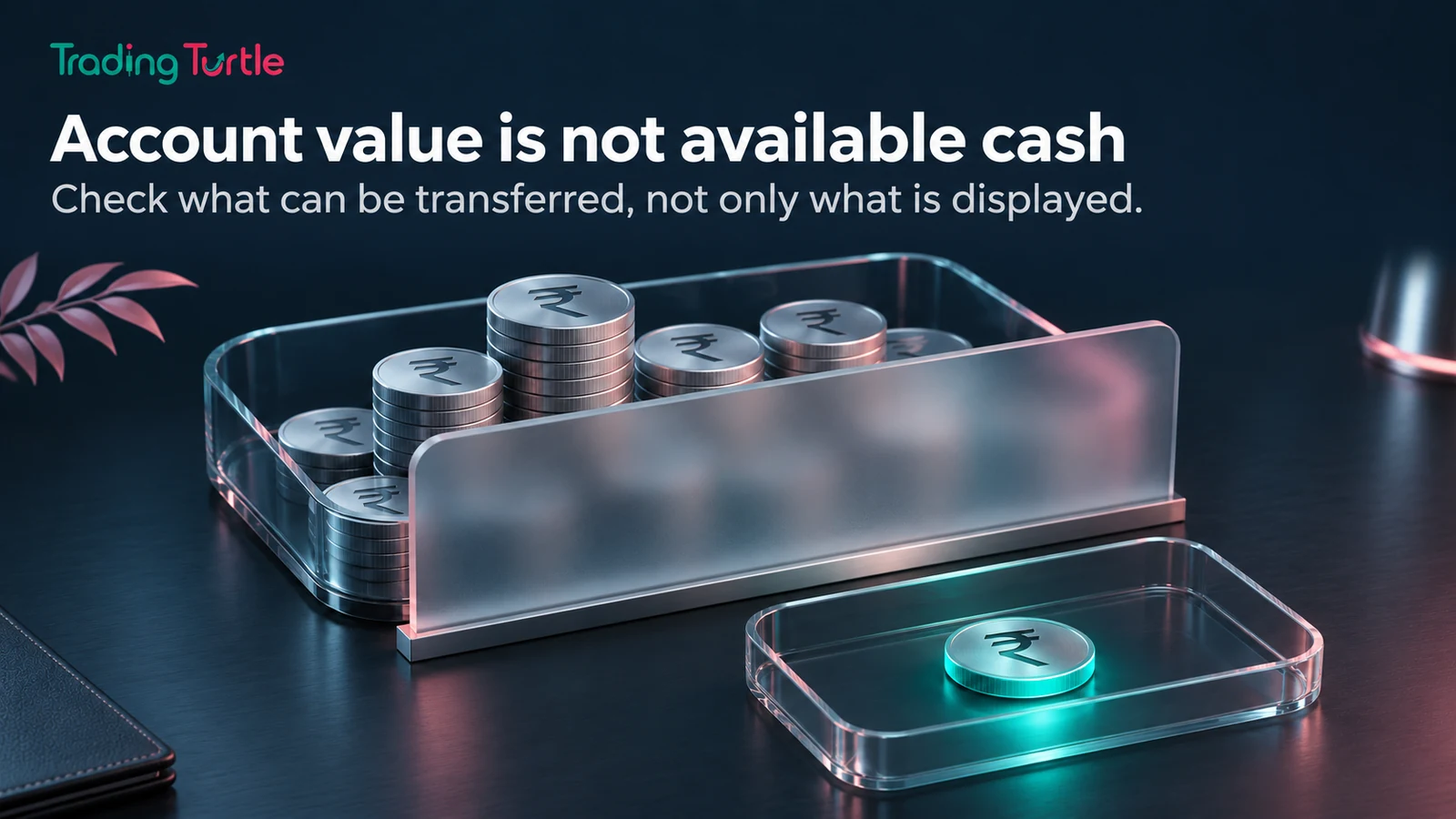
An account’s total value can include assets that are not immediately available for transfer. Coinbase’s balance guidance explains that holds and account conditions can affect transfer availability. Exact features and eligibility vary, so users should follow the information shown for their own account and region.
Consider a hypothetical account showing ₹50,000 in total value. If ₹15,000 is available for withdrawal and the rest is subject to a restriction, treating all ₹50,000 as immediately spendable would overstate accessible cash by ₹35,000. The example is arithmetic, not an assertion about a particular customer.
The same distinction applies when assessing an emergency reserve. A holding may be valuable and still be unsuitable for a bill due today. Matching the accessibility of money to the timing of obligations is a basic planning exercise, independent of any opinion about crypto prices.
A decision framework during an interruption
First establish what is affected. Is the notice about INR withdrawals, a particular blockchain network, deposits or the entire account? Similar wording on social media can conceal different incidents.
Next record the status of your own transaction. Keep the request time, reference, amount and any official response. Avoid public screenshots that expose personal or account details. A support case is easier to trace when its facts are complete and consistent.
Then distinguish a provider-wide interruption from an account-specific review. Both can exist at the same time. The existence of one should not be used to dismiss the other, particularly if the app provides a specific explanation.
Finally, evaluate alternatives by their entire cost and risk. Buying an asset, transferring it and selling elsewhere introduces execution costs, network risk, counterparty exposure and potentially tax consequences. Those consequences depend on jurisdiction and circumstances; an improvised workaround should not be presented as universally suitable.
Why proof of reserves does not settle every question
Reserve disclosures can contribute to an assessment, but a customer needs to understand what the evidence actually covers. An asset snapshot, liability assessment, legal claim and functioning payout process answer different questions.
For example, confirming that a wallet held an asset at a particular time does not independently establish every customer liability or every obligation elsewhere in a business. Conversely, a payment outage can occur without a change in the quantity of a blockchain asset.
The useful approach is to avoid treating one reassuring metric as a universal certificate. Ask about the scope, observation date, methodology and exclusions. If those are missing, record the limitation rather than substituting an assumption.
Our Blockchain Basics resources explain the difference between publicly observable network records and the broader business arrangements around them.
What a better recovery update should contain
A good update should specify which service has resumed, whether new requests can be submitted and what customers with older pending requests should expect. It should distinguish processing a backlog from normal operation.
The evidence should also be consistent across the status page, app and support communication. Conflicting instructions increase the chance of duplicate requests or unnecessary transfers. When a timetable is uncertain, an honest explanation is more useful than a deadline that is repeatedly moved without context.
For a customer, the final confirmation remains the actual transaction outcome. A notice saying that infrastructure is operational does not settle every individual request. Check the exchange record and the receiving bank entry before treating the matter as complete.
Three possible paths from here
In a straightforward recovery, the payment route resumes, pending requests are reconciled and customers receive clear confirmation. The key evidence is completed processing, not simply a more optimistic message.
In a slower recovery, new payments may resume while older requests still need reconciliation. That would make the age and status of the backlog important. It would not justify assuming that every user has the same remaining wait.
In a recurring-disruption scenario, reliability becomes a persistent product issue. Users would then need to evaluate the service against their own access requirements, and the exchange would face questions about redundancy and communication. This is a scenario framework rather than a prediction that any of these outcomes will occur.
A practical checklist before the next deposit
Check the current withdrawal methods, applicable limits and expected processing times. Read the account’s availability message rather than relying on a general marketing page. Confirm the support route before a problem makes it urgent.
Decide which funds are intended for risk-taking and which must remain available for ordinary commitments. Avoid adding leverage to solve an access problem: a leveraged position adds an obligation without restoring the payment rail.
If exploring self-custody, learn the responsibilities first. Controlling keys changes the custody arrangement but introduces backup, address, network and signing risks. It does not eliminate the need for a reliable fiat conversion route when rupees are required.
Trading Turtle’s Crypto Wallets and Risk Management guides can support that learning. The central lesson is to assess accessibility as deliberately as price and fees.
Frequently asked questions
Does an INR withdrawal outage prove an exchange is insolvent?
No. It establishes a service interruption, not a complete financial diagnosis. Solvency requires evidence about assets, liabilities and obligations. Customers should still take access limitations seriously and follow documented updates.
Can deposits work while withdrawals do not?
Yes. Incoming and outgoing payments can depend on different processes. Always check the specific service required rather than assuming one successful transaction proves that every route is available.
Is buying crypto a reliable way around a cash withdrawal delay?
It is not a universal solution. Trading, transfer restrictions, network selection, fees, price movements and the receiving platform all affect the outcome. Evaluate the complete route before taking an irreversible action.
Does self-custody remove every withdrawal risk?
No. It changes who controls the keys and adds operational responsibilities. Converting assets into bank money can still require an intermediary and a functioning payment route.
Sources and method: Coinbase status notice and available-balance guidance, reviewed 15 November 2026. The layered-risk framework, examples and scenarios are Trading Turtle’s analysis. No private banking architecture or customer records were accessed. Educational information only; no guarantee of access, recovery time or investment outcome is implied.