Crypto Wallet Safety: How Seed Phrases, Private Keys and Self-Custody Work

What is crypto wallet safety?
Crypto wallet safety is the process of protecting the credentials, devices, applications, and decisions that allow access to digital assets.
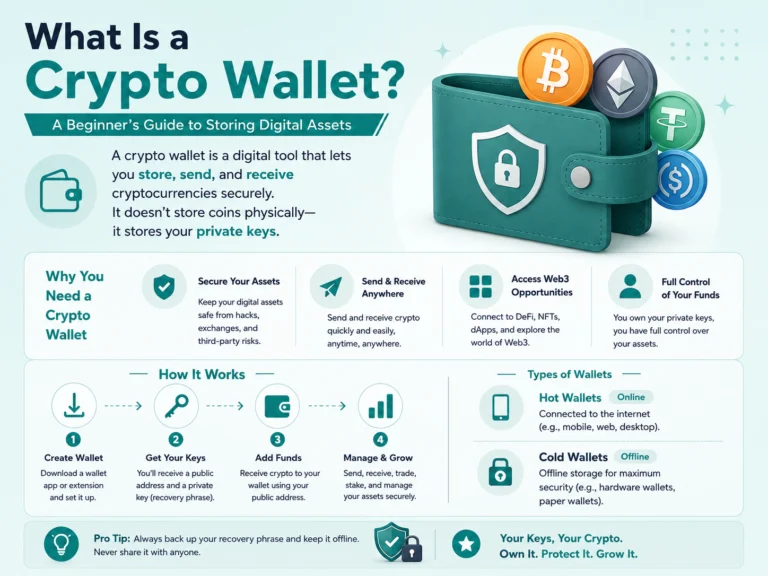
A wallet does not usually store cryptocurrency in the same way a physical wallet stores cash. Blockchain networks record asset balances and transaction history, while the wallet manages the private keys used to authorise transfers.
The private key is therefore the critical security element. If another person obtains it, they may be able to move the assets associated with the relevant address. If the key is lost and no valid recovery method exists, the user may permanently lose access.
NIST explains that a stolen private key can give an attacker access to all assets controlled by that key, while a lost key can make the associated assets inaccessible.
Good crypto wallet safety is not limited to selecting a hardware device or downloading an application. It involves the complete chain of custody:
- How the wallet was created.
- Where the private key is stored.
- How the recovery phrase is backed up.
- Which devices are used.
- How transactions are reviewed.
- How online threats are identified.
- What happens if the device is lost or compromised.
Education-only disclaimer: This article is for general educational purposes only. It is not financial, investment, legal, tax, or professional cybersecurity advice. Crypto assets can be permanently lost through theft, fraud, user error, device damage, platform failure, or loss of access credentials. Never share a private key or seed phrase.
Private keys and seed phrases
What is a private key?
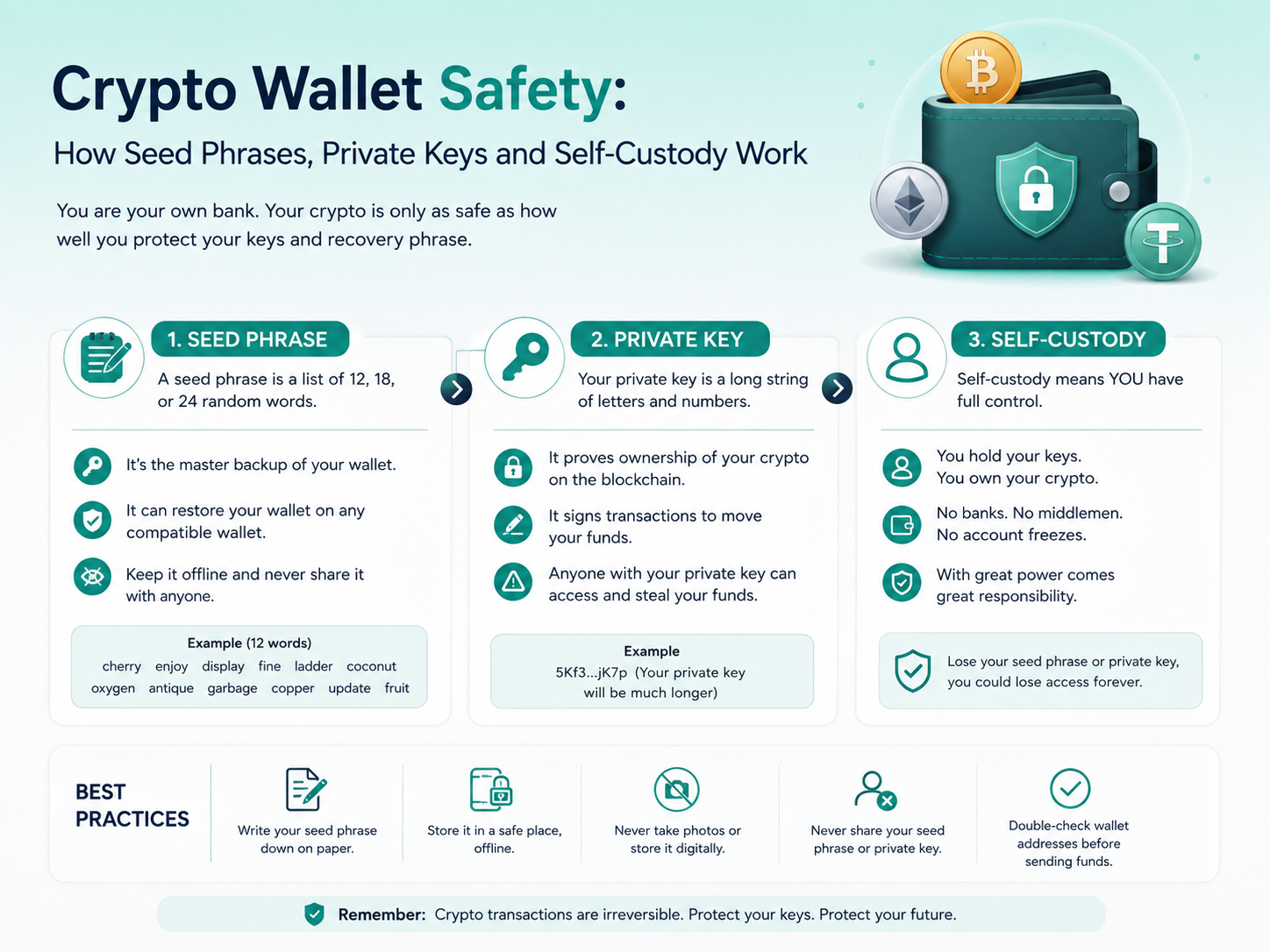
A private key is a secret cryptographic value that authorises blockchain transactions. It should remain known only to the person or system responsible for controlling the wallet.
A wallet address can usually be shared to receive assets. A private key must never be shared to prove ownership, unlock rewards, verify an account, or receive customer support.
Anyone who asks for a private key or seed phrase should be treated as potentially fraudulent. The CFTC specifically warns users not to give these credentials to anyone.
What is a seed phrase?
A seed phrase, also called a recovery phrase or backup phrase, is a sequence of words that can restore a self-custody wallet or recreate the keys associated with it.
The phrase is not an ordinary password. It is often the master backup for multiple addresses and assets. Someone who obtains it may be able to restore the wallet on another device and transfer the assets.
Investor.gov describes a seed phrase as a sequence of words that can restore a wallet if the private key, hardware, or software is lost or damaged. It also advises users to store the phrase securely and never share it.
How to protect a seed phrase
A reliable backup should be:
- Kept offline.
- Protected from unauthorised access.
- Protected from fire, water, and physical damage.
- Stored in a location that can be accessed when needed.
- Excluded from screenshots, cloud storage, email, and messaging apps.
Do not type a seed phrase into a website unless you are intentionally restoring a wallet through a verified official application. A website requesting the phrase to “synchronise,” “verify,” or “unlock” a wallet is a serious warning sign.
How self-custody works
Self-custody means the user controls the private keys rather than relying on a third-party platform to manage them.
This arrangement can provide direct control over transfers and reduce dependence on an exchange or custodian. It also means there may be no central support team capable of resetting a forgotten credential or reversing a transaction.
Benefits of self-custody
Self-custody may provide:
- Direct control over private keys.
- The ability to send assets without requesting a platform withdrawal.
- Reduced dependence on a single exchange.
- Greater control over transaction approval.
- The ability to choose different storage and backup arrangements.
Responsibilities of self-custody
The user must also manage:
- Private-key protection.
- Seed-phrase backups.
- Device security.
- Transaction verification.
- Application permissions.
- Recovery planning.
- Physical access.
- Emergency procedures.
The central principle of crypto wallet safety is that control and responsibility are connected. The more direct control a user has, the more carefully the user must manage the security process.
Custodial alternatives
With third-party custody, an exchange, wallet provider, or other platform may control the private keys. This can provide account recovery, password resets, and a simplified user experience.
However, the user depends on the platform’s security, solvency, withdrawal procedures, internal controls, and operational continuity. Custody does not remove risk; it changes the type of risk.
Common threats to wallet security
Phishing scams
Phishing scams use fake websites, messages, emails, advertisements, social-media accounts, or support agents to trick users into revealing credentials or approving transactions.
A message may claim:
- Your wallet has been suspended.
- A transaction requires urgent approval.
- You have received a reward.
- Your account needs verification.
- Your assets will be lost unless you connect immediately.
- Customer support needs your seed phrase.
The safest response is to close the message and independently navigate to the official website or application. Do not use the links, QR codes, or phone numbers provided in an unexpected message.
The CFTC advises users not to click links, open attachments, or use QR codes in urgent messages about trading accounts, transactions, wallets, or new products.
Fake support agents
Scammers often impersonate wallet providers, exchanges, developers, or security teams. They may contact users through social media, messaging platforms, email, or fake live-chat pages.
A genuine support representative should not ask for:
- A seed phrase.
- A private key.
- A password.
- A multi-factor authentication code.
- Remote access to your device.
- A transfer to a “verification” wallet.
If support is necessary, find the official support route independently instead of replying to an unsolicited message.
Malicious wallet applications
A fake wallet application may look similar to a legitimate one but send private keys to an attacker or alter transaction details.
Download wallet software only from the verified official source. Check the developer information, domain name, application publisher, update history, and community warnings. Avoid relying only on a search advertisement.
Malicious smart-contract approvals
A wallet may be used to interact with decentralised applications and smart contracts. Signing a transaction can grant permissions or transfer assets depending on the contract’s design.
Do not approve a transaction simply because a website displays a familiar logo. Read the request carefully, check the domain, confirm the network, and understand whether the action is a transfer, approval, permission change, or contract interaction.
Clipboard and address manipulation
Malware can replace a copied wallet address with an attacker’s address. This is why users should compare the address shown on the sending device with the intended address before confirming.
For higher-value transfers, verify the beginning and end of the address and consider using a previously verified address book or withdrawal whitelist where available.
Physical theft and loss
A hardware wallet can be lost or stolen. A phone or laptop can be damaged, infected, or accessed by another person.
The recovery phrase is usually more important than the physical device. A device may be replaced if the backup is secure, but a compromised or lost seed phrase may expose the entire wallet.
Practical crypto wallet safety controls
Use layered security
A strong setup does not rely on one control. Combine:
- Strong, unique passwords.
- Multi-factor authentication on custodial accounts.
- Device encryption and screen locks.
- Regular operating-system and wallet updates.
- Withdrawal address controls.
- Separate email accounts for important financial services.
- Limited API permissions.
- Offline recovery backups.
- Transaction notifications.
- Regular account reviews.
These controls reduce the likelihood that one compromised password or device will expose everything.
Separate active and long-term storage
Many users divide their assets according to purpose. A small amount may be kept in a hot wallet for regular use, while less frequently accessed assets may be kept in a cold-storage arrangement.
This can reduce the amount exposed during a routine interaction with a decentralised application. It does not eliminate risk, and it creates additional recordkeeping and recovery responsibilities.
Test recovery carefully
Before storing significant value, understand how the wallet is restored. Use official documentation and confirm that the recovery process is valid.
A recovery plan should answer:
- Where is the backup stored?
- Who can access it?
- What happens if the device is lost?
- What happens if the primary user becomes unavailable?
- Which wallet software is compatible?
- Are all networks and assets supported after recovery?
Do not test recovery by entering the seed phrase into an unverified website or unfamiliar device.
Safe transaction practices
Transaction security is a major part of crypto wallet safety because users can lose assets even when the wallet itself has not been hacked.
Before approving a transaction, confirm:
- The website or application is genuine.
- The wallet is connected to the correct network.
- The recipient address is accurate.
- The asset and amount are correct.
- The fee is reasonable.
- The transaction type is understood.
- Any token approval or permission request is necessary.
- The destination platform supports the asset and network.
For a first transfer, a small test transaction may reduce the impact of an address or network error. It does not guarantee recovery and may involve additional fees.
Avoid rushing. Urgency is a common feature of crypto scams. If a message claims you must act immediately to protect funds, independently verify the claim before doing anything.
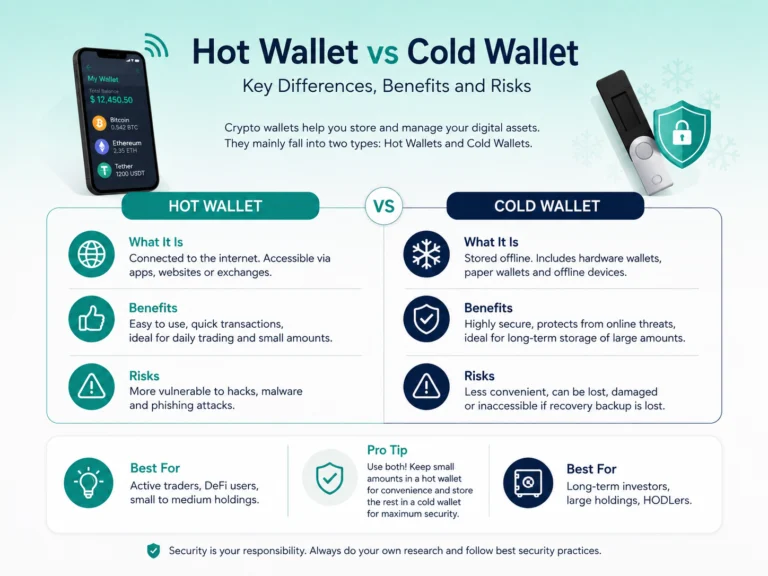
Hot and cold wallet protection
Hot and cold wallets require different security priorities.
A hot wallet should be treated as an active spending or interaction account. Keep its balance limited, use it only on a trusted device, and avoid connecting it to unfamiliar applications.
A cold wallet should be treated as a long-term key-management system. Verify the device, protect the PIN, check transaction details on the device screen, and secure the recovery phrase separately.
A hardware wallet can reduce some remote attack risks, but it cannot protect a user who reveals the seed phrase or approves a malicious transaction. Cold storage is a security layer, not a complete security solution.
What to do if a wallet may be compromised
If you believe a seed phrase or private key has been exposed, treat the wallet as compromised.
The priority is to create a new wallet using a trusted process and move remaining assets to the new address, provided it is safe to do so. Do not continue using a compromised wallet for convenience.
Also consider:
- Disconnecting the wallet from suspicious applications.
- Revoking unnecessary token approvals through a trusted method.
- Changing passwords for connected custodial accounts.
- Removing malicious browser extensions.
- Reviewing account and transaction history.
- Contacting the official platform through an independently verified channel.
- Preserving evidence if fraud occurred.
- Reporting the incident to relevant authorities or service providers.
Do not send additional crypto to a person promising to recover stolen funds for an upfront payment. Recovery scams often target victims after the original loss.
Key takeaways
- Crypto wallet safety begins with protecting the private keys and recovery information that control access to digital assets.
- A seed phrase can restore a self-custody wallet and should be treated as highly sensitive secret information.
- Self-custody provides direct control but also places responsibility for backups, transaction approval, and security entirely on the user.
- Phishing, fake support agents, malicious applications, incorrect addresses, and unsafe smart-contract approvals are common wallet threats.
- Hardware wallets can reduce some online risks but cannot protect against a leaked seed phrase or a malicious transaction approved by the user.
- A secure wallet setup includes strong authentication, offline backups, transaction verification, limited exposure, and a tested recovery process.
– Frequently Asked Questions (FAQs)
Never share your private key or seed phrase. These credentials can provide access to the assets controlled by the wallet, and legitimate support services should not request them.
A seed phrase generally cannot be changed like an ordinary password. If it is exposed, creating a new wallet and transferring the assets may be necessary, provided the remaining assets are secure.
No. A hardware wallet may reduce some online threats, but it cannot prevent seed-phrase theft, phishing, malicious transaction approval, physical loss, or incorrect transfers.
Most confirmed blockchain transactions are difficult or impossible to reverse. Recovery may depend on the recipient, receiving platform, blockchain design, and circumstances.
No. Online storage can expose the phrase to account compromise, malware, unauthorised access, or cloud breaches. Use a secure offline backup method appropriate for your circumstances.
Do not provide it. End the conversation, avoid the supplied links, and contact the service through an independently verified official channel if you need assistance.