Hot Wallet vs Cold Wallet: Key Differences, Benefits and Risks

Hot wallet vs cold wallet explained
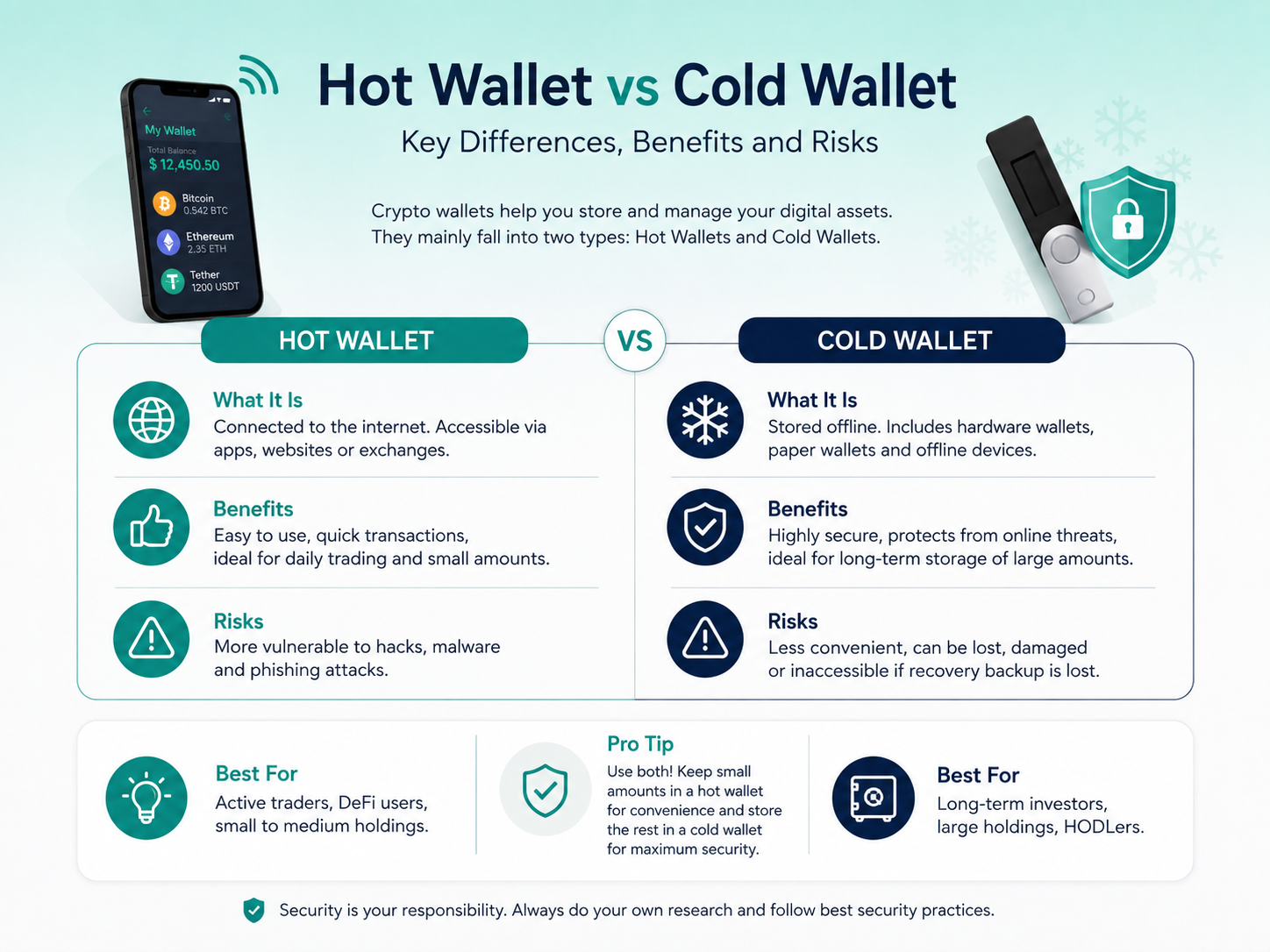
The simplest explanation of hot wallet vs cold wallet is connectivity.
A hot wallet is connected to the internet or designed for regular online access. A cold wallet is kept offline or isolated from the internet when it is not being used to approve a transaction.
The difference affects convenience and security:
- Hot wallets are easier to access and use for frequent transfers or decentralised applications.
- Cold wallets generally reduce exposure to online attacks but require more careful physical handling and recovery planning.
Investor.gov defines a hot wallet as a wallet connected to the internet and a cold wallet as a wallet that is generally not connected to the internet. It notes that hot wallets provide convenience but increase exposure to cyberthreats, while cold wallets are usually less convenient but generally less exposed to online attacks.
The comparison is not about choosing a universally “safe” or “unsafe” wallet. It is about matching the storage method with the purpose and risk profile of the assets.
Education-only disclaimer: This article is for general educational purposes only. It is not financial, investment, legal, tax, or cybersecurity advice. Crypto wallets can be lost, damaged, hacked, compromised, or permanently rendered inaccessible. Never share a private key or recovery phrase.
What is a hot wallet?
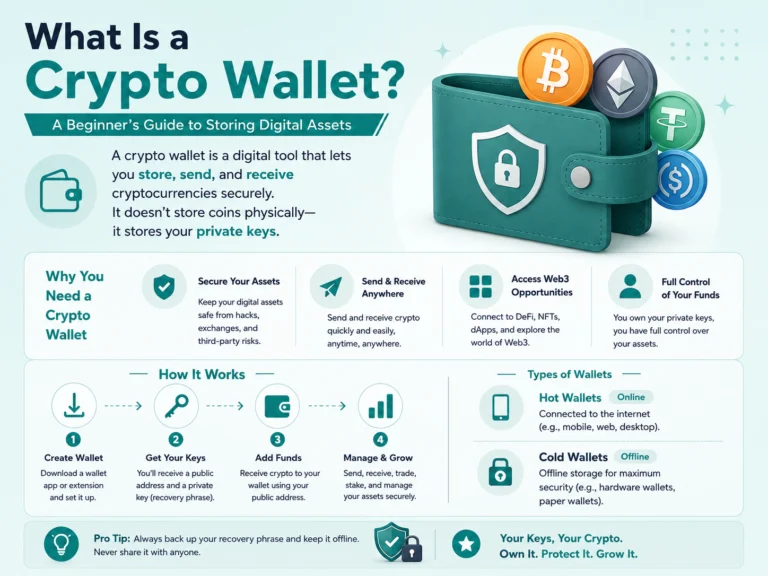
A hot wallet is a crypto wallet that remains connected to the internet or can quickly connect to online services. Common examples include:
- Mobile wallet applications.
- Desktop wallet software.
- Browser-extension wallets.
- Web-based wallets.
- Exchange-linked wallets.
- Wallets used to interact with decentralised applications.
Hot wallets are designed for accessibility. A user can often send, receive, swap, or sign blockchain transactions quickly without connecting a separate physical device.
How hot wallets work
A hot wallet manages private keys on an internet-connected device or through an online platform. When the user approves a transaction, the wallet signs the request and broadcasts it to the relevant blockchain network.
The private key should remain hidden from the user interface and from third parties. However, an internet-connected device may be exposed to malicious software, fake applications, phishing websites, browser vulnerabilities, clipboard manipulation, or unauthorised access.
This makes the security of the device, operating system, browser, wallet application, and user behaviour important.
When a hot wallet may be useful
A hot wallet may be practical for:
- Small balances used for regular transactions.
- Testing decentralised applications.
- Receiving payments.
- Participating in blockchain activities.
- Moving assets between services.
- Users who require quick access.
Convenience is the main advantage. The trade-off is that a hot wallet may present a larger online attack surface than an offline storage arrangement.
What is a cold wallet?
A cold wallet is designed to keep private keys offline or separated from an internet-connected environment. It may be a hardware wallet, an offline signing system, or another arrangement in which the key is not continuously exposed online.
A hardware wallet is a specialised device that helps generate, protect, and use private keys. In many designs, a transaction is prepared on an online device and then approved on the hardware device.
How cold wallets work
A typical cold-wallet transaction may follow this process:
- The user creates a transaction on an online computer or phone.
- The transaction is transferred to the offline or hardware wallet.
- The user checks the transaction details on the wallet device.
- The private key signs the transaction within the protected environment.
- The signed transaction is returned to the online device.
- The online device broadcasts it to the blockchain network.
The private key is intended to remain isolated from the internet. However, the security outcome depends on authentic hardware, correct setup, secure backups, careful transaction verification, and protection of the recovery phrase.
When a cold wallet may be useful
A cold wallet may be considered for:
- Assets intended for longer-term storage.
- Balances that do not require frequent transactions.
- Users who want to reduce direct online exposure.
- Higher-value holdings where additional security controls are appropriate.
- Self-custody arrangements with a documented backup process.
Cold storage is not automatically suitable for every person. A user who cannot safely manage a device, PIN, recovery phrase, and backup may create a different type of risk.
Hot wallet vs cold wallet: key differences
| Feature | Hot wallet | Cold wallet |
|---|---|---|
| Internet connection | Connected or readily connected | Usually offline when not signing |
| Convenience | High | Lower |
| Transaction speed | Usually quick | Requires additional physical steps |
| Online attack exposure | Generally higher | Generally lower |
| Physical-loss risk | Device or account risk | Device, backup, and recovery risk |
| Best suited to | Frequent access and smaller active balances | Less frequent access and longer-term storage |
| Main user responsibility | Device and online-security protection | Device, seed phrase, physical security, and recovery |
| Smart-contract access | Usually convenient | Requires deliberate approval and device confirmation |
The table is a general educational comparison. Wallet designs differ, and a third-party custodian may use a combination of hot and cold storage internally.
Benefits and limitations of hot wallets
Benefits of hot wallets
The main advantage of a hot wallet is accessibility. The user can often connect to a decentralised application, scan a payment code, or send assets without retrieving a separate device.
Hot wallets can also be useful for learning. A beginner can observe transaction requests, network fees, wallet addresses, and smart-contract interactions in a relatively simple interface.
For active traders, a hot wallet or exchange account may reduce operational friction. However, faster access can also make impulsive transfers and unsafe approvals easier.
Limitations of hot wallets
A hot wallet may be exposed to:
- Phishing pages.
- Malicious browser extensions.
- Fake wallet applications.
- Malware and keyloggers.
- Compromised email or device accounts.
- Clipboard-address replacement.
- Malicious smart contracts.
- Unauthorised account access.
A hot wallet should not be treated as a bank account with automatic protection. The security of the wallet depends on the device, application, private-key management, authentication controls, and user decisions.
Benefits and limitations of cold wallets
Benefits of cold wallets
The main advantage of a cold wallet is reduced online exposure. If the private key remains offline, certain remote attacks become more difficult.
A cold wallet can also add a deliberate pause before a transaction is approved. The user may need to connect the device, review the recipient address, confirm the network, and physically approve the transaction.
That extra friction can reduce impulsive transfers and make unexpected transaction requests easier to notice.
Limitations of cold wallets
Cold-wallet risks include:
- Buying a tampered or counterfeit device.
- Losing the physical device.
- Damaging the device without a backup.
- Losing or exposing the recovery phrase.
- Forgetting the PIN or recovery process.
- Approving a malicious transaction after connecting the device.
- Sending assets through the wrong network.
- Assuming that offline storage protects against every form of fraud.
Investor.gov warns that cold-wallet devices can be lost, damaged, or stolen, potentially resulting in permanent loss of access. It also notes that self-custody means the user has sole responsibility for private-key security.
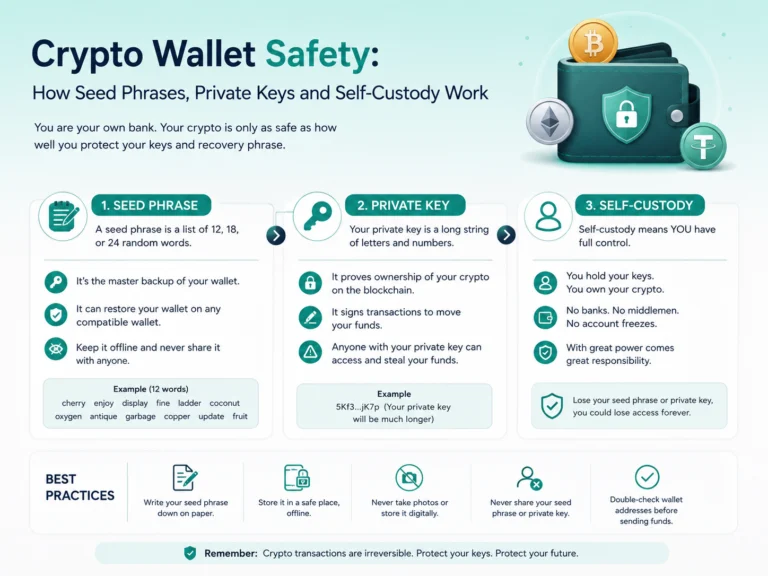
How private keys and seed phrases affect security
The most important part of hot wallet vs cold wallet security is not the product label. It is the protection of the private key.
A private key is the secret credential that authorises transactions from an associated blockchain address. Anyone who obtains it may be able to transfer the assets linked to that address.
A seed phrase or recovery phrase can recreate the wallet’s private keys in many self-custody systems. Therefore, the phrase should be treated as the master backup—not as an ordinary password.
Good seed-phrase practices
A self-custody user should:
- Write the recovery phrase carefully and verify it.
- Keep it offline and protected from unauthorised access.
- Store it in a location protected from fire, water, and physical damage.
- Never photograph or upload it.
- Never type it into a website or send it through a message.
- Avoid storing the only copy in one vulnerable location.
- Test the documented recovery process before storing significant value.
Do not share a seed phrase with anyone claiming to be from wallet support. A legitimate service should not request it.
Which wallet should you use?
There is no universal answer to hot wallet vs cold wallet. The appropriate arrangement depends on how the assets will be used and how responsibly the user can manage security.
A person making frequent small transactions may prioritise accessibility. A person holding assets that do not need regular movement may prioritise reduced online exposure.
Some users divide responsibilities rather than selecting only one wallet:
- A hot wallet for limited transaction funds.
- A cold wallet for assets intended to remain offline.
- A separate wallet for interacting with unfamiliar applications.
- A custodial platform for trading, subject to platform and counterparty risk.
This approach can reduce concentration risk, but it also increases the need for accurate records and secure backups. More wallets do not automatically mean more safety if the user loses track of addresses, networks, or recovery information.
Practical wallet-security framework
The hot wallet vs cold wallet decision should be part of a wider custody plan.
For hot wallets
Use only official wallet software and verify the correct website or application source. Keep the balance limited to what is needed for active use. Protect the device with a strong passcode, updated software, and reputable security controls.
Before connecting a hot wallet to a decentralised application, check the domain and understand the requested permissions. Avoid signing a transaction that you cannot explain.
For cold wallets
Purchase hardware only through a trusted and verifiable source. Follow the manufacturer’s setup process, inspect the device, and generate the recovery phrase according to the official instructions.
Confirm transaction details on the hardware device itself. Do not assume that an offline private key makes every transaction safe; the user can still approve a malicious transfer.
For custodial wallets
Research the platform, custody model, withdrawal rules, security controls, jurisdiction, and recovery process. Use strong authentication and do not treat an exchange balance as identical to self-custody.
Investor.gov recommends carefully researching third-party custodians, using strong passwords and multi-factor authentication, protecting private information, and watching for phishing scams.
Common mistakes in hot wallet vs cold wallet decisions
People often make avoidable mistakes because they focus on the device instead of the entire custody process.
One mistake is storing a large balance in a hot wallet simply because it is convenient. Another is buying a cold wallet but storing the recovery phrase in an online document. Some users protect the device but approve every smart-contract request without reading it.
Other problems include sending assets over an unsupported network, failing to test recovery, keeping the only backup in one location, or sharing wallet information publicly.
A cold wallet can reduce certain cyberthreats, but it cannot correct a wrong address or protect a user who voluntarily gives away the recovery phrase. A hot wallet can be useful for active transactions, but convenience should not be confused with security.
Key takeaways
- The main difference in hot wallet vs cold wallet storage is whether the wallet is connected to the internet.
- Hot wallets are generally more convenient for frequent transactions, while cold wallets are designed to reduce online exposure.
- A cold wallet is not automatically risk-free; loss, physical damage, theft, incorrect setup, and seed-phrase exposure can still cause permanent loss.
- A hot wallet may be suitable for smaller, active balances, while offline storage may be considered for assets that do not need frequent access.
- The safest arrangement depends on the user’s purpose, technical ability, custody model, transaction frequency, and backup practices.
- Neither wallet type protects users from every risk. Address errors, malicious approvals, platform failure, phishing, and poor key management remain important concerns.
– Frequently Asked Questions (FAQs)
A cold wallet is generally less exposed to online threats because it is not continuously connected to the internet. However, it can still be lost, damaged, stolen, incorrectly configured, or compromised through recovery-phrase exposure.
Not necessarily. The decision depends on transaction frequency, asset value, technical ability, custody preferences, and backup quality. Some users keep a limited active balance in a hot wallet and store less frequently used assets offline.
A hot wallet may be compromised through phishing, malware, a fake application, a vulnerable device, malicious browser activity, or unauthorised access. Strong device security and careful transaction review can reduce some risks but cannot eliminate them.
A cold wallet may reduce remote online exposure, but it is not immune to every attack. A user may be tricked into revealing the seed phrase, approving a malicious transaction, or using a counterfeit or compromised device.
If the recovery phrase is securely backed up, a replacement compatible wallet may allow the user to restore access. If both the device and recovery phrase are lost, the assets may become permanently inaccessible.
An exchange may use hot wallets, cold wallets, or a combination of both internally. The user may not control the private keys directly, so an exchange balance is generally a custodial arrangement rather than personal self-custody.
Not always. A beginner may first learn using a low-value hot wallet or a paper-trading environment for market education. A hardware wallet may be considered when the user understands self-custody, recovery, transaction verification, and secure backup practices.