What Is Trading? Meaning, How It Works for Beginners

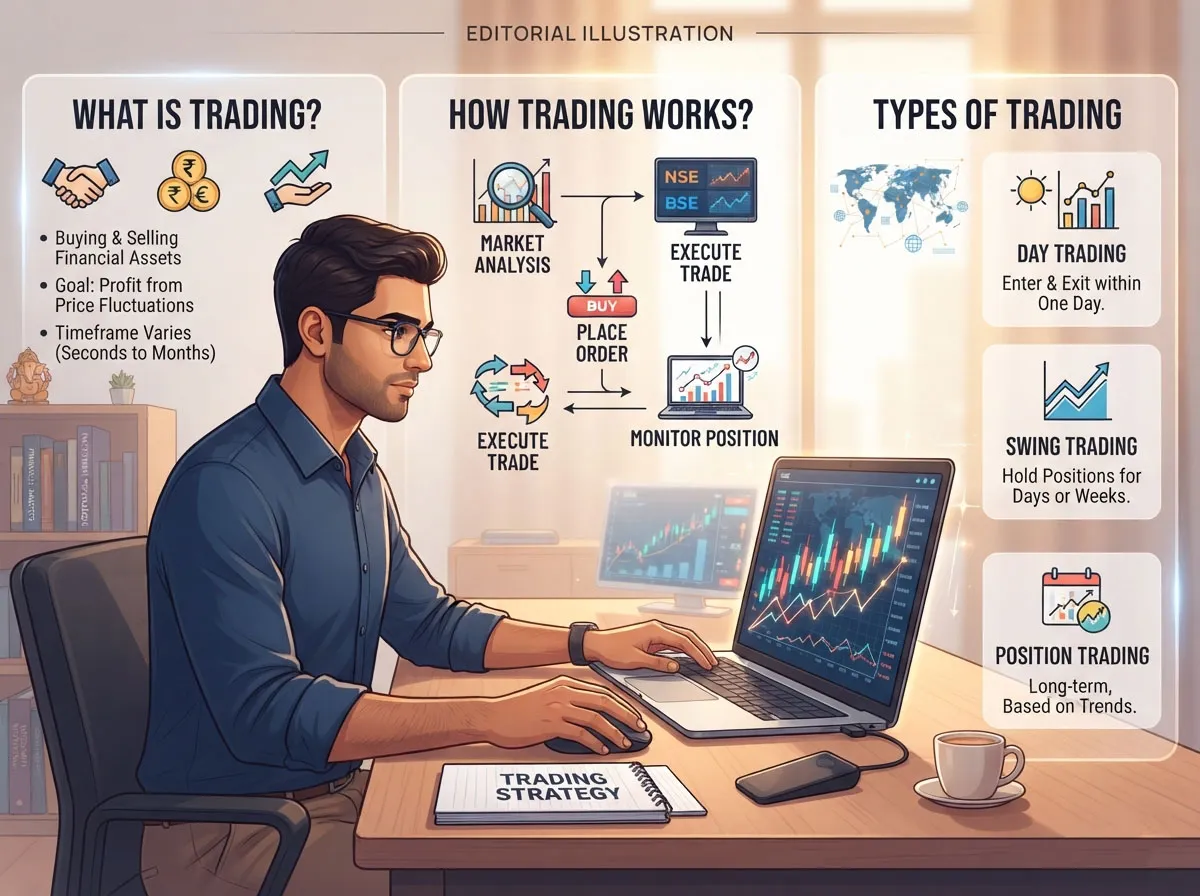
What is trading? Trading is the buying and selling of financial instruments – such as shares, derivatives, currencies, commodities, or crypto assets – with the aim of benefiting from price movements over a relatively short or flexible time period. The basic trading meaning is simple: a trader enters a position, manages risk while the market moves, and exits the position based on a plan.
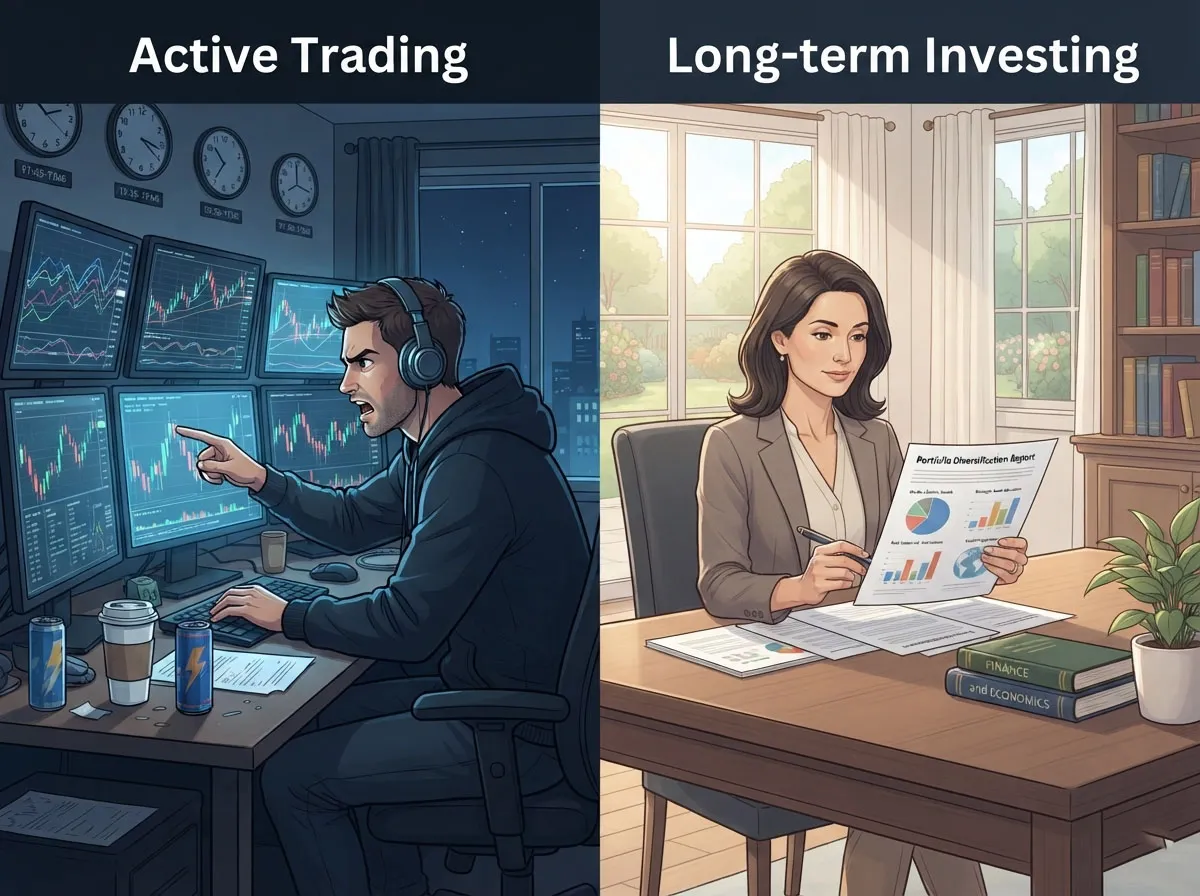
Unlike long-term investing, trading usually focuses more heavily on price action, timing, liquidity, volatility, technical analysis, news, and strict risk control. A trader may hold a position for seconds, hours, days, weeks, or occasionally months, depending on the selected strategy.
For example, a person may buy shares because they expect the price to rise over the next few days. Another trader may sell a futures contract because they expect the price to decline. Both are trading because they are taking a position based on an expected market move.
Trading exists in many markets, including Indian stocks, global equities, forex, commodities, index derivatives, and cryptocurrencies. However, every market has different regulations, costs, trading hours, liquidity conditions, and risks. In India, securities-market participants should use SEBI-registered intermediaries and learn the relevant investor-protection rules before placing trades.
Trading vs Investing
Trading and investing both involve financial markets, but they differ mainly in time horizon, decision-making process, and the way risk is managed.
An investor may buy a company’s shares because they believe the business can grow over several years. A trader may buy the same shares because the price has broken above a resistance level and may move higher over the next session or week.
Neither approach automatically guarantees success. The right approach depends on your objective, available time, experience, capital, risk tolerance, and ability to follow a plan.
| Factor | Trading | Investing |
|---|---|---|
| Typical holding period | Seconds to weeks, sometimes months | Years or longer |
| Main focus | Price movement, timing, liquidity and market structure | Business growth, valuation and long-term compounding |
| Common analysis | Technical analysis, news, volume, order flow | Fundamentals, earnings, industry and valuation |
| Activity level | Often frequent | Usually lower |
| Costs to monitor | Brokerage, spreads, slippage, taxes and funding costs | Charges, taxes and long-term portfolio costs |
| Main challenge | Discipline under rapid market movement | Patience during long market cycles |
A trader can use fundamental information, and an investor can use charts. The difference is not the tool itself – it is how and why the position is managed.
How Trading Works
To understand what is trading, think of every trade as a transaction between buyers and sellers. A buyer wants to purchase an asset at an acceptable price, while a seller wants to sell it at an acceptable price. The market matches those orders when prices align.
For exchange-traded securities, the process generally involves a broker, an exchange, buyers, sellers, clearing systems, and settlement arrangements. Your broker provides the platform through which you view prices and submit orders.
A simple trade example
Assume a trader studies a listed stock and believes it may rise after a strong breakout.
- The trader identifies an entry level, such as ₹500.
- They decide in advance where the trade idea becomes invalid, perhaps at ₹490.
- They calculate position size so the possible loss stays within their predefined risk limit.
- They place a buy order through their broker.
- If the order is matched, they hold the position while monitoring the plan.
- They may exit at a target, trail a stop-loss, or close the position if market conditions change.
If the stock rises to ₹520, the gross gain is ₹20 per share. If it falls to the stop-loss level near ₹490, the planned gross loss is roughly ₹10 per share, before costs and execution differences.
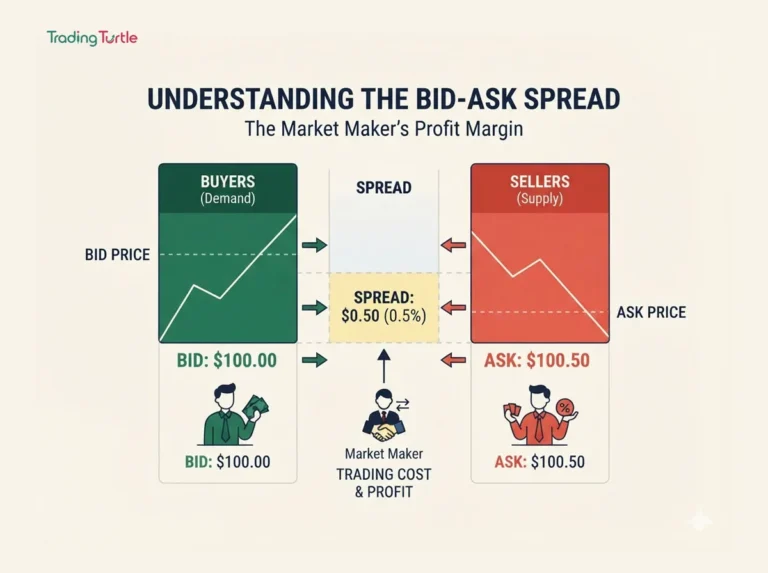
Actual results may differ because of bid-ask spreads, slippage, brokerage, taxes, delayed execution, illiquid markets, price gaps, and emotional decisions. A stop-loss order is a risk-control tool, not a guarantee of an exact exit price.
Risk reminder: A trade can move against you faster than expected, particularly during news events, market openings, low-liquidity periods, or sharp volatility. Leverage can magnify losses as well as gains. Use position sizing and a predefined maximum loss for every trade.
Markets You Can Trade
The trading meaning changes slightly by market, but the core concept remains the same: taking a buy or sell position in an instrument whose price can change.
Stocks
Stock trading involves buying and selling shares of publicly listed companies. In India, equity trading commonly takes place through exchanges such as the National Stock Exchange of India (NSE) and BSE. A share represents ownership in a company, but short-term price movement may be influenced by factors beyond business performance.
Indices
An index tracks the combined performance of selected securities. Traders may gain exposure to indices through exchange-traded products or derivatives, depending on the market and applicable rules. Index trading can reduce single-company risk, but it still carries market risk.
Derivatives
Derivatives derive value from an underlying asset, such as a stock, index, currency, or commodity. Futures and options are common derivative instruments. They can be useful for hedging or trading, but their complexity and leverage make them unsuitable for people who do not understand payoff structures, margin requirements, and potential losses.
Commodities
Commodity markets include instruments linked to assets such as gold, silver, crude oil, natural gas, and agricultural products. Prices can react to global supply, demand, weather, geopolitical developments, interest rates, and currency movements.
Forex
Forex trading involves currency pairs, such as the US dollar against the Indian rupee. Currency markets are influenced by central-bank policy, inflation, trade flows, interest-rate expectations, and geopolitical events. Access and permitted products vary by jurisdiction.
Cryptocurrency
Crypto trading involves digital assets such as Bitcoin, Ether, stablecoins, and other tokens. Crypto markets can operate around the clock and often experience high volatility. The Reserve Bank of India has cautioned users about risks associated with virtual currencies, including losses connected to hacking, compromised credentials, and password loss.
Common Types of Trading
There is no single “best” method. Different trading styles require different levels of time, speed, capital, emotional control, and market knowledge.
| Trading approach | Typical holding period | Main idea | Practical challenge |
|---|---|---|---|
| Scalping | Seconds to minutes | Capture very small intraday moves | Fast execution, spreads and high stress |
| Intraday trading | Minutes to one session | Open and close positions on the same day | Requires active monitoring and discipline |
| Swing trading | Days to weeks | Capture short- to medium-term price swings | Overnight gaps and changing trends |
| Positional trading | Weeks to months | Follow broader market trends | Requires patience and wider risk limits |
| Algorithmic trading | Varies by strategy | Execute rules through software | Strategy validation, data quality and operational risk |
A beginner does not need to try every style. It is usually better to learn one market, one setup, and one time frame before adding complexity.
For instance, a swing trader may review daily charts after market hours, while a scalper may need real-time data, fast order execution, and constant attention. Choosing a style that conflicts with your schedule often leads to rushed decisions.
Who Participates in Markets
Markets include more than individual traders. Understanding the participants helps explain why price action can become fast, uneven, or volatile.
- Retail traders: Individuals buying and selling through brokerage platforms.
- Long-term investors: People, funds, or institutions building portfolios over longer time frames.
- Institutional investors: Mutual funds, banks, insurers, pension funds, and foreign institutions.
- Hedgers: Businesses or investors using derivatives to reduce exposure to price changes.
- Speculators: Participants taking risk because they expect a price move.
- Market makers: Firms that quote buy and sell prices, helping support liquidity in some markets.
- Arbitrageurs: Participants who seek price differences between related markets or instruments.
These groups may trade for completely different reasons. A company may hedge currency exposure, while a day trader is responding to a chart breakout. Both actions can affect demand, supply, volume, and short-term price behaviour.
Tools Traders Use
Successful trading is not about owning the most indicators. It is about using a small set of tools consistently and understanding their limitations.
Trading account and platform
You need a regulated broker or appropriate platform for the market you wish to access. Before opening an account, check registration status, charges, product availability, margin rules, customer support, and risk disclosures. SEBI provides investor education material on topics such as securities markets, KYC, and trading or demat accounts.
Charts and market data
Charts organize historical prices into visual formats, such as candlesticks, bars, or lines. Traders may study trends, support and resistance, volume, momentum, and volatility. Charts show what has happened, not what must happen next.
Order types
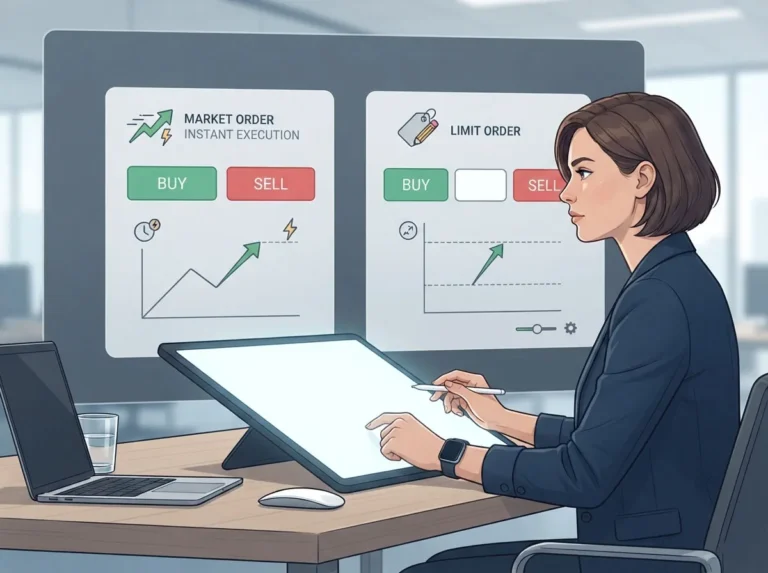
Order types control how you enter or exit the market. A market order prioritizes execution, while a limit order gives you price control but may not execute. NSE describes limit-price orders as orders that allow the price to be specified.
Read our detailed guide on market orders and limit orders before using either type with real money.
Trading journal
A journal records the setup, entry, exit, position size, reason for taking the trade, emotions, and lessons learned. Over time, it can reveal patterns such as overtrading after losses, entering trades late, or ignoring stop-loss rules.
Risk-management rules
Risk management is the operating system behind a trading strategy. Before entering, define:
- Entry price or entry condition.
- Stop-loss or invalidation level.
- Target or exit method.
- Amount of capital at risk.
- Maximum daily or weekly loss limit.
- Conditions that require you to stop trading.
Explore the risk management learning hub before moving from paper trades to live positions.
Why Prices Move
Prices move because buyers and sellers continually reassess what an asset is worth and what they are willing to pay or accept. When demand is stronger than available supply at current levels, prices may rise. When selling pressure is stronger, prices may fall.
Common drivers include:
- Company earnings, management commentary, mergers, dividends, and corporate actions.
- Economic data, inflation, interest rates, and central-bank decisions.
- Changes in global markets, commodity prices, or currency values.
- Regulations, taxation changes, and government announcements.
- News, geopolitical events, and unexpected market shocks.
- Technical levels, trading volume, liquidity, and positioning.
- Fear, greed, and forced buying or selling.
No single explanation applies to every move. Markets can react unexpectedly, even when news appears positive or negative. That is why a trading plan should account for uncertainty rather than depend on prediction.
Risks of Trading
Trading can be educational and intellectually challenging, but it is never a low-risk shortcut to income. The main risks include the following.
Market risk
The asset moves against your position. This is the most direct trading risk and can occur even when your analysis appears reasonable.
Leverage and margin risk
Leverage allows you to control a larger position using a smaller amount of capital. It can increase gains, but it also increases losses. In derivatives or leveraged crypto products, losses may accumulate quickly.
Liquidity risk
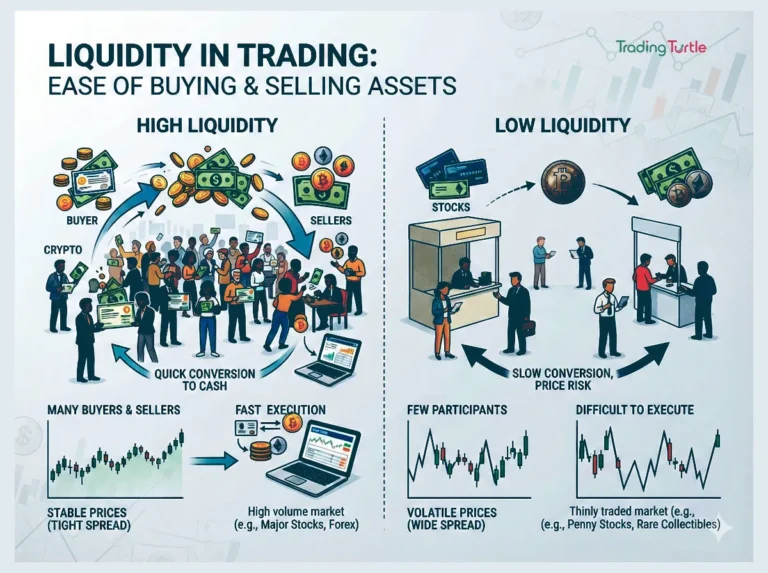
A market may not have enough buyers or sellers at your preferred price. This can lead to slippage, partial fills, and difficult exits. Learn more in our upcoming guide on liquidity in trading.
Execution risk
An order may fill at a worse price than expected, especially during fast-moving markets. Internet disruptions, platform outages, and operational errors can also affect execution.
Emotional risk
Fear may make you exit good plans too early. Greed may make you hold losing or winning positions without discipline. Revenge trading after a loss can turn a manageable mistake into a major drawdown.
Information risk
Social-media tips, unverified signals, manipulated screenshots, and promotional claims can lead to poor decisions. Treat any claim of guaranteed profit as a warning sign.
Common Beginner Mistakes
Many new traders lose money not because they lack indicators, but because they lack a repeatable process.
- Trading without a written entry, exit, and risk plan.
- Using leverage before understanding margin and liquidation risk.
- Risking too much capital on one trade.
- Changing strategies after a few losses without enough data.
- Copying social-media calls without independent research.
- Overtrading after a win or trying to recover losses immediately.
- Ignoring brokerage, spread, taxes, funding charges, and slippage.
- Trading illiquid instruments simply because they appear to move quickly.
- Treating paper-trading results as proof that live trading will perform the same way.
- Failing to keep records and review mistakes.
A useful first step is to practise a defined setup in a simulated environment. Visit our paper trading guide to understand how to test a process without immediately risking capital.
Key Takeaways
- What is trading? It is the purchase and sale of financial instruments to benefit from price movements over a chosen time frame.
- The trading meaning includes much more than buying and selling: it requires planning, execution, risk control, and review.
- Trading can occur in stocks, indices, derivatives, commodities, forex, and crypto markets.
- Trading differs from investing mainly in time horizon, methods, frequency, and risk management.
- Every trade should have a defined entry, invalidation point, position size, and exit plan.
- Leverage, volatility, poor liquidity, emotional decisions, and misinformation can cause rapid losses.
- New traders should start small, learn order types, use a journal, and build risk-management habits before seeking aggressive returns.
Educational disclaimer: This article is for educational purposes only and is not investment, trading, tax, or legal advice. Trading involves substantial risk, and you can lose some or all of your capital. Never trade with money you cannot afford to lose.
– Frequently Asked Questions (FAQs)
Trading means buying and selling an asset to try to benefit from a change in its price. The asset may be a share, index, commodity, currency, derivative, or crypto asset.
No. Investing generally focuses on long-term ownership and growth, while trading usually focuses on shorter-term price movements and active entry or exit decisions. The two can overlap, but their goals and methods are different.
Beginners can learn trading, but they should begin with education, a written plan, risk management, and simulated trading where available. Starting with large positions or high leverage can create losses before essential skills are developed.
The amount depends on the market, broker rules, product, fees, and your risk plan. The better question is how much you can afford to lose without affecting essential expenses or financial obligations. Never borrow money or use emergency funds to trade.
Yes. All trading involves risk, and leveraged products can magnify losses. Prices can move suddenly because of news, volatility, low liquidity, or market gaps. A stop-loss reduces risk but cannot guarantee an exact execution price.
Learn market basics, order types, position sizing, stop-loss concepts, bid-ask spreads, trading costs, liquidity, and the risks of leverage. Start with the Trading Glossary and the Risk Management hub.