Paytm Subsidiary Gets RBI In-Principle PPI Authorisation: Final Approval Still Required

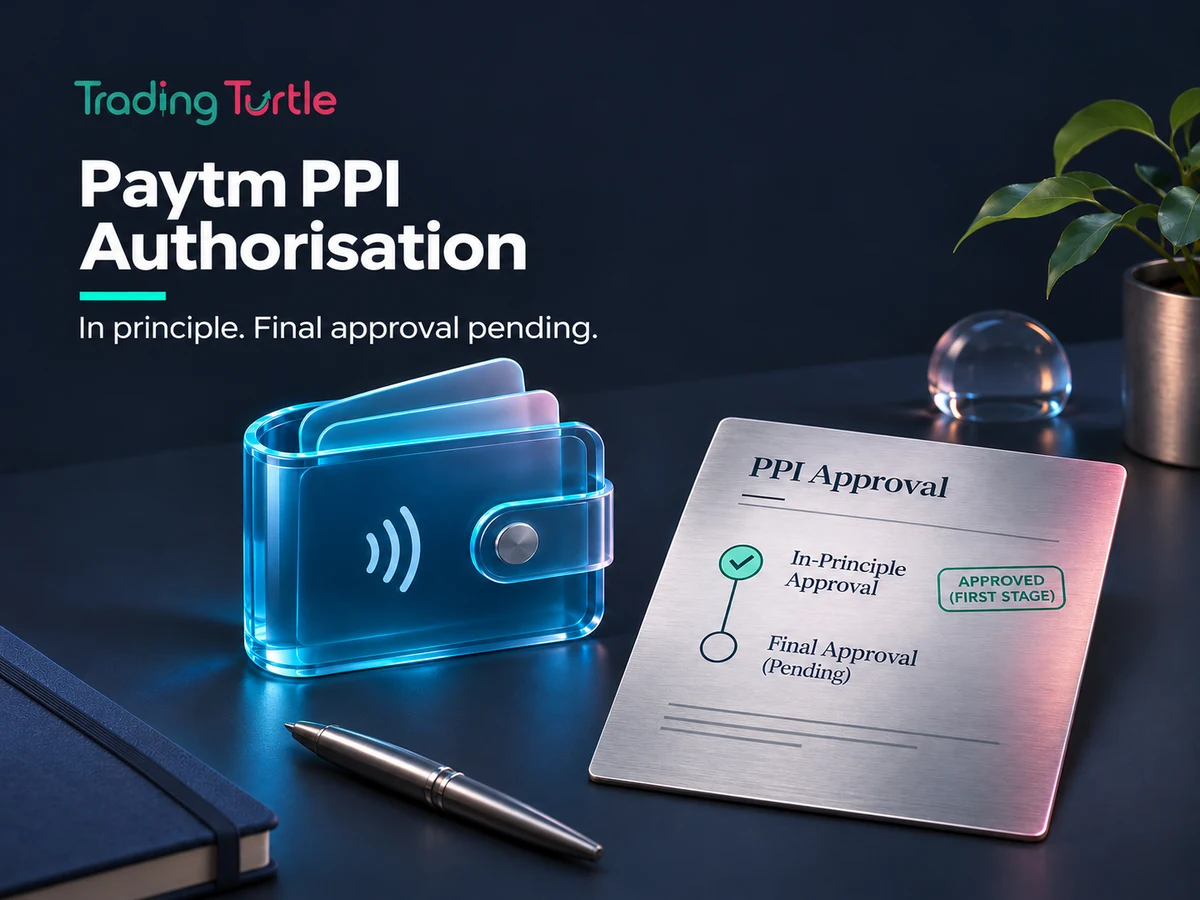
Paytm Payments Services Limited has received RBI in-principle authorisation for prepaid payment instruments. The disclosure marks a regulatory milestone, while making clear that final authorisation is still required before the subsidiary can offer instruments such as a wallet under this approval.
Reporting checked: 15 November 2026. This report is based on the company’s 13 November exchange filing and the RBI’s published PPI framework. It does not assume a launch date or future financial contribution.
What the exchange filing says
One 97 Communications, the listed company behind Paytm, disclosed that its wholly owned subsidiary Paytm Payments Services Limited, or PPSL, had received a letter dated 13 November 2026 from the Reserve Bank of India.
The company’s exchange disclosure describes the decision as in-principle authorisation for a payment system involving the issuance and operation of prepaid payment instruments in India. It is subject to the applicable RBI directions.
Crucially, the filing says PPSL can offer prepaid instruments such as a wallet after receiving final authorisation or a certificate of authorisation. That distinction should remain visible in any headline about the development.
What is a prepaid payment instrument?
The RBI’s PPI explainer describes instruments used for purchases, financial services or permitted remittances against stored value. A wallet is a familiar example, although the features and permitted uses depend on the type of instrument and applicable rules.
A prepaid instrument should not be casually described as a normal savings account. The user experience may involve money shown in an app, but the legal product, issuing entity, permitted functions and customer conditions are what determine how it works.
For readers following a listed payments company, understanding the product helps separate the announcement from assumptions about revenue. Permission to develop a service creates an opportunity; customers still have to choose it, use it and find continuing value in it.

Why “in principle” matters
Regulatory developments often arrive in stages. An initial decision can address one part of an application without establishing that every requirement for commercial operation has been completed. The document’s precise wording is more useful than a shorthand description such as “wallet is back.”
In this case, the issuer itself makes the final-authorisation requirement explicit. Readers should avoid filling that gap with an assumed launch schedule. A later announcement may clarify progress, but it needs to be assessed when it is actually published.
This also means the current event should not be read as a blanket change to every product associated with the Paytm brand. Always identify the named legal entity, the specific permission and the activity covered by that permission. Brand familiarity is not a substitute for that check.
What customers should watch next
For prospective customers, a subsequent product announcement should explain availability, eligibility, fees, limits, support and the terms governing stored balances. Those details influence the practical experience more directly than the headline alone.
Before relying on a newly launched payment service, read the current terms through official channels. Check how money can be loaded, spent, transferred or redeemed, where applicable, and what happens when a transaction is disputed. Product features should be confirmed from the provider rather than inferred from an approval story.
There is no need for users to take action simply because a regulatory filing has appeared. A product becoming possible does not establish that it is available to every customer, or that it suits every payment need.
What the announcement means for market coverage
For investors and traders, the immediate task is to separate the verified milestone from the financial assumptions attached to it. Potential future activity cannot be treated as booked revenue, profit or cash flow.
A more complete assessment would consider the eventual service design, user uptake, ongoing compliance expense, customer-support costs and the economics of repeat transactions. Those questions remain relevant even if market sentiment initially responds favourably to an announcement.
This report does not quote a share-price move because a reliable price comparison needs a specified exchange, observation time and reference session. A price headline without those details can blur intraday trading with a closing move or a longer historical comparison.
For background on evaluating market information, see Trading Turtle’s Stock Market Basics and Risk Management resources.
The next meaningful milestone
Keep a copy of the original disclosure when following this story. A later summary may shorten the wording, omit a condition or describe a different event under a similar headline. Comparing dated documents makes it easier to identify a real change in status and avoids repeatedly counting the same preliminary decision as fresh progress.
The most useful follow-up evidence would be a company filing confirming final authorisation, followed by details of any commercial rollout. Investors can then compare management’s expectations with measurable delivery rather than treating a preliminary permission as the end of the process.
When reading the next announcement, ask three questions: has the regulatory stage changed, has the product become available, and has the company provided evidence of business impact? These are distinct milestones and may occur at different times.
For a deeper interpretation of the business questions behind the filing, read Paytm PPI approval analysis. The news report establishes the event; the analysis explains how to evaluate what follows.
Sources: One 97 Communications’ 13 November 2026 exchange disclosure and the RBI’s PPI FAQ and Master Directions. This report is informational and does not recommend buying or selling Paytm shares.