What Is OP Stack? How Optimism’s Modular Blockchain Technology Works


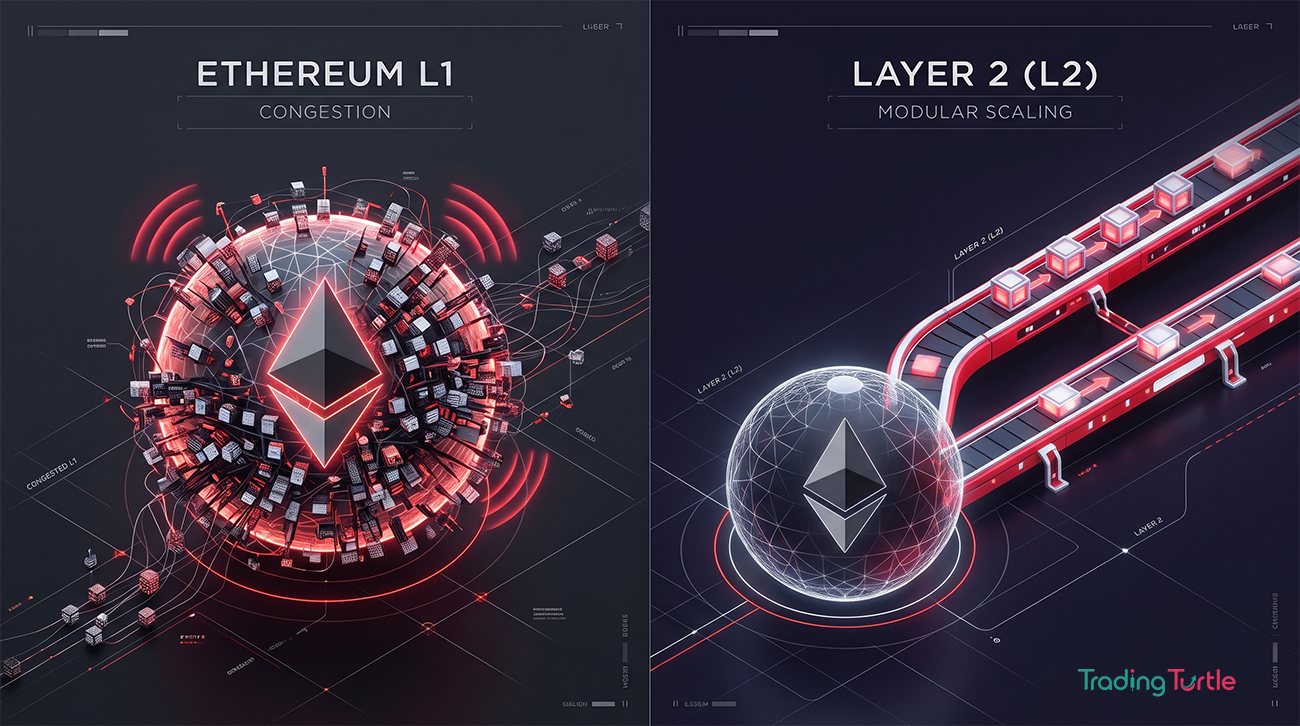
Ethereum has become one of the most important networks for decentralized applications, smart contracts and onchain finance. However, as activity on Ethereum increased, transaction costs and network capacity became important challenges for developers and users.
Layer 2 networks emerged to address these limitations by processing transactions outside Ethereum’s main execution layer while using Ethereum for important security, data availability or settlement functions.
One technology helping developers build these networks is the OP Stack, an open-source framework developed within the Optimism ecosystem.
Rather than requiring every development team to build an entire blockchain infrastructure from scratch, OP Stack provides a collection of modular software components that can be configured to create Ethereum-compatible Layer 2 networks.
Its architecture has contributed to the development of several blockchain networks, including Optimism’s OP Mainnet and, historically, Coinbase’s Base.
But what exactly is OP Stack, how does it work, and why is it important to the future of Ethereum scaling?
Let’s break it down.
Educational disclaimer: This article is published by Trading Turtle for informational and educational purposes only. It is intended to explain blockchain technology, cryptocurrency infrastructure and related concepts. The information should not be considered financial, investment, legal or technical advice, nor a recommendation to buy, sell or use any cryptocurrency, blockchain network or digital asset.
What Is OP Stack?
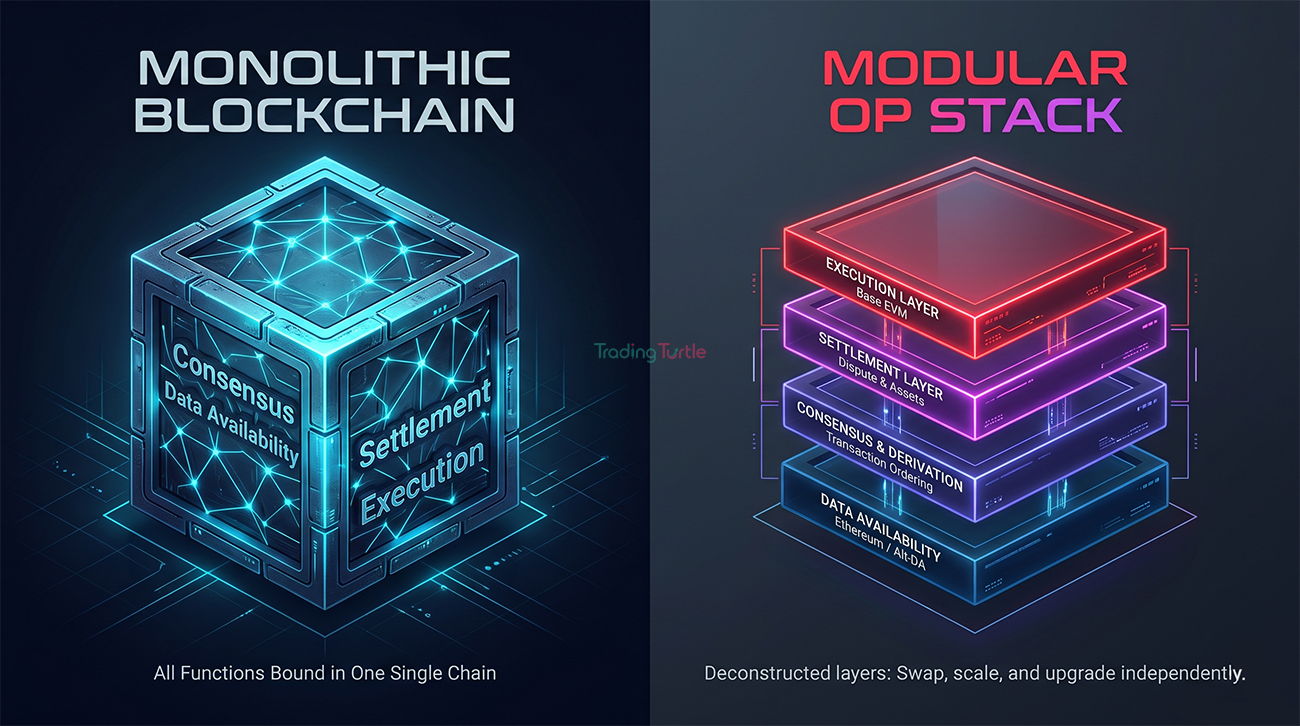
The OP Stack is an open-source, modular software framework developed by the Optimism ecosystem for building Ethereum Layer 2 blockchains and other onchain infrastructure.
It provides developers with reusable components for essential blockchain functions, including transaction sequencing, execution, data availability, state verification and settlement.
Instead of developing every component independently, developers can use the OP Stack’s existing architecture and customize it according to their network’s requirements.
Think of it as a collection of building blocks for creating a blockchain.
For example, launching a new Layer 2 network requires several important systems:
- A mechanism to receive and order transactions.
- An execution environment to process transactions and update blockchain state.
- A system to publish transaction data.
- A mechanism to verify the network’s state.
- Smart contracts that coordinate deposits, withdrawals and settlement.
The OP Stack provides standardized software for many of these functions.
Its modular design also allows developers to modify or replace certain components depending on their requirements.
The central idea is simple: make blockchain infrastructure reusable so developers can focus more on building applications, services and ecosystems.

Why Was OP Stack Developed?
Building an independent blockchain requires significant technical expertise and infrastructure.
Developers need to establish transaction processing, execution environments, network security, data availability and communication with other blockchain systems.
When every development team builds these components independently, several challenges emerge.
1. Repeated Development Costs
Developing blockchain infrastructure from scratch requires substantial engineering resources.
Different teams may end up solving similar technical problems independently, even when their networks require almost identical functionality.
The OP Stack reduces this duplication by providing reusable infrastructure and established development standards.
2. Fragmented Blockchain Ecosystems
As more Layer 2 networks emerge, the Ethereum ecosystem becomes increasingly distributed across different chains.
Each network can have its own applications, liquidity, users and infrastructure.
This creates challenges for transferring assets, communicating between networks and providing a consistent user experience.
The Superchain vision aims to address this fragmentation through shared standards and interoperability between participating networks.
3. The Need for Customizable Infrastructure
Not every blockchain has the same requirements.
A network designed for payments may prioritize low transaction costs and high throughput, while another network may focus on gaming, decentralized finance or institutional applications.
A modular framework allows developers to configure important components without rebuilding the entire system.
This flexibility is one of the major reasons behind the OP Stack’s development.
How Does OP Stack Work?
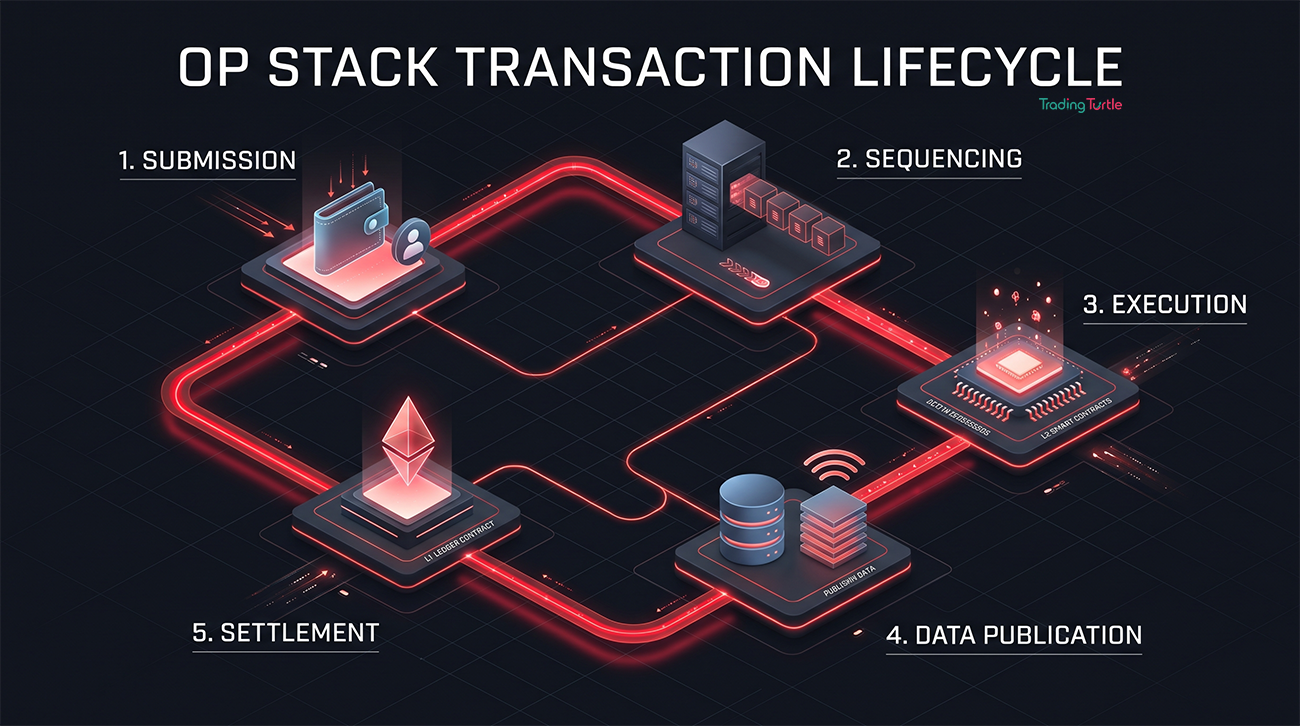
To understand how OP Stack works, it is important to understand the basic transaction lifecycle of an optimistic rollup.
Consider a user making a transaction on an OP Stack-based Layer 2 network.
The process generally involves the following steps.
Step 1: Transaction Submission
A user submits a transaction through a wallet or decentralized application.
The transaction is received by the network’s sequencer, which is responsible for ordering incoming transactions and organizing them into Layer 2 blocks.
Step 2: Transaction Execution
The sequenced transactions are processed by the network’s execution engine.
The execution engine updates the blockchain’s state based on the transactions and the network’s rules.
For EVM-compatible networks, this allows developers to use familiar Ethereum smart contract tools and infrastructure.
Step 3: Data Publication
Transaction data is organized into batches and published through the network’s configured data availability mechanism.
In the standard Ethereum-based rollup configuration, this involves publishing transaction data to Ethereum.
Ethereum’s data availability infrastructure allows independent participants to retrieve the information required to reconstruct and verify the Layer 2 chain.
Step 4: State Verification
The network’s state commitments can be submitted to Ethereum through its settlement contracts.
OP Stack rollups use fault-proof mechanisms to allow incorrect state claims to be challenged under the protocol’s rules.
This is an important distinction: the system does not simply assume that every proposed state is correct without a verification mechanism.
Step 5: Settlement and Withdrawals
Ethereum’s Layer 1 contracts coordinate important interactions between the Layer 2 network and Ethereum.
These include deposits, withdrawals and the verification or finalization of Layer 2 state commitments.
The exact withdrawal process and waiting periods depend on the network’s configuration and proof system.
In simple terms: The Layer 2 network handles transaction execution, while Ethereum provides important infrastructure for data availability, settlement and security in the standard configuration.
Understanding the Core Architecture of OP Stack
The OP Stack is modular rather than a single piece of blockchain software.
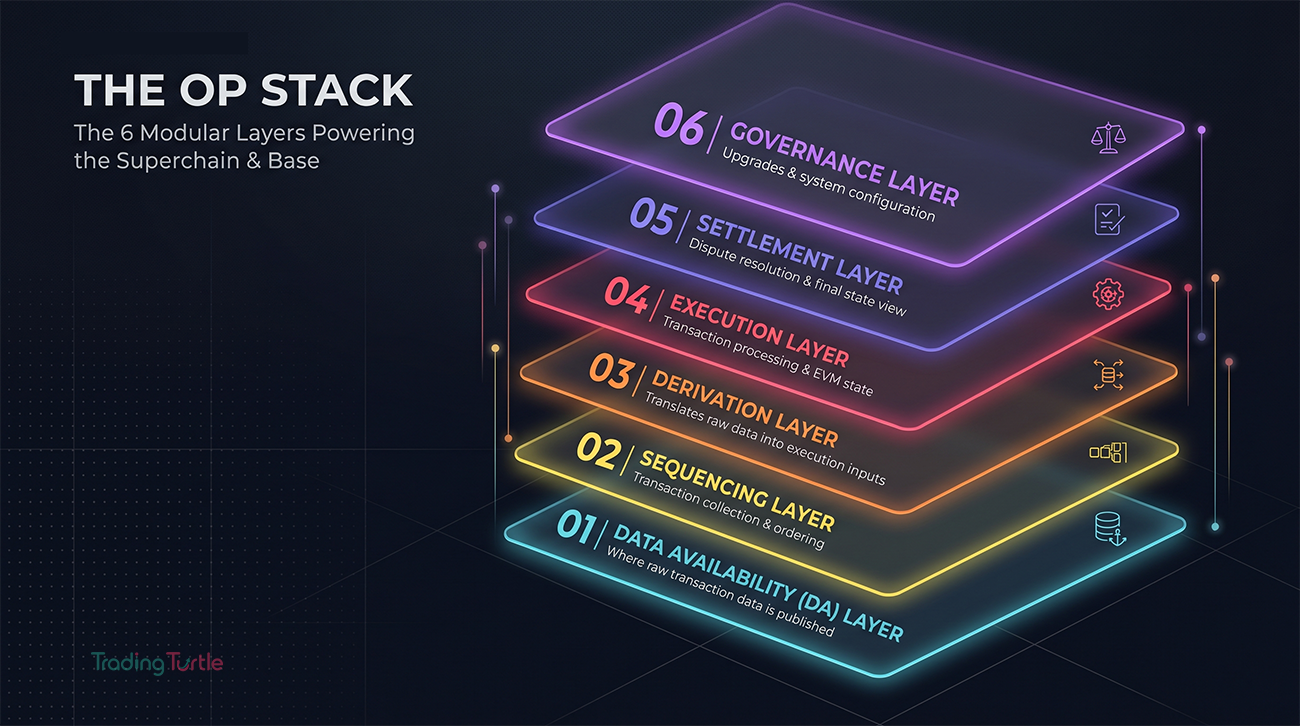
Its architecture can be understood through several conceptual layers. These layers work together to operate a functioning rollup.
1. Data Availability Layer
The data availability layer determines where the information required to reconstruct the blockchain is published.
For Ethereum-based rollups using Ethereum data availability, transaction data is published to Ethereum.
This allows independent participants to access the information needed to verify the network’s operation.
The choice of data availability infrastructure can influence network costs, security assumptions and design flexibility.
2. Sequencing Layer
The sequencing layer handles incoming transactions and determines their ordering.
The sequencer receives user transactions, organizes them into blocks and provides transaction confirmations.
It plays an important role in transaction speed and user experience.
However, sequencer design also introduces important decentralization considerations, particularly when a network relies on a single active sequencer.
3. Derivation Layer
The derivation layer determines how the canonical Layer 2 chain is reconstructed from available Layer 1 information and sequenced transaction data.
It processes information such as transaction batches and deposits to derive the corresponding Layer 2 blocks.
This is important because independent participants need a consistent way to reconstruct the network’s state.
4. Execution Layer
The execution layer processes transactions and updates the blockchain’s state.
It determines how smart contracts execute, how balances change and how applications interact with the network.
OP Stack networks are designed around Ethereum-compatible execution, allowing developers to use familiar EVM development tools.
5. Settlement Layer
The settlement layer handles important interactions with Ethereum.
It includes the smart contracts responsible for functions such as deposits, withdrawals and state verification.
Fault-proof mechanisms are particularly important here because they allow disputes about proposed Layer 2 states to be resolved according to the protocol.
These five areas provide a useful conceptual overview, although the actual OP Stack implementation contains additional components and protocol-level interactions.
What Is the Superchain?
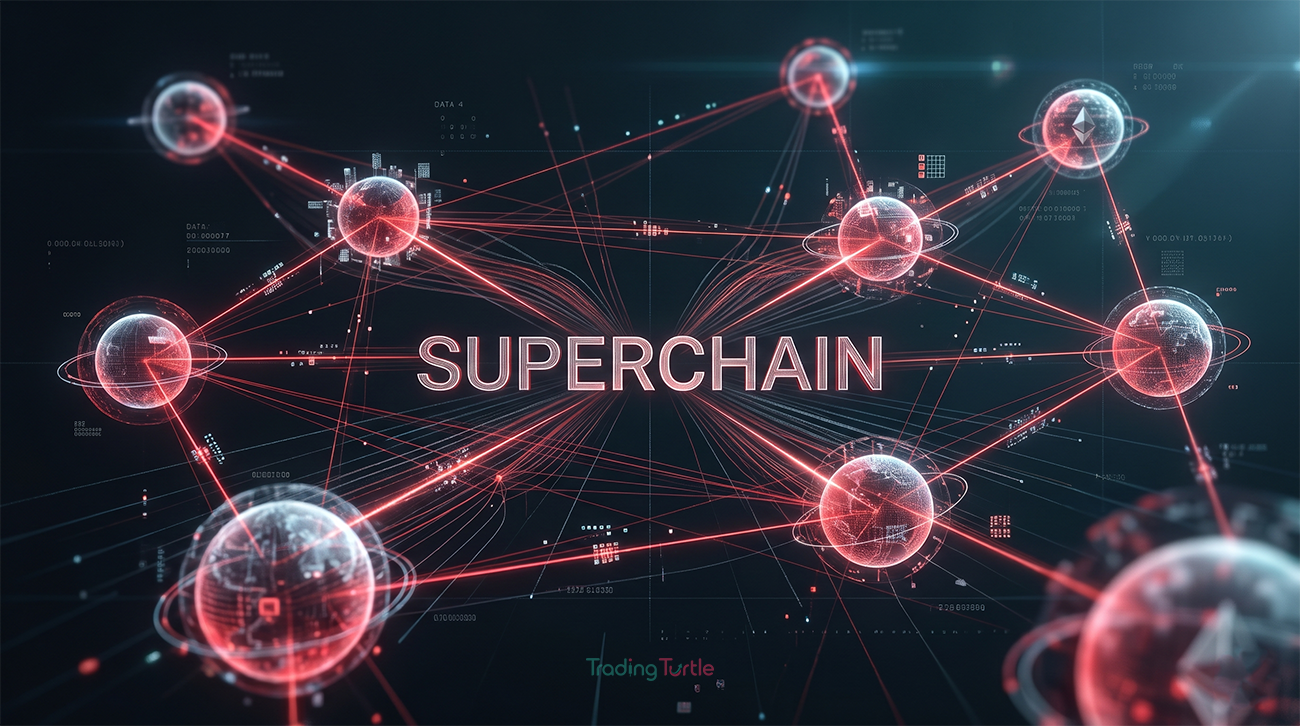
The Superchain is Optimism’s vision of an interconnected ecosystem of Ethereum Layer 2 networks built around shared standards and infrastructure.
Instead of treating every blockchain as an isolated network, the Superchain aims to create an environment where participating chains can work together more effectively.
Networks within this ecosystem can share important technical standards and participate in the development of common interoperability infrastructure.
This could improve:
- Cross-chain asset transfers.
- Communication between decentralized applications.
- Movement of users across participating networks.
- Developer infrastructure and tooling.
- Liquidity coordination across the ecosystem.
However, it is important to understand that using the OP Stack alone does not automatically make every network fully interoperable.
Interoperability requires additional protocol support, compatible configurations and the development of shared infrastructure.
The Superchain is therefore more than a collection of similarly built blockchains. It represents a broader effort to make multiple Ethereum networks function as a more connected ecosystem.
How Is OP Stack Related to Base?
Base is an important example of how OP Stack technology contributed to the development of Ethereum Layer 2 networks.
Coinbase introduced Base in 2023 as an Ethereum Layer 2 network designed to provide a lower-cost environment for decentralized applications and onchain activity.
Base originally launched using Optimism’s open-source OP Stack, collaborating with the Optimism ecosystem to develop and improve its infrastructure.
This relationship helped demonstrate how an established software framework could support the development of another major Ethereum Layer 2 network.
However, the relationship has evolved.
On February 18, 2026, Base announced that it was moving towards a unified, Base-operated software stack. The announcement explained that Base intended to consolidate its infrastructure and reduce external dependencies while continuing to support compatibility during the transition.
This distinction matters when understanding the current relationship between the two ecosystems.
Base’s original use of OP Stack remains an important part of its development history, but its subsequent infrastructure evolution should not be overlooked.
For more context, read our guide: Why Coinbase Built Base: The Vision Behind Onchain Finance.
What Are the Advantages of OP Stack?
The OP Stack offers several advantages for developers and blockchain ecosystems.
Open-Source Development
The framework is open source, allowing developers to examine, modify and contribute to its codebase.
This encourages collaboration and makes the underlying infrastructure more accessible.
Modular Architecture
Developers can configure different components according to their requirements.
This flexibility makes the framework suitable for networks with different performance, economic and infrastructure objectives.
Ethereum Compatibility
EVM compatibility makes it easier for developers to work with familiar smart contract languages, development tools and existing applications.
It reduces the additional engineering required when moving Ethereum-based applications to compatible Layer 2 environments.
Shared Development Infrastructure
Developers can benefit from improvements made by other contributors and teams working within the ecosystem.
This creates opportunities for collaboration instead of requiring every network to independently develop its core infrastructure.
Ecosystem Development
The Superchain vision creates an opportunity for participating networks to share infrastructure and develop better cross-chain experiences.
Its long-term success depends on the continued development of interoperability, security and decentralization.
What Are the Limitations and Risks of OP Stack?
Although OP Stack simplifies blockchain development, it does not eliminate the technical and operational risks associated with running a Layer 2 network.
Sequencer Centralization
Some OP Stack networks use a single active sequencer.
This can create dependence on a limited number of operators for transaction ordering and timely processing.
Decentralizing sequencing remains an important consideration for Layer 2 infrastructure.
Security Depends on Implementation
Using open-source software does not automatically guarantee that every network built with it is equally secure.
Security depends on the network’s configuration, smart contracts, proof systems, infrastructure operators and upgrade mechanisms.
Interoperability Is Still Developing
Shared software standards do not automatically provide seamless communication between every network.
Cross-chain transfers and interactions still depend on specific interoperability mechanisms and their associated security assumptions.
Infrastructure and Operational Complexity
Launching and maintaining a production blockchain still requires significant resources.
Developers must manage nodes, upgrades, monitoring, security and network operations.
The OP Stack reduces the need to build everything from scratch, but it does not remove these responsibilities.
OP Stack vs Traditional Layer 2 Development
| Feature | Traditional custom-built L2 | OP Stack |
|---|---|---|
| Development | More components built independently | Reusable software components |
| Architecture | Custom infrastructure | Modular framework |
| Customization | Depends on implementation | Configurable modules |
| Ethereum compatibility | Varies | Designed for EVM compatibility |
| Development effort | Can be substantial | Can be reduced |
| Ecosystem | Depends on individual network | Shared development ecosystem |
The key difference is not that OP Stack makes every blockchain identical.
Instead, it provides a common technical foundation that developers can adapt to their individual requirements.
Final Thoughts
The OP Stack represents an important development in the way Ethereum Layer 2 infrastructure can be created and maintained.
By providing reusable software components, modular architecture and a shared development foundation, it reduces the need for every team to build blockchain infrastructure independently.
Its significance extends beyond a single network. The broader Superchain vision demonstrates how multiple Ethereum-based networks could eventually coordinate more effectively while retaining their individual characteristics.
However, the long-term success of this approach will depend on more than technical compatibility. Security, decentralization, interoperability and sustainable network economics will remain essential.
For anyone trying to understand the evolution of Ethereum scaling and onchain finance, understanding OP Stack provides an important foundation for exploring the next generation of blockchain infrastructure.
Frequently Asked Questions (FAQs)
No. OP Stack is an open-source software framework used to build and operate blockchain networks. OP Mainnet is an example of a blockchain built using this framework.
OP Stack was developed within the Optimism ecosystem, with OP Labs and the broader contributor community playing important roles in its development.
Yes. OP Stack is an open-source framework distributed under the MIT license, allowing developers to inspect, modify and contribute to its software.
Base originally launched using the OP Stack in collaboration with Optimism. However, Base announced a move towards its own unified software stack in February 2026. Its infrastructure relationship should therefore be understood in the context of this transition.
Optimism refers to the broader ecosystem and its Ethereum scaling efforts. OP Stack is the open-source software framework used to build compatible blockchain networks.
OP Mainnet is the Layer 2 blockchain operated within this ecosystem.
The Superchain is Optimism’s vision of an interconnected ecosystem of Ethereum Layer 2 networks using shared standards and interoperability infrastructure.
OP Stack itself is software infrastructure, not a cryptocurrency. The OP token is associated with Optimism’s governance ecosystem. Individual OP Stack-based networks may have their own token designs and economic models.