What Is Base Blockchain? A Beginner’s Guide to Coinbase’s Layer 2 Network

What if sending money across the world was as simple as sending an email? What if digital payments settled within seconds, businesses could move value globally 24/7, and developers could build financial applications without relying on traditional banking infrastructure?
These ideas are at the heart of blockchain technology’s long-term vision. Yet despite years of innovation, one major challenge remains: scalability.
As more users join blockchain networks, costs can increase, transaction speeds can slow, and user experiences can become more complicated. Solving these challenges is one of the reasons Base was created.
Developed within Coinbase, Base is an Ethereum Layer 2 blockchain designed to make onchain applications faster, cheaper, and easier to use while remaining connected to Ethereum’s security and ecosystem. Rather than positioning itself as another standalone blockchain competing for attention, Base aims to help expand Ethereum’s capabilities and make blockchain-powered applications accessible to significantly more users.
More importantly, Base is not focused solely on cryptocurrency trading. The network has increasingly positioned itself around payments, stablecoins, financial infrastructure, tokenized assets, and what many industry participants describe as the future of onchain finance.
Understanding Base is therefore not only about understanding another blockchain network. It is about understanding how blockchain technology itself may evolve over the coming years.
In this guide, you’ll learn what Base Blockchain is, why it was built, how it works, what problems it aims to solve, how it compares with Ethereum, and why many businesses, developers, and users are paying close attention to its rapidly growing ecosystem.
Educational Disclaimer: This article is for educational purposes only. It is not investment, financial, legal, tax, or regulatory advice. Blockchain networks, cryptocurrencies, decentralized applications, stablecoins, and digital assets involve technical, operational, and financial risks. Nothing in this article should be interpreted as a recommendation to buy, sell, hold, or use any asset, protocol, or platform.
Key Takeaways
- Base is an Ethereum Layer 2 blockchain incubated by Coinbase.
- Base helps improve scalability by processing transactions more efficiently than Layer 1 Ethereum.
- The network is built using the OP Stack framework.
- Base focuses heavily on payments, stablecoins, tokenized assets, and onchain financial infrastructure.
- Base does not currently have an official network token.
- Developers can build decentralized applications while benefiting from Ethereum’s security model.
- Base represents one of the largest efforts to bring mainstream users into blockchain-based applications.
What Is Base Blockchain?
Base is an Ethereum Layer 2 blockchain designed to make blockchain applications faster, more affordable, and easier to use.
At its core, Base helps solve one of the biggest challenges facing blockchain adoption: scaling.
Ethereum has become one of the most important blockchain networks in the world. Thousands of projects, applications, and digital assets rely on Ethereum’s infrastructure. However, as network usage grows, transaction fees and congestion can become obstacles.
Base was created to address those limitations.
Instead of processing all activity directly on Ethereum, Base processes transactions through a Layer 2 environment while ultimately maintaining a relationship with Ethereum’s underlying security and settlement systems.
A simple way to think about Base is:
- Ethereum provides security.
- Base provides scalability.
- Users receive a faster and more affordable experience.
This relationship allows Base to benefit from Ethereum while helping expand the overall capacity of the ecosystem.
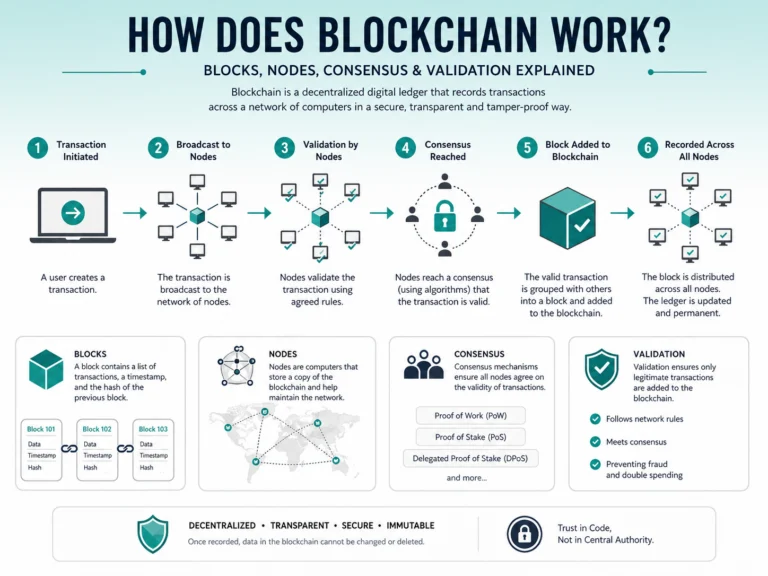
For readers new to blockchain technology, the foundational concepts behind distributed ledgers, validation, and smart contracts are explored throughout Trading Turtle’s existing Blockchain Basics content, including What Is Blockchain? and How Blockchain Works.
Why Did Coinbase Build Base?
To understand Base properly, it is important to look beyond the technology.
The real story begins with adoption.
Blockchain networks have existed for years, yet most people still do not use blockchain applications in everyday life.
Why?
Several barriers continue to limit adoption:
- Complex user experiences
- Expensive transaction costs
- Slow onboarding processes
- Fragmented ecosystems
- Technical learning curves
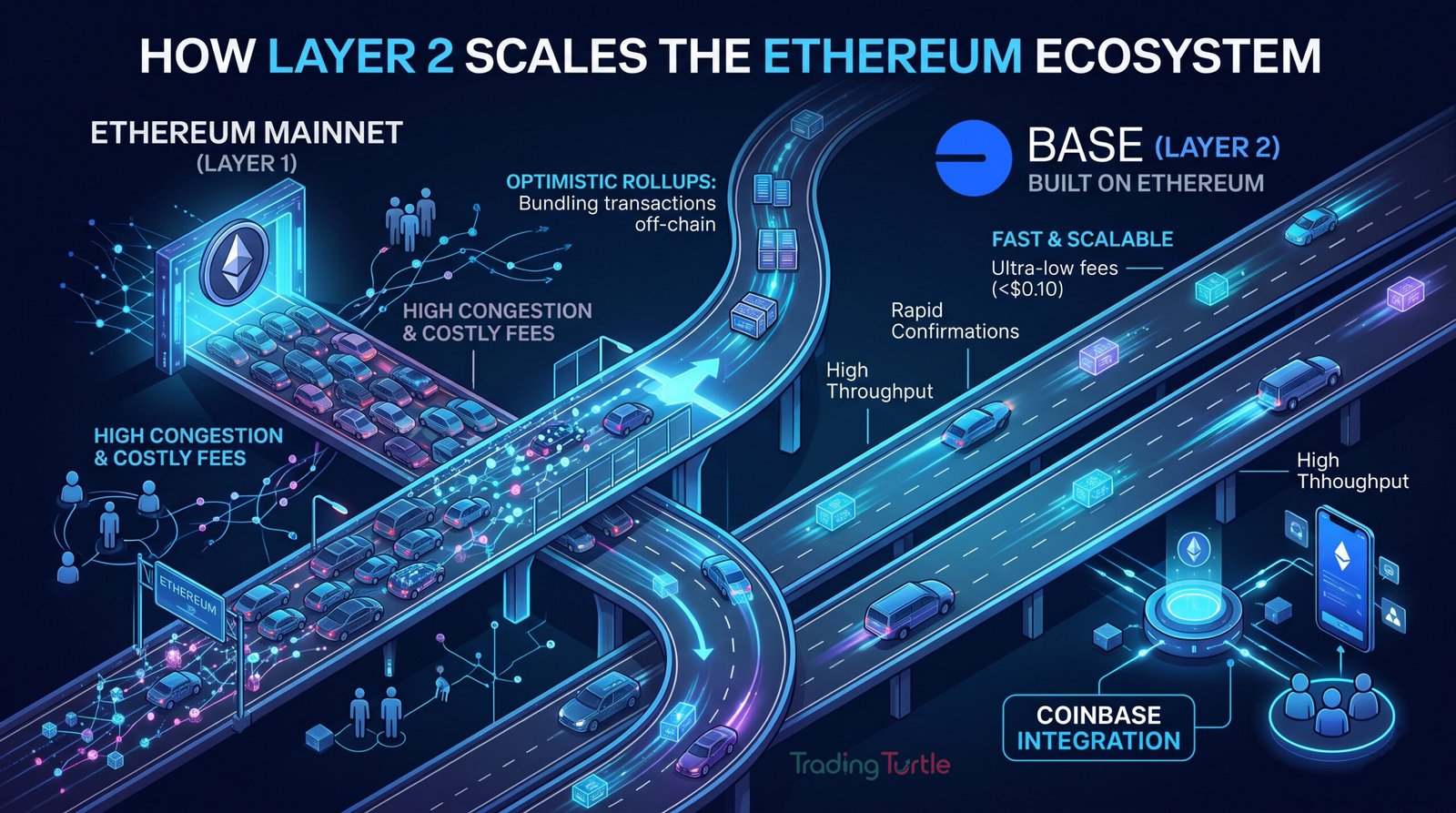
While blockchain technology has progressed significantly, the experience often remains intimidating for newcomers.
This is where Base enters the picture.
According to the vision outlined by Base and Coinbase, the objective is not simply to launch another blockchain. The larger goal is to create infrastructure capable of supporting a significantly larger onchain economy.
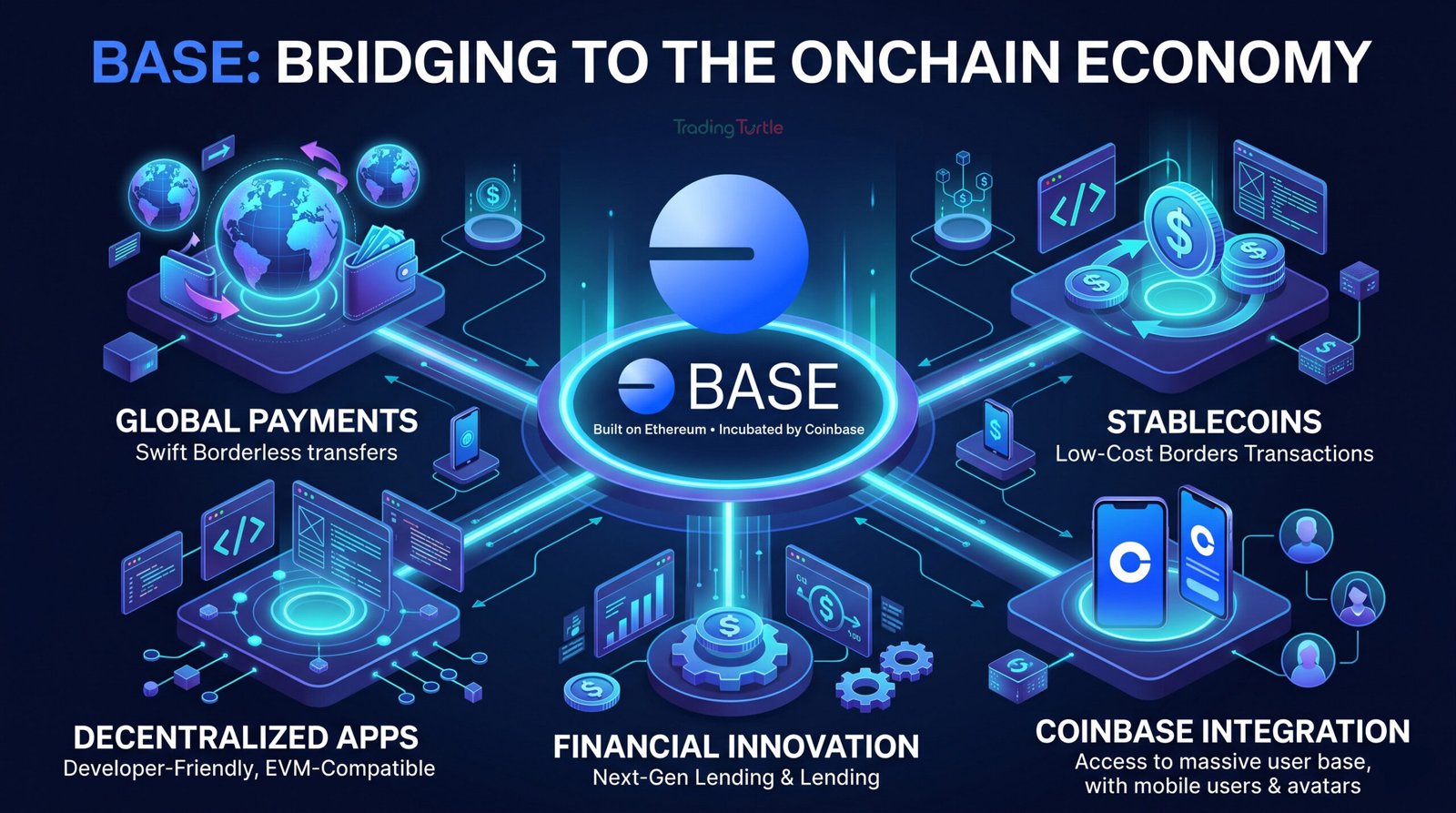
That includes:
Global Payments
Traditional financial transfers can involve multiple intermediaries, delays, settlement periods, and geographical restrictions.
Blockchain networks can reduce some of these frictions.
Base aims to make those experiences more scalable and practical.
Stablecoin Adoption
Stablecoins have become one of the most important use cases in digital finance.
Low-cost blockchain infrastructure can help businesses and individuals transfer stablecoins more efficiently across borders.
Decentralized Applications
Developers need environments where they can build useful products without forcing users to pay excessive network costs.
Base attempts to provide that environment.
Financial Innovation
The broader blockchain ecosystem continues experimenting with new forms of:
- Lending
- Borrowing
- Payments
- Asset ownership
- Digital identity
- Settlement infrastructure
Base was designed to support these developments.
Mainstream Accessibility
Perhaps most importantly, Base reflects a growing belief that blockchain technology must become easier to use if it hopes to reach mainstream audiences.
The network’s long-term mission is closely tied to increasing participation in the onchain economy.
The Problem Base Is Trying to Solve
Many articles explain what Layer 2 networks are.
Far fewer explain why they matter.
To understand Base, it helps to start with a practical question:
Why isn’t Ethereum simply enough?
The answer is not that Ethereum is broken.
The answer is that success creates challenges.
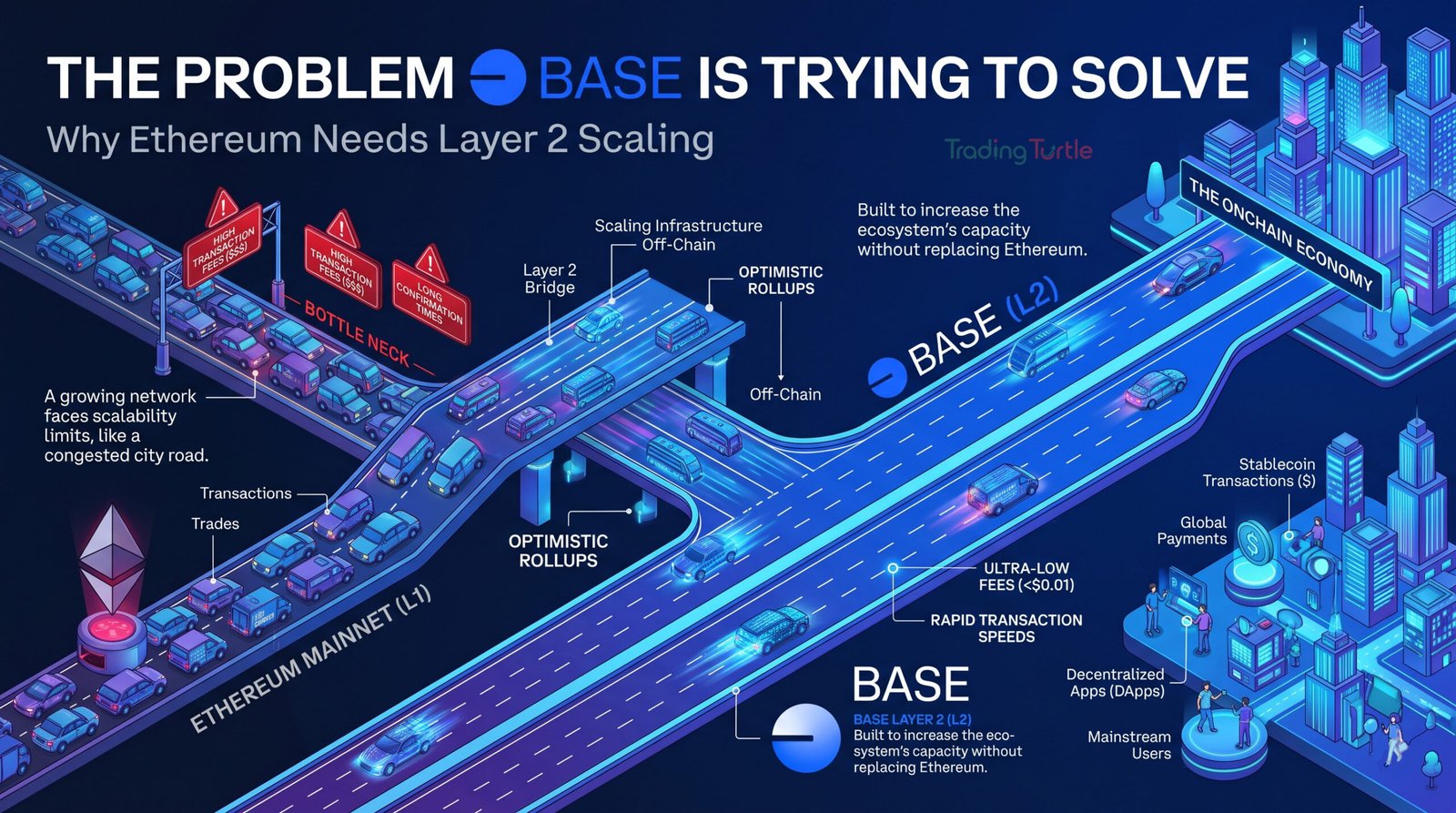
As blockchain adoption grows, more users compete for limited network resources.
When demand increases, users may experience:
- Higher transaction costs
- Longer confirmation times
- Reduced efficiency
This challenge is not unique to Ethereum.
Many successful technologies eventually confront scalability limitations.
Think about a growing city.
A small road network may function perfectly when the population is limited.
As the population expands, transportation demands increase.
Eventually, additional infrastructure becomes necessary.
Layer 2 networks represent that additional infrastructure.
Rather than replacing Ethereum, they help expand the ecosystem’s overall capacity.
Base is therefore best understood as a scaling solution rather than a replacement blockchain.
The network exists because successful blockchain adoption requires better scalability.
Why Scalability Matters More Than Most Beginners Realize
For many newcomers, scalability sounds like a technical issue relevant only to developers.
In reality, scalability affects every user.
Imagine paying the equivalent of several dollars simply to complete a small transaction.
Imagine waiting during periods of heavy congestion.
Imagine attempting to onboard millions of new users under those conditions.
Adoption becomes difficult.
Now imagine:
- Lower transaction costs
- Faster execution
- Improved developer experiences
- More accessible applications
These improvements create entirely new possibilities.
Businesses become more willing to experiment.
Developers can create products for larger audiences.
Users encounter fewer barriers.
This is why Layer 2 networks have become a major focus within the Ethereum ecosystem.
Base is one of the most prominent examples of that effort.
What Makes Base Different?
New blockchain networks launch regularly.
Most disappear.
Some survive.
Only a small number attract meaningful ecosystems.
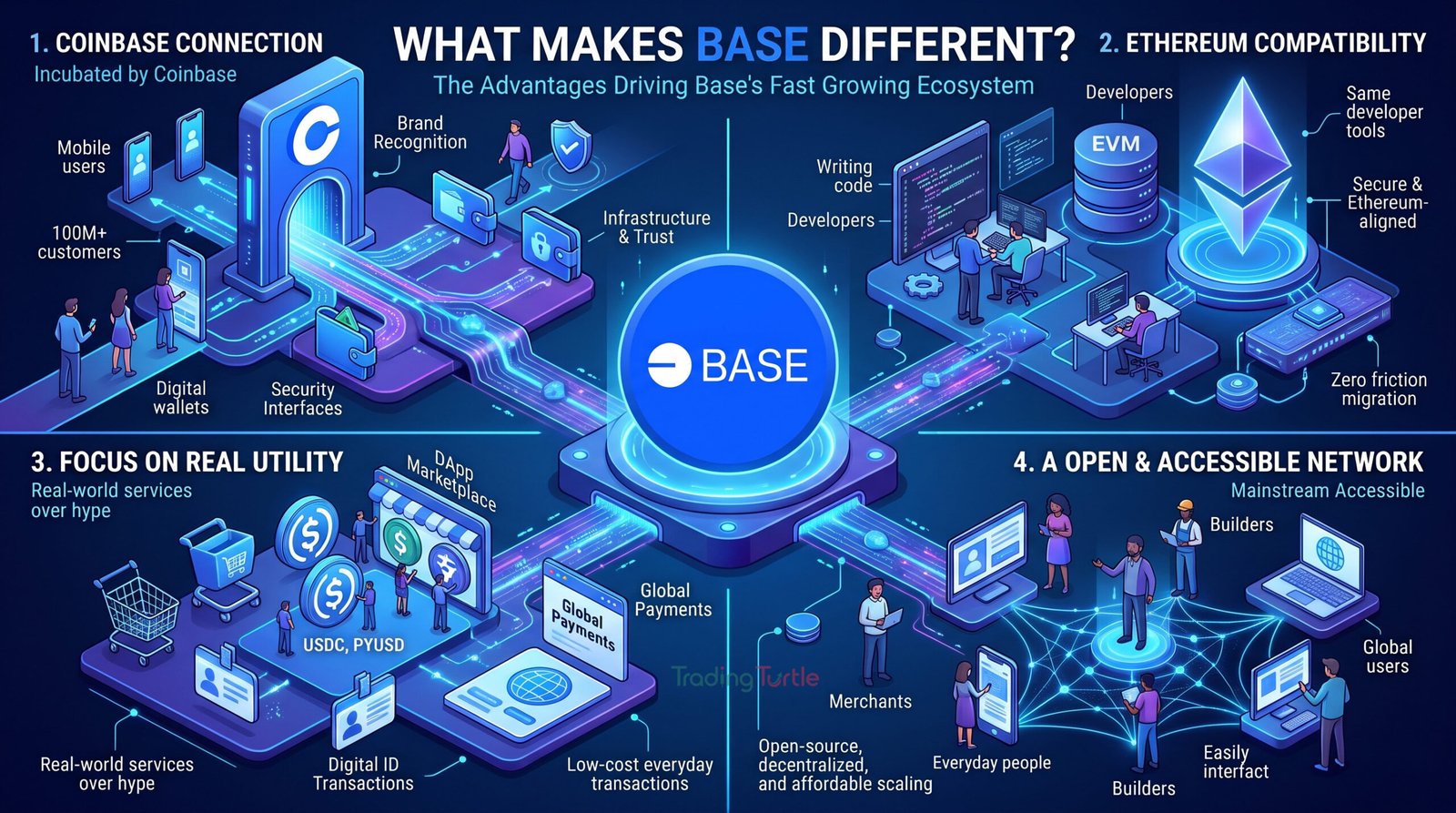
Base entered the market with several advantages.
Connection to Coinbase
Unlike many independent blockchain projects, Base was incubated within Coinbase, one of the most recognized companies in the cryptocurrency industry.
This connection provides:
- Brand recognition
- Infrastructure expertise
- Developer resources
- Ecosystem access
However, Base is designed to operate as an open network rather than a private Coinbase product.
Focus on Real Utility
A significant portion of the crypto industry historically centered around speculation.
Base has increasingly focused its messaging around practical utility.
Examples include:
- Payments
- Stablecoins
- Financial applications
- Commerce
- Onchain infrastructure
This focus differentiates Base from projects that primarily compete for speculative attention.
Ethereum Compatibility
Developers familiar with Ethereum can generally work within the Base ecosystem without completely learning a new technology stack.
This lowers development friction and encourages ecosystem growth.
Growing Ecosystem
An ecosystem becomes valuable when developers build useful products.
As infrastructure, wallets, financial applications, payment solutions, and services emerge, the network becomes increasingly useful for users.
This ecosystem effect is one of the most important factors determining long-term success.
Base and the Bigger Shift Toward Onchain Finance
Many people still associate blockchain technology exclusively with cryptocurrency trading.
That perception is increasingly incomplete.
The industry is gradually evolving toward broader use cases.
Examples include:
- Digital payments
- Stablecoin settlements
- Tokenized assets
- Internet-native financial services
- Cross-border transfers
- Developer-owned applications
Base sits directly within this transition.
Instead of asking:
“How can we create another cryptocurrency?”
the broader question becomes:
“How can financial systems become more open, programmable, and accessible?”
Whether that vision succeeds remains uncertain.
However, understanding Base requires understanding that its ambitions extend far beyond simple token transfers.
The network is attempting to participate in a much larger transformation of digital finance.
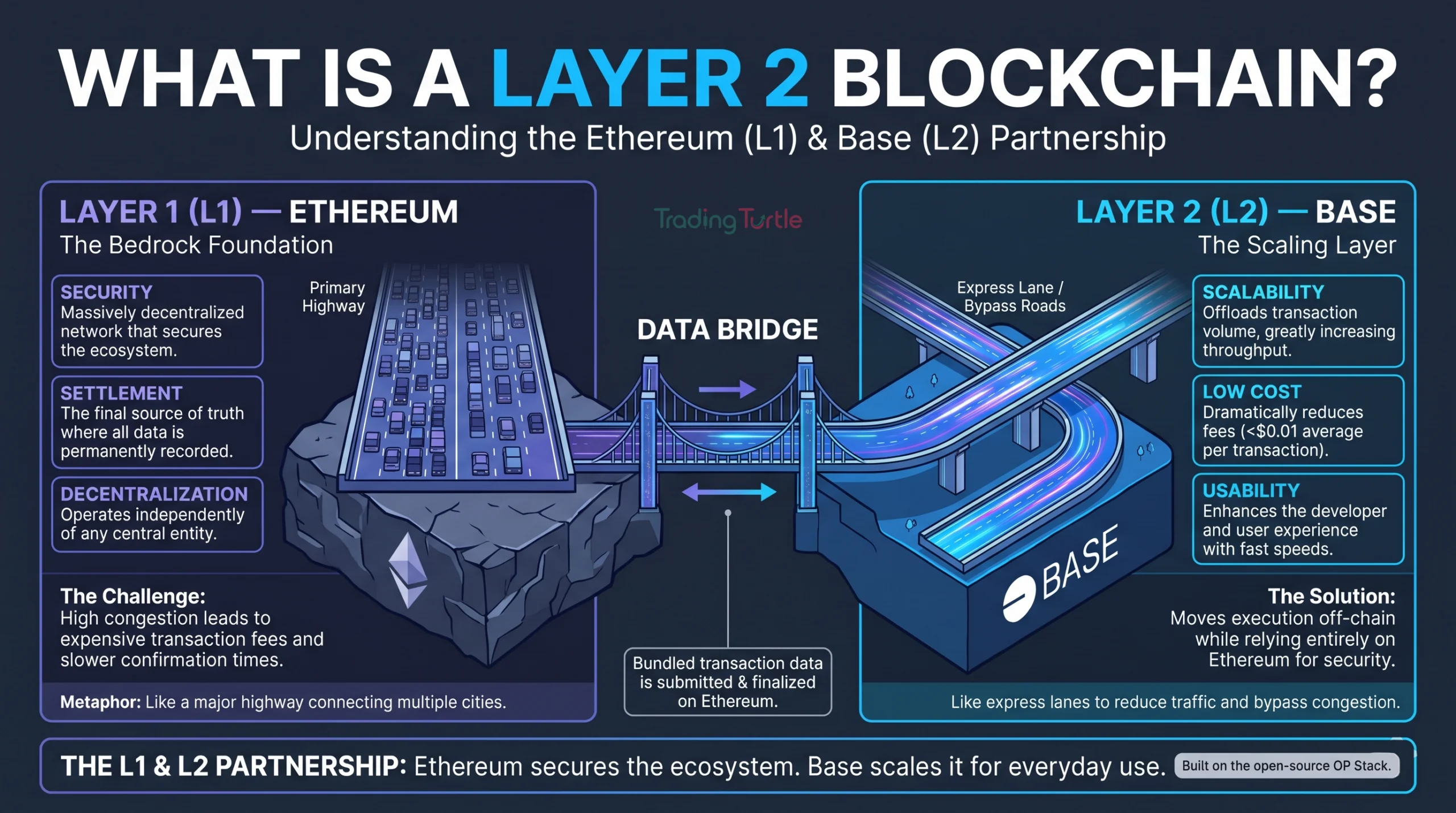
What Is a Layer 2 Blockchain?
To understand Base properly, you first need to understand what a Layer 2 blockchain actually is.
Ethereum is often referred to as a Layer 1 blockchain because it provides the foundational infrastructure responsible for security, consensus, and settlement.
Layer 2 networks are built on top of a Layer 1 blockchain.
Rather than replacing Ethereum, they help Ethereum handle more activity efficiently.
A useful analogy is a highway system.
Imagine Ethereum as a major national highway connecting cities across an entire country.
The highway works extremely well but becomes congested when traffic increases.
One solution would be rebuilding the entire highway from scratch.
Another solution would be adding express lanes that connect back to the same highway while reducing congestion.
Layer 2 networks function much like those express lanes.
They process activity separately while remaining connected to the underlying network.
This enables:
- Lower transaction costs
- Faster user experiences
- Increased scalability
- Greater transaction throughput
Layer 2 solutions have become an important part of Ethereum’s long-term scaling strategy because they allow the ecosystem to grow without sacrificing the security foundations that make Ethereum valuable.
Many of the core blockchain concepts behind network validation and distributed ledgers are covered throughout Trading Turtle’s guides on What Is Blockchain? and How Blockchain Works.
How Base Blockchain Works
At a high level, Base allows users to interact with blockchain applications more efficiently than if every action occurred directly on Ethereum.
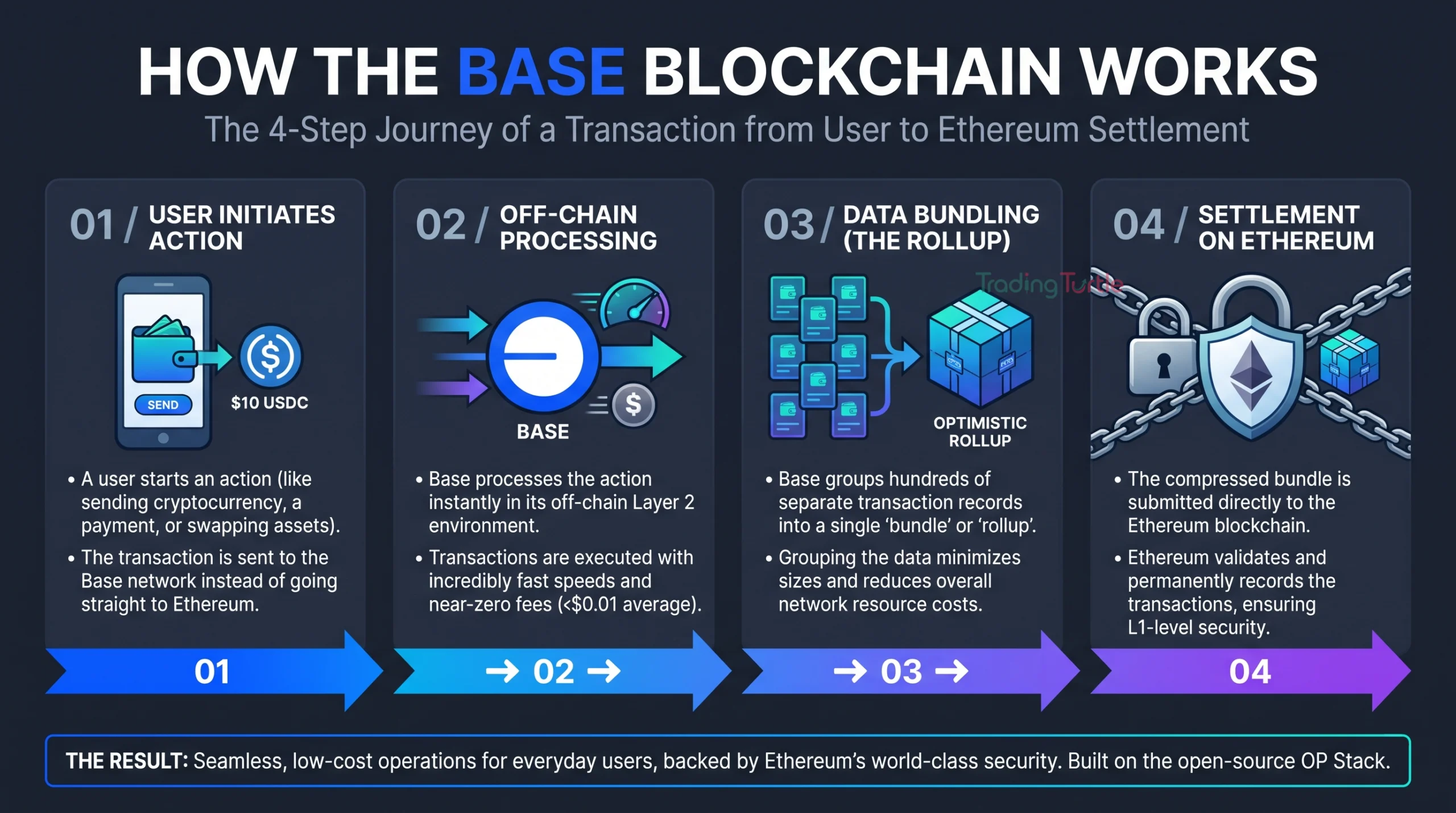
The technical architecture is sophisticated, but the overall process can be understood in four simple stages.
Step 1: A User Initiates an Action
The user may:
- Send cryptocurrency
- Transfer stablecoins
- Trade tokens
- Mint an NFT
- Interact with a decentralized application
- Execute a smart contract
From the user’s perspective, the experience feels similar to using many other blockchain networks.
The difference happens behind the scenes.
Step 2: Base Processes the Transaction
Instead of placing every transaction directly on Ethereum, Base processes activity through its own Layer 2 environment.
This helps reduce congestion on the Ethereum network.
By processing transactions more efficiently, Base can often deliver:
- Lower costs
- Faster confirmations
- Better scalability
- Improved usability
This efficiency is one of the primary reasons Layer 2 networks have become increasingly important within the Ethereum ecosystem.
Step 3: Transaction Data Is Organized
Blockchain systems require security and verification.
Rather than sending every interaction individually to Ethereum, activity can be bundled and organized in a more efficient manner.
This significantly reduces overall resource requirements while maintaining connections to the Ethereum ecosystem.
Most users never see this process taking place.
What matters to users is the resulting experience.
Transactions become faster and more affordable.
Step 4: Settlement Through Ethereum
Although Base processes activity independently, Ethereum remains the foundation that provides settlement and security.
This relationship allows Base to benefit from Ethereum’s established infrastructure while improving overall efficiency.
For users, this creates a balance between:
- Scalability
- Security
- Accessibility
The combination is one of the reasons Base has attracted significant interest throughout the blockchain industry.
The OP Stack Explained
Base is built using a framework known as the OP Stack.
Rather than building every component from scratch, developers can use frameworks that provide foundational infrastructure for scalable blockchain networks.
Think of the OP Stack as an operating framework.
Just as developers build applications on top of operating systems, Layer 2 networks can be built using shared infrastructure frameworks.
The benefits include:
- Faster development
- Greater interoperability
- Shared innovation
- Easier ecosystem expansion
For everyday users, these technical details are mostly invisible.
What matters is that Base was designed to participate in a broader ecosystem rather than operating in complete isolation.
This approach may help accelerate development and adoption over the long term.
Base and Ethereum: A Partnership Rather Than a Competition
One of the most common misunderstandings among beginners is the belief that Base competes with Ethereum.
The reality is very different.
Base depends on Ethereum.
Ethereum and Base perform different roles.
Ethereum Provides
- Security
- Settlement
- Decentralization
- Core infrastructure
Base Provides
- Scalability
- Faster transactions
- Lower transaction costs
- Improved user experiences
A useful way to understand the relationship is:
Ethereum secures the ecosystem. Base helps scale the ecosystem.
The success of Base therefore does not require Ethereum to fail.
In many ways, both networks benefit from each other’s growth.
This cooperative model has become one of the defining characteristics of Ethereum’s broader scaling strategy.
Why Lower Fees Matter More Than Many People Realize
For newcomers, transaction fees may seem like a relatively minor issue.
In reality, fees have a direct impact on adoption.
Imagine paying several dollars simply to complete a small transaction.
Many people would choose not to use the system.
Now multiply that challenge across millions of users.
The result becomes a major obstacle to growth.
Lower transaction costs can enable:
- Small-value payments
- Everyday transactions
- Consumer applications
- Global transfers
- New business models
Developers are also more likely to experiment when users can interact with applications affordably.
This creates opportunities for innovation that may not be practical within higher-cost environments.
Real-World Example: Sending Money on Base
Imagine a person working internationally who wants to send money to family members in another country.
Traditional systems may involve:
- Intermediaries
- Processing delays
- Operating-hour restrictions
- Additional fees
Blockchain infrastructure introduces an alternative approach.
A user can send value digitally through blockchain-based systems that operate continuously rather than relying entirely on traditional settlement schedules.
The exact process depends on the application, jurisdiction, and asset being used.
However, the broader concept helps explain why scalable blockchain infrastructure attracts attention.
The goal is not necessarily to replace every existing financial system.
The goal is to create additional options.
Real-World Example: Stablecoins and Digital Payments
Stablecoins have become one of the most important categories within the blockchain ecosystem.
Unlike highly volatile cryptocurrencies, stablecoins are generally designed to maintain a more stable value relative to an external reference.
As a result, they are increasingly being explored for:
- Payments
- Commerce
- International transfers
- Treasury operations
- Settlement systems
If stablecoin adoption continues growing, infrastructure must be capable of supporting significant transaction volumes.
This is where scaling solutions become especially relevant.
Networks like Base are built with the assumption that future blockchain adoption may depend as much on payments and commerce as it does on trading.
From Cryptocurrency Trading to Onchain Applications
The first major wave of blockchain adoption was largely driven by cryptocurrency transactions.
Today, the industry is gradually expanding beyond trading.
Builders are increasingly focused on creating applications that solve real-world problems.
Examples include:
- Digital payments
- Lending platforms
- Savings products
- Creator tools
- Identity systems
- Business infrastructure
- Asset tokenization
This shift from speculation toward utility represents one of the most important trends in the modern blockchain industry.
Base has positioned itself directly within this transition.
Rather than focusing solely on crypto assets, the network increasingly emphasizes the infrastructure required to support a broader onchain economy.
The Base Ecosystem Explained
Technology alone does not determine whether a blockchain succeeds.
A network becomes valuable when people build useful products on top of it.
This is where the concept of an ecosystem becomes important.
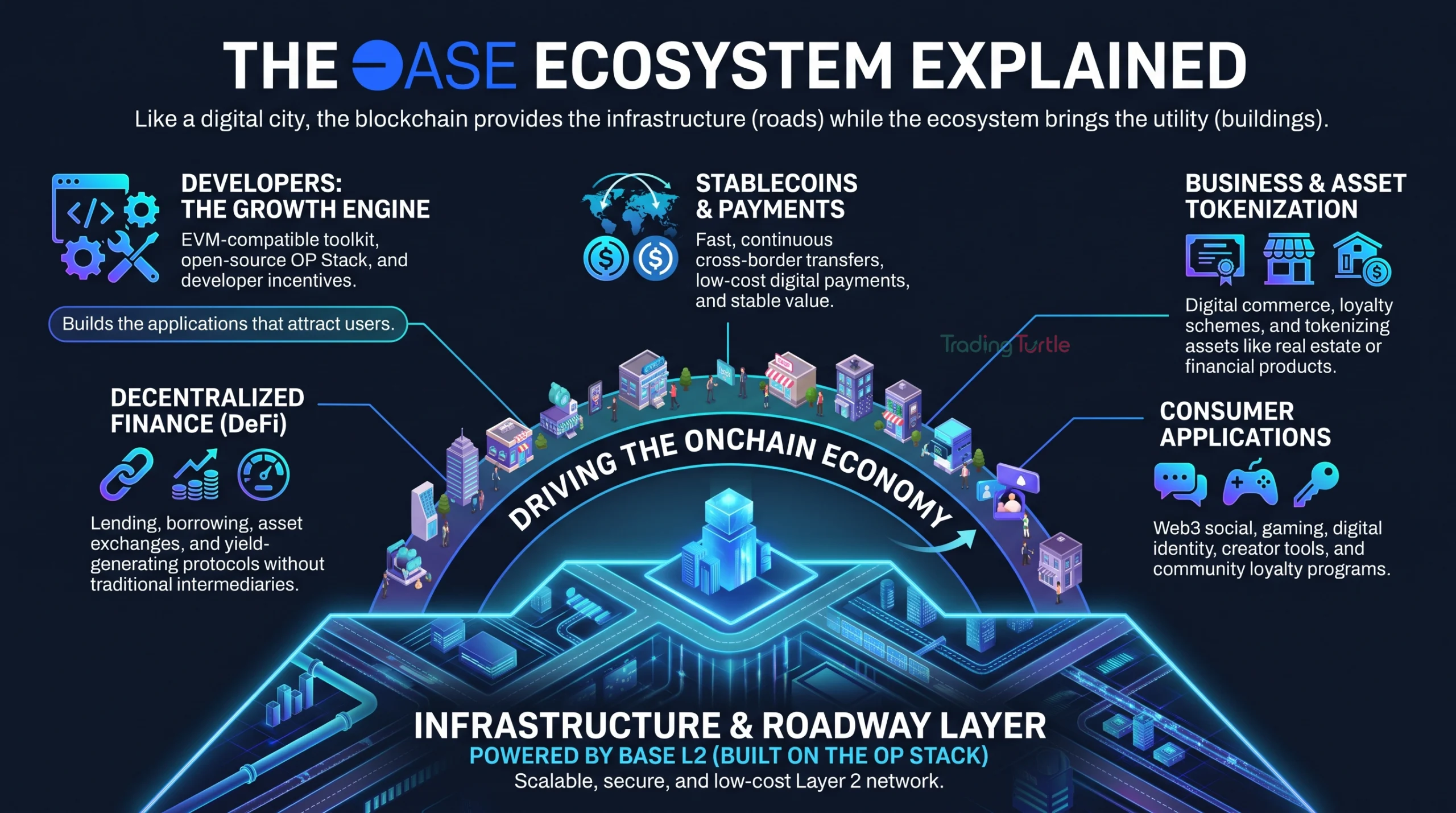
The Base ecosystem consists of developers, businesses, infrastructure providers, decentralized applications, wallets, financial protocols, creator tools, and users who collectively contribute to the network’s growth.
Think of a blockchain as a city.
The blockchain itself provides roads and infrastructure.
The ecosystem is everything built on top of those roads.
Without applications, services, and users, even the most advanced blockchain would have limited value.
The long-term success of Base depends not only on its technology but also on the quality and adoption of the ecosystem being built around it.
Developers Are the Growth Engine
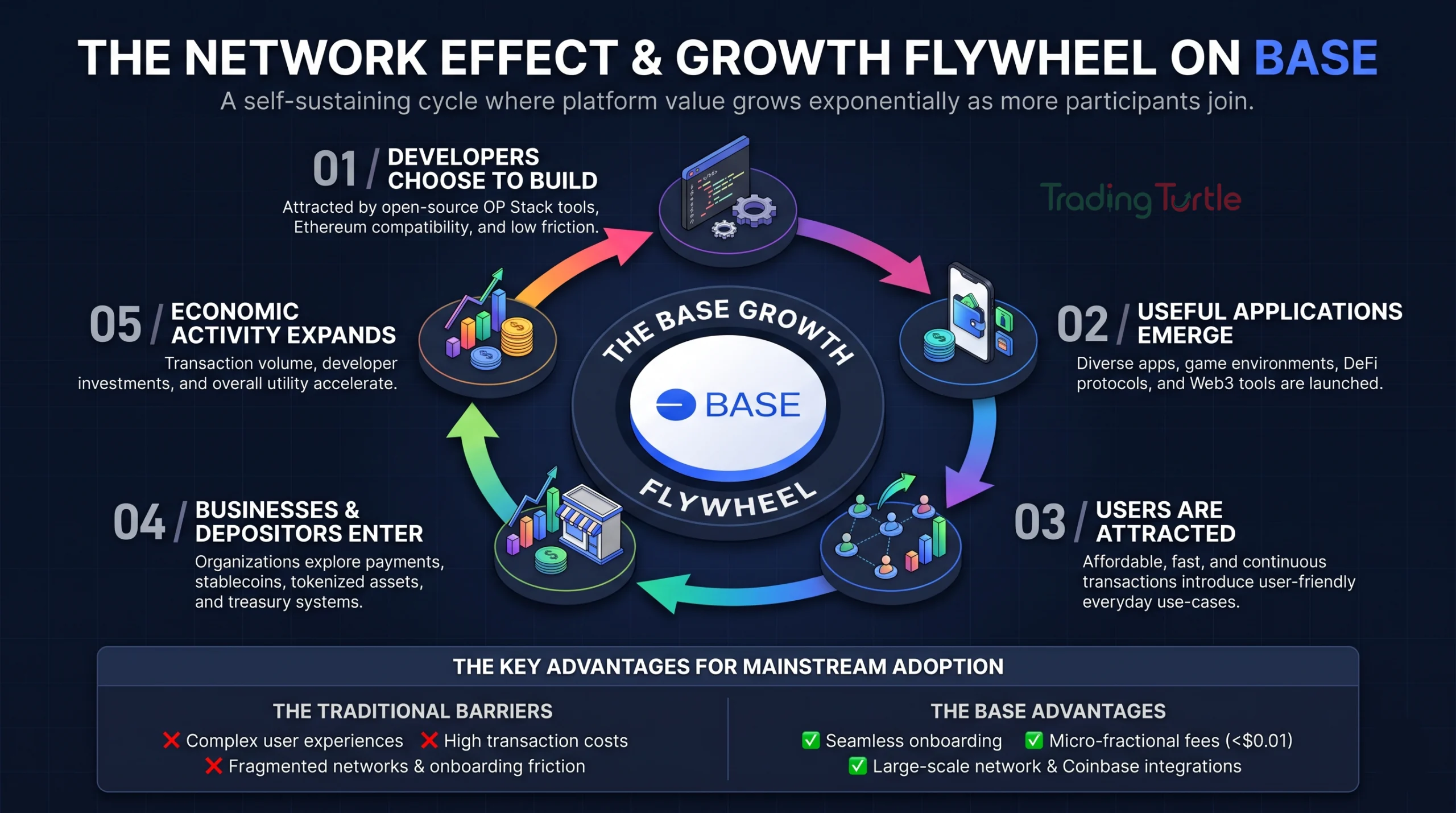
Most successful technology platforms become successful because developers choose to build on them.
Applications attract users.
Users attract businesses.
Businesses create economic activity.
Economic activity attracts more developers.
This cycle creates what is known as a network effect.
Base is actively trying to accelerate this cycle by creating an environment where developers can build applications without some of the limitations associated with higher-cost blockchain infrastructure.
For developers, lower transaction costs can improve product design.
Features that might be impractical on expensive networks become more realistic when costs decrease.
This opens the door to entirely new categories of applications.
Decentralized Finance on Base
One of the largest segments within modern blockchain ecosystems is decentralized finance, often shortened to DeFi.
DeFi refers to blockchain-based financial services that operate through smart contracts rather than traditional financial intermediaries.
Examples can include:
- Lending platforms
- Borrowing protocols
- Asset exchanges
- Liquidity markets
- Yield-generating applications
The goal is not necessarily to replace traditional finance entirely.
Instead, these systems introduce alternative methods for accessing certain financial services through blockchain infrastructure.
Understanding DeFi becomes easier when you first understand the assets that move through these networks.
Readers unfamiliar with digital asset classifications may benefit from Trading Turtle’s guide to Types of Cryptocurrency, which explains coins, tokens, and stablecoins in more detail.
Why Stablecoins Matter to Base
When many people think about cryptocurrency, they immediately think about volatility.
Stablecoins represent a different category.
A stablecoin is generally designed to maintain a relatively stable value by referencing another asset.
Because of this characteristic, stablecoins have become one of the most important use cases in modern blockchain ecosystems.
Stablecoins may be used for:
- Payments
- Transfers
- Commerce
- Treasury management
- Settlement
- Cross-border transactions
For businesses, stablecoins often present a simpler value-transfer mechanism than highly volatile cryptocurrencies.
This is one reason scalable blockchain infrastructure matters so much.
If stablecoin adoption continues to grow, the underlying networks must be capable of processing large numbers of transactions efficiently.
Base’s emphasis on scalability aligns closely with this trend.
Consumer Applications Beyond Finance
One of the most interesting developments in blockchain technology is the shift from purely financial products toward broader consumer applications.
Historically, many blockchain projects focused on trading.
Today’s builders are exploring a much wider range of ideas.
Examples include:
- Social platforms
- Creator tools
- Digital identity systems
- Loyalty programs
- Gaming infrastructure
- Community applications
- Digital ownership systems
These applications often require frequent user interactions.
Frequent interactions become easier when transaction costs remain relatively low.
This relationship between usability and scalability is a major reason why Layer 2 networks have become increasingly important.
Why Businesses Are Exploring Blockchain Infrastructure
Businesses evaluate technology differently than individual users.
A business typically asks questions such as:
- Is the technology reliable?
- Can it scale?
- Can it support customers globally?
- Does it improve efficiency?
- Does it reduce costs?
Blockchain networks are increasingly being examined through this lens.
Rather than focusing only on cryptocurrency as an investment, businesses are exploring how blockchain infrastructure might improve operations.
Potential use cases include:
Payments
Businesses often move money across multiple regions, currencies, and jurisdictions.
Digital payment infrastructure may offer alternative methods for settlement.
Digital Commerce
Blockchain technologies can introduce programmable forms of payment and ownership.
Customer Rewards
Token-based loyalty programs continue to attract experimentation.
Global Operations
Networks that operate continuously can potentially simplify certain international processes.
Not every business use case will succeed.
However, experimentation continues to grow across multiple industries.
The Rise of Tokenized Assets
One of the most discussed trends in blockchain infrastructure is tokenization.
Tokenization refers to representing ownership rights, assets, or claims digitally on a blockchain.
The concept can potentially apply to:
- Financial products
- Real estate interests
- Collectibles
- Membership rights
- Intellectual property
- Business assets
The idea is not that everything will become tokenized.
Rather, blockchain technology provides a method for digitally representing and transferring ownership in certain contexts.
For tokenization to scale effectively, the underlying infrastructure must support significant levels of activity.
This is another area where scalable networks become increasingly important.
The Power of Network Effects
Many of the world’s most successful technologies benefit from network effects.
A network effect occurs when a system becomes more valuable as more participants join.
Examples can be found throughout modern technology:
- Social networks
- Operating systems
- Payment networks
- Online marketplaces
Blockchain ecosystems exhibit similar dynamics.
A growing network may attract:
- Developers
- Applications
- Users
- Businesses
- Additional developers
The cycle then continues.
This creates a competitive advantage because larger ecosystems often become more useful over time.
For Base, ecosystem growth may ultimately prove more important than any individual technical feature.
Why User Experience Still Matters
Technology enthusiasts often focus heavily on infrastructure.
Most users do not.
The average person generally wants:
- Simplicity
- Reliability
- Speed
- Affordability
People rarely care how technology works internally.
They care whether it solves a problem.
A user sending money to a friend typically thinks about the result, not the underlying architecture.
For blockchain adoption to grow, user experiences must continue improving.
This represents one of the largest opportunities for developers building within scalable ecosystems.
The winning applications may not be the most technically impressive.
They may simply be the easiest to use.
Building for the Next Billion Users
Many blockchain projects speak about mass adoption.
Achieving it is considerably more difficult.
Mass adoption requires more than technology.
Successful platforms generally need:
- Scalability
- Developer activity
- Useful applications
- Strong user experiences
- Economic sustainability
The challenge is significant because mainstream users evaluate blockchain products against highly polished internet applications.
Consumers compare experiences to:
- Online banking
- Payment apps
- E-commerce platforms
- Social networks
Anything dramatically more complex faces resistance.
This is one reason why the conversation around blockchain infrastructure has increasingly shifted toward user experience rather than purely technical innovation.
What Could Drive Future Growth?
Predicting the future of any technology is difficult.
However, several trends could influence the adoption of networks such as Base.
Stablecoin Growth
Stablecoins continue to represent one of the strongest real-world blockchain use cases.
Digital Payments
The demand for faster and more efficient payment systems remains substantial globally.
Developer Innovation
New applications often create entirely new categories of demand.
Business Adoption
If businesses continue exploring blockchain infrastructure, transaction activity could expand significantly.
Consumer Applications
The emergence of compelling user-facing products could introduce blockchain technology to broader audiences.
None of these developments are guaranteed.
However, they help explain why scalable infrastructure continues receiving significant attention throughout the industry.
Why the Ecosystem Matters More Than Technology Alone
Many blockchain discussions focus heavily on technical specifications.
Technology matters.
Ecosystems matter more.
History shows that successful platforms often win because they attract:
- Developers
- Builders
- Businesses
- Communities
- Users
Infrastructure creates possibilities.
Ecosystems create adoption.
Ultimately, the long-term significance of Base will likely depend less on technical architecture and more on whether people build products that solve meaningful problems.
That question remains open.
What is clear is that blockchain adoption increasingly revolves around real-world utility rather than speculation alone.
And that shift may prove to be one of the most important developments in the evolution of digital finance.
Base vs Ethereum
One of the most common beginner questions is:
Is Base better than Ethereum?
The comparison is understandable, but it is not entirely accurate.
Base and Ethereum serve different purposes.
Ethereum is the foundational blockchain responsible for security, settlement, and decentralization.
Base is a Layer 2 network designed to improve scalability and usability.
Rather than competing directly, both networks are intended to work together.
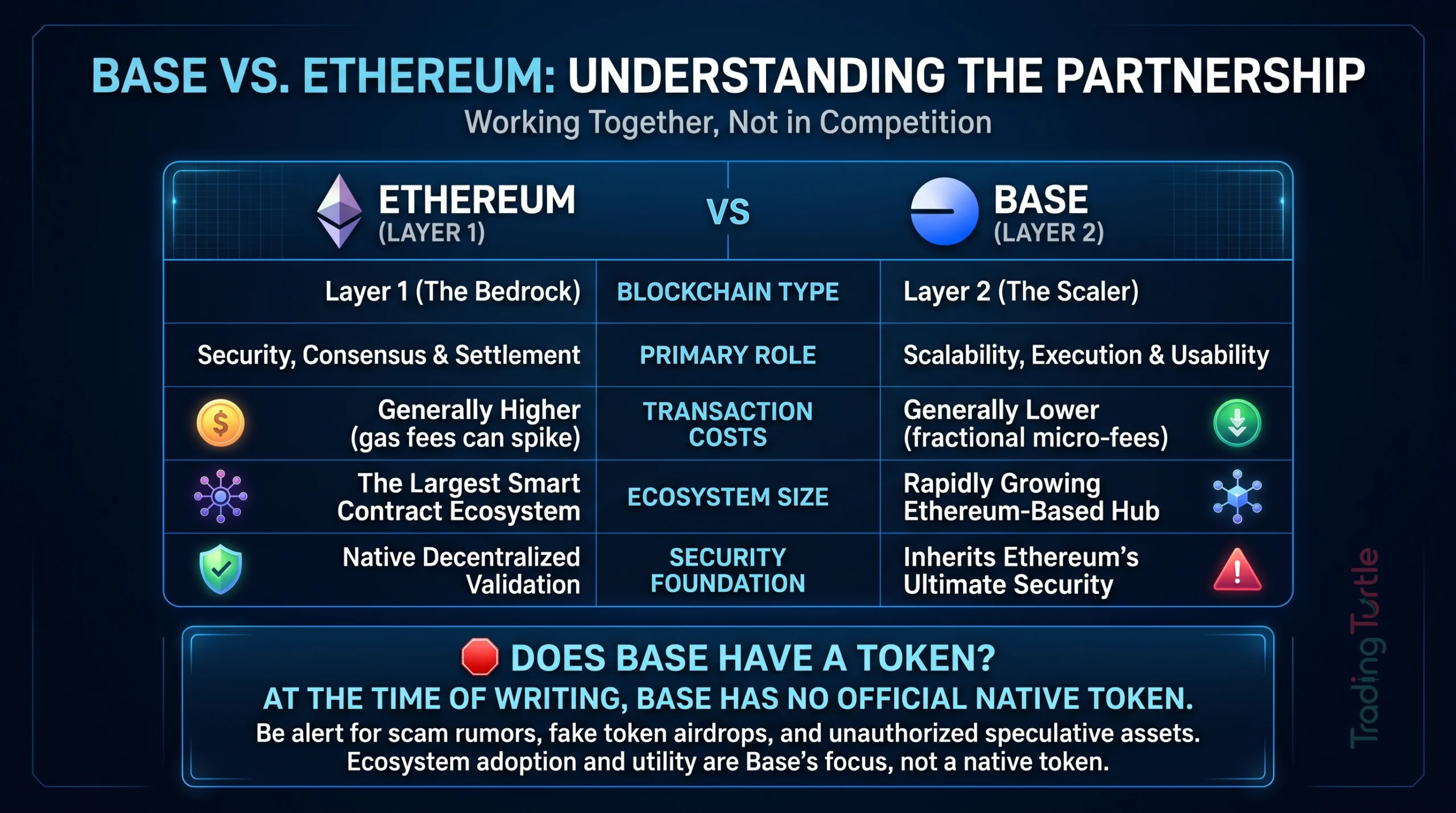
The relationship can be summarized as follows:
| Feature | Ethereum | Base |
|---|---|---|
| Blockchain Type | Layer 1 | Layer 2 |
| Primary Role | Security & Settlement | Scalability & Execution |
| Transaction Costs | Generally Higher | Generally Lower |
| Ecosystem | Largest Smart Contract Ecosystem | Growing Ethereum-Based Ecosystem |
| Security Foundation | Native | Inherits from Ethereum |
A user choosing between Base and Ethereum is often not choosing one over the other.
Instead, the decision is usually about where a specific activity makes the most sense.
Base vs Other Layer 2 Networks
Base is not the only Layer 2 solution within the Ethereum ecosystem.
Several projects are working toward similar goals.
Examples include:
- Arbitrum
- Optimism
- Polygon’s scaling ecosystem
- Other Ethereum scaling solutions
Each network approaches scalability differently.
However, they generally share similar objectives:
- Reduce transaction costs
- Improve user experience
- Expand Ethereum’s capacity
- Support application growth
For beginners, it is often more useful to understand the broader Layer 2 concept than to focus immediately on individual network differences.
As the ecosystem evolves, users and developers will naturally gravitate toward platforms that provide the best combination of:
- Applications
- Liquidity
- User experience
- Developer activity
- Community adoption
Future Trading Turtle comparison articles will explore these differences in greater detail.
Does Base Have a Token?
One of the most searched questions about Base is whether it has its own native token.
At the time of writing, Base does not have an official network token.
This is important because misinformation spreads quickly within the cryptocurrency industry.
Many new users assume every blockchain launches with a native asset.
That assumption is not always correct.
When researching blockchain projects, it is important to verify information carefully and avoid making decisions based on rumors, speculation, or unofficial announcements.
A network can still grow and attract meaningful activity even without introducing its own token.
Ultimately, ecosystem adoption matters more than token launches.
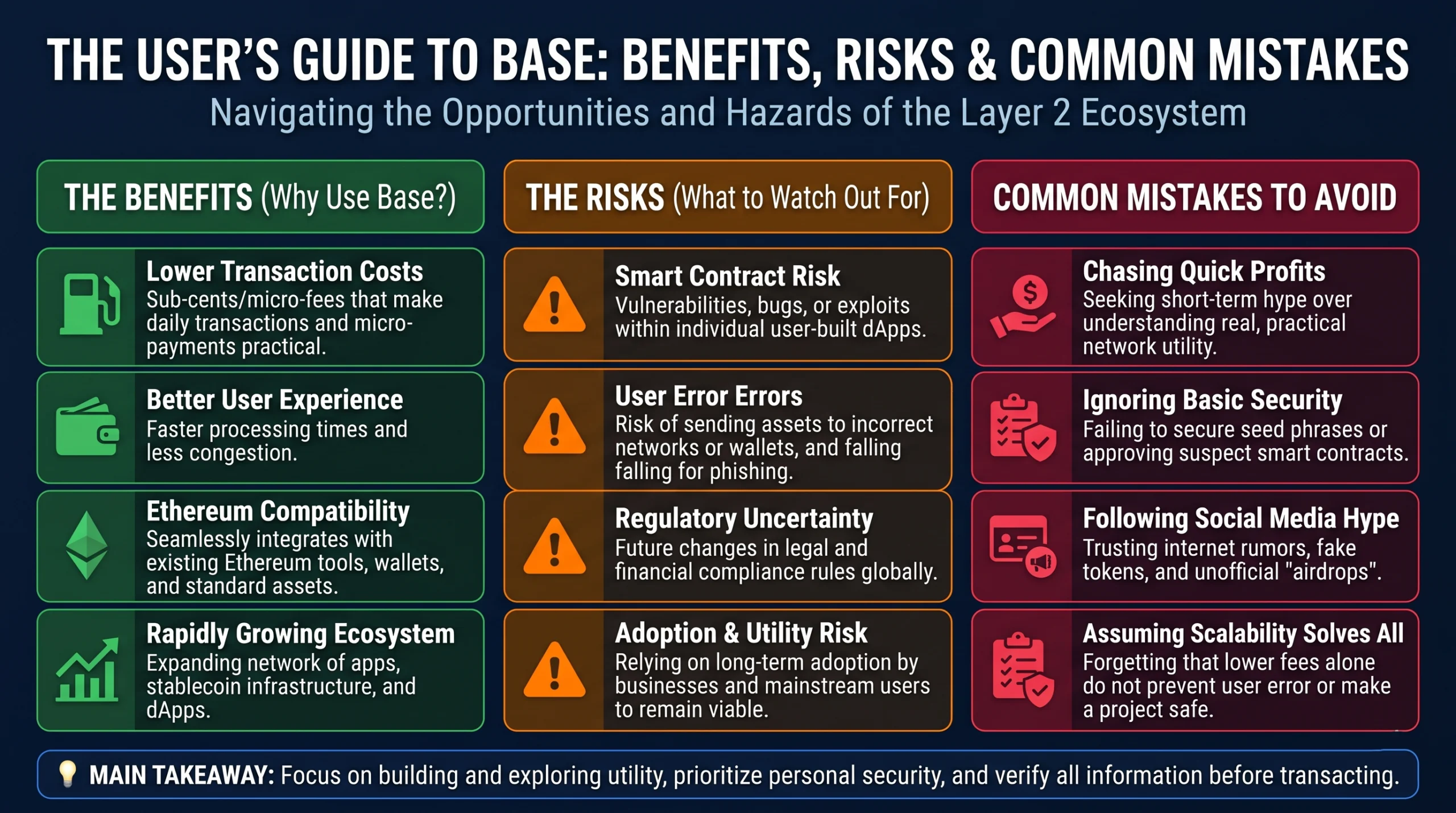
Benefits of Base Blockchain
Every blockchain infrastructure decision involves trade-offs.
Understanding the benefits of Base helps explain why developers and businesses continue paying attention to its growth.
Lower Transaction Costs
One of Base’s primary goals is reducing the costs associated with blockchain activity.
Lower costs can unlock use cases that may be impractical on more expensive networks.
Examples include:
- Frequent transactions
- Small-value transfers
- Consumer applications
- Everyday payments
Improved User Experience
Technology succeeds when people enjoy using it.
Applications built on scalable infrastructure often have greater flexibility to create smoother user experiences.
This matters because mainstream adoption depends heavily on usability.
Most users care more about convenience than technical architecture.
Ethereum Compatibility
Because Base exists within the broader Ethereum ecosystem, developers can benefit from existing tools, standards, and infrastructure.
This lowers barriers for builders and supports ecosystem growth.
Compatibility also helps users move more easily between applications that share common blockchain foundations.
Growing Ecosystem
The value of a blockchain network often increases as more applications become available.
As developers continue building tools, financial services, and consumer products, the ecosystem becomes more useful for both individuals and businesses.
This network effect can create momentum that attracts even more development activity over time.
Risks and Limitations of Base
No blockchain network is without risk.
Understanding both opportunities and limitations is essential for informed decision-making.
Smart Contract Risk
Applications built on blockchain networks rely heavily on smart contracts.
Software vulnerabilities, design flaws, and implementation mistakes can lead to unexpected outcomes.
Users should always perform independent research before interacting with any protocol.
User Error
Many blockchain losses occur because of simple mistakes.
Examples include:
- Losing wallet access
- Sending assets to incorrect addresses
- Falling victim to phishing attacks
- Approving malicious transactions
Understanding wallet security remains one of the most important skills for blockchain users.
Regulatory Uncertainty
Blockchain regulation continues to evolve globally.
Changes in legislation, regulatory frameworks, or compliance requirements could affect how blockchain networks operate in different jurisdictions.
Future developments remain difficult to predict.
Adoption Risk
Technology does not achieve success automatically.
For Base to thrive over the long term, the ecosystem must continue attracting:
- Developers
- Users
- Businesses
- Applications
Strong technology alone does not guarantee adoption.
History is filled with technically impressive products that failed to achieve widespread usage.
Who Should Use Base?
Base is not necessarily the ideal solution for every user.
However, several groups may find it particularly relevant.
Developers
Developers interested in building blockchain applications may benefit from scalable infrastructure and compatibility with the broader Ethereum ecosystem.
Stablecoin Users
People regularly using stablecoins may find efficient blockchain infrastructure valuable for transfers and payments.
Businesses
Organizations exploring blockchain-powered payments, commerce, or digital financial infrastructure may be interested in scalable blockchain environments.
Blockchain Learners
Anyone seeking to understand how modern blockchain ecosystems are evolving can learn valuable concepts by studying Base and Layer 2 networks.
Common Beginner Mistakes
Many mistakes occur because users focus on hype rather than education.
Avoiding these mistakes can significantly improve the learning experience.
Mistake 1: Looking for Quick Profits
Technology and investment decisions are not the same thing.
Understanding a blockchain network does not automatically create an investment thesis.
Mistake 2: Ignoring Security Basics
Wallet security matters.
Strong passwords, secure backups, and phishing awareness remain essential.
Mistake 3: Following Social Media Hype
Popular narratives often spread faster than accurate information.
Always verify claims through primary sources and educational resources.
Mistake 4: Assuming Scalability Solves Everything
Scalability is important.
However, adoption also depends on applications, user experience, community support, and long-term utility.
Mistake 5: Skipping Fundamentals
Many users rush directly into applications without understanding the underlying technology.
A stronger foundation often leads to better decision-making.
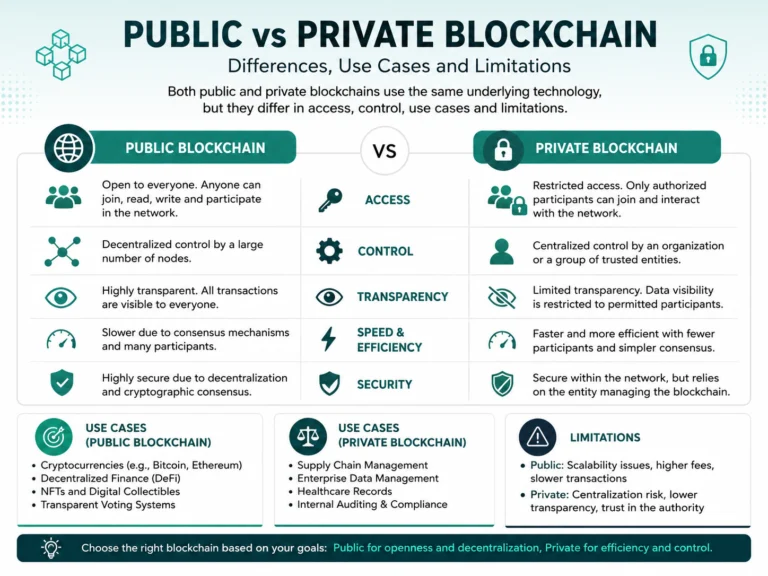
Readers seeking deeper context may benefit from revisiting foundational guides such as How Cryptocurrency Works and Public vs Private Blockchain.
The Future of Onchain Finance
When discussing Base, it is tempting to focus entirely on blockchain technology.
The larger story may actually be finance.
Financial systems continue evolving.
Payments are becoming increasingly digital.
Money moves globally at unprecedented speed.
Businesses operate across borders more than ever before.
Consumers increasingly expect instant access to services.
Blockchain infrastructure exists within this broader transformation.
The concept of onchain finance refers to financial activity occurring through blockchain-based systems rather than traditional centralized infrastructure alone.
Potential areas of growth include:
- Stablecoin settlement
- Global payments
- Digital asset ownership
- Tokenized assets
- Programmable financial products
- Internet-native financial services
Whether every prediction becomes reality remains uncertain.
However, the underlying direction is clear.
The blockchain industry is gradually shifting from speculation toward utility.
Networks capable of supporting that transition may play increasingly important roles in the years ahead.
Final Takeaway
Base is much more than another blockchain network.
It represents a broader effort to make blockchain technology more practical, scalable, and accessible.
By helping reduce transaction costs and improve usability while remaining connected to Ethereum, Base aims to support a future where blockchain applications can serve significantly larger audiences.
The most important thing to understand about Base is not its technology.
It is its vision.
The network reflects a growing belief that blockchain adoption will ultimately be driven by useful applications, efficient payments, stablecoin infrastructure, and real-world utility rather than speculation alone.
Whether that vision succeeds remains to be seen.
But understanding Base provides valuable insight into where the next stage of blockchain innovation may be heading.
Frequently Asked Questions (FAQs)
Base is an Ethereum Layer 2 blockchain designed to improve scalability, reduce transaction costs, and support blockchain applications.
Base was incubated within Coinbase and developed to help expand access to onchain applications and infrastructure.
No.
Base is designed to work alongside Ethereum rather than replace it.
Ethereum provides security and settlement, while Base helps improve scalability.
No. Base is a Layer 2 blockchain built on top of Ethereum.
Base was created to help make blockchain applications more accessible, affordable, and scalable while supporting the growth of the broader onchain economy.
Users can make payments, use stablecoins, interact with decentralized finance applications, and access other blockchain-based services.